


Unlocking the Power of Commercial Solar in Florida: A Strategic Guide for Business Owners
Florida, the Sunshine State, lives up to its name. With an average of over 230 sunny days per year, it's a natural powerhouse for solar energy. But for business owners, the question isn't just about having sun—it's about harnessing it intelligently to boost the bottom line, ensure operational resilience, and build a sustainable brand. This is where commercial solar in Florida transitions from a green idea to a compelling financial and strategic imperative. The phenomenon is clear: forward-thinking businesses across the state are looking beyond their utility bills and seeing a grid-independent future powered by their own rooftops and parking lots.
The Florida Phenomenon: Sunshine, Savings, and a Strategic Shift
You've likely noticed more solar panels appearing on warehouses, shopping centers, and office buildings. This isn't a coincidence; it's a calculated response to several converging factors. Florida's commercial electricity rates, while variable, have shown a historical upward trend, directly impacting operational costs. Simultaneously, the reliability of the grid, especially during the intense hurricane season, is a perennial concern for businesses where downtime means lost revenue. Installing a solar array addresses the cost issue, but the truly transformative step is integrating it with a sophisticated battery energy storage system (BESS). This combination doesn't just generate power; it creates a controllable, resilient energy asset.
The Data Dive: Why Florida's Commercial Solar Market is Booming
The numbers tell a powerful story. According to the Solar Energy Industries Association (SEIA), Florida is consistently among the top states for solar capacity installation. For commercial entities, the economics are particularly attractive:
- Significant Cost Savings: Businesses can offset 70-100% of their electricity usage, locking in energy costs for decades and hedging against utility price inflation.
- Accelerated Depreciation (MACRS): The federal Modified Accelerated Cost Recovery System allows businesses to depreciate the cost of a solar system over five years, a substantial tax advantage.
- No State Corporate Income Tax for Solar: Florida offers a sales tax exemption for solar equipment, further reducing the upfront capital required.
- Net Metering Successor Tariffs: While traditional net metering has evolved, current policies still allow for crediting excess solar generation, improving project payback periods.

Image: Commercial solar installations on large rooftops are becoming a common sight in Florida's business landscape. (Photo by American Public Power Association on Unsplash)
Case Study: A Florida Hotel's Journey to Energy Independence
Consider the real-world example of a 200-room beachfront resort in Tampa Bay. Facing annual electricity costs exceeding $240,000 and constant threat of storm-related outages that could cripple their operations, management decided to invest in a comprehensive solar-plus-storage solution.
- System Size: 500 kW rooftop solar array.
- Storage Integration: A 750 kWh battery energy storage system was paired with the solar installation.
- Results:
- Annual electricity bill reduced by 92%.
- The BESS provides critical backup power to guest rooms, elevators, and refrigeration for up to 8 hours during an outage, enhancing guest safety and satisfaction.
- The system participates in a utility demand response program, earning additional revenue by discharging the battery during peak grid stress periods.
- Projected payback period: 6.5 years, thanks to combined savings, incentives, and demand response income.
This case highlights that modern commercial solar in Florida is about revenue streams and risk mitigation as much as it is about sustainability.
Beyond the Panels: The Critical Role of Intelligent Energy Storage
Solar panels are the generators, but an intelligent battery system is the brain and the bank. For a commercial operation, simply generating power when the sun shines is not optimal. Energy storage allows you to:
| Challenge | Solar-Only Limitation | Solar + Storage Solution |
|---|---|---|
| Power Outages | System shuts off for safety (no backup). | Seamless backup power to keep critical loads running. |
| Time-of-Use Rates | You sell excess at low noon rates, buy back at high evening rates. | Store cheap midday solar, use it during expensive peak hours. |
| Demand Charges | Little impact on peak demand spikes (often in early evening). | Battery discharges to "shave" peak demand, drastically reducing this charge. |
| Grid Services | Not possible. | Potential to generate revenue by providing grid stability services. |
The Highjoule Solution: Smart Storage for Florida's Commercial Sector
This is where Highjoule's expertise becomes pivotal. Since 2005, we have specialized in designing and deploying advanced battery energy storage systems that make commercial solar installations truly intelligent and maximally profitable. For a Florida business, our HPS Series Commercial Storage System is engineered for the local environment and market dynamics.
Our system integrates seamlessly with new or existing solar arrays and is built with:
- High-Density, Safe LFP Chemistry: Ideal for Florida's heat, offering longer lifespan and superior thermal stability.
- AI-Powered Energy Management System (EMS): The true differentiator. Our software automatically optimizes energy flow—deciding when to store, use, or sell power—based on weather forecasts, utility rates, and your consumption patterns to maximize ROI.
- Scalable Architecture: Start with what you need and expand storage capacity as your business grows, protecting your initial investment.
- Robust Backup Power: Provides a seamless transition to backup power during grid failures, ensuring business continuity through storms.

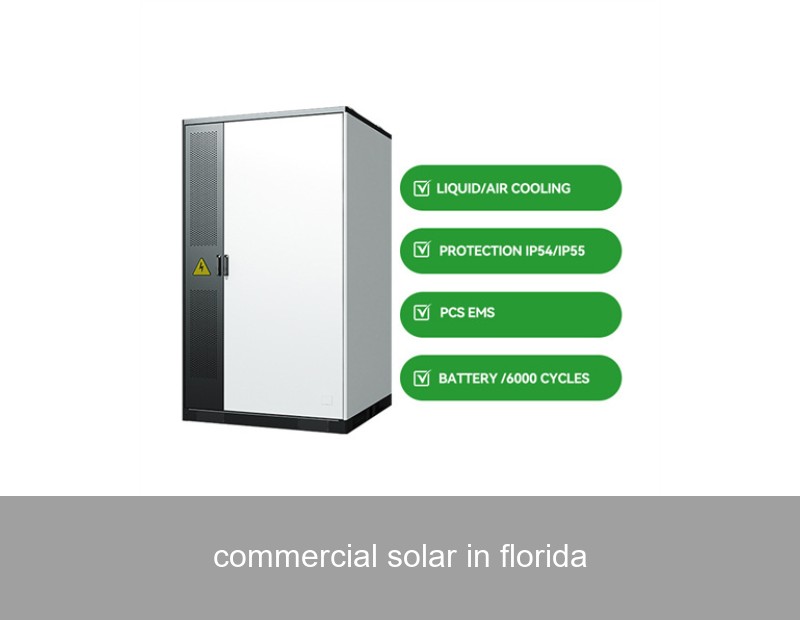
Image: Modern, containerized battery storage systems like Highjoule's HPS Series provide safe, scalable energy management. (Photo by Michael Fousert on Unsplash)
Navigating Incentives and Implementation
The path to solar and storage is smoother with the right guide. Highjoule's team provides end-to-end support, from initial feasibility analysis—modeling your savings and payback with precision—to navigating the paperwork for federal tax credits, depreciation, and local interconnection agreements. We handle the complex engineering and procurement, allowing you to focus on your business.
The Future of Florida's Commercial Energy Landscape
The evolution towards decentralized, resilient energy is accelerating. Technologies like vehicle-to-grid (V2G) and advanced microgrids are on the horizon. Businesses that invest in smart solar-plus-storage systems today are not just cutting costs; they are positioning themselves as leaders in energy independence, gaining a competitive edge through operational reliability and a strengthened commitment to environmental stewardship. The U.S. Department of Energy's Solar Futures Study outlines a future where solar powers 40% of the nation's electricity, with commercial buildings playing a major role.
Is your business ready to transform its largest operational expense into a controlled, profitable asset and build resilience against Florida's next storm season? What would a 90% reduction in your net electricity costs and guaranteed backup power do for your operational planning and peace of mind?
 Inquiry
 Online Chat