


How to Choose the Right Wind Turbine Distributors for Your Energy Project
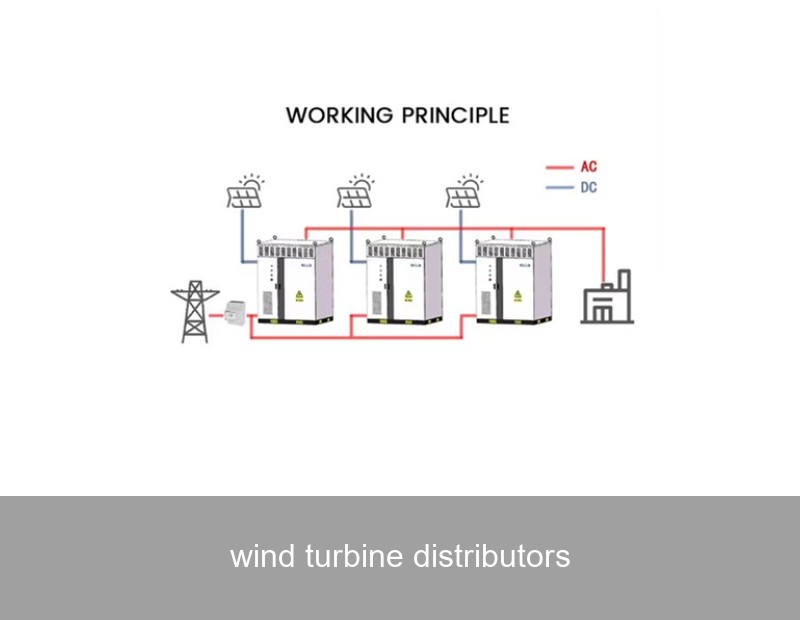
So, you're planning a wind energy project. Whether it's for a remote farm, a commercial facility, or a community microgrid, you've likely discovered that sourcing the turbines is just the beginning. The real power lies in the complete system—and that's where your choice of wind turbine distributors becomes critical. A distributor is more than a supplier; they are your gateway to technology, long-term performance, and ultimately, your return on investment. In today's market, the most successful projects are those that view turbines not as standalone units, but as the beating heart of an integrated renewable energy ecosystem. This is where expertise in pairing generation with smart storage solutions makes all the difference.
Table of Contents
- The Evolving Role of Wind Turbine Distributors
- Key Selection Criteria: Beyond the Price Tag
- Technical Integration Capability
- Local Market & Regulatory Knowledge
The Evolving Role of Wind Turbine Distributors
Gone are the days when wind turbine distributors simply handled logistics and inventory. For projects in Europe and the US, a modern distributor must act as a technical consultant. Why? Because the grid landscape is changing rapidly. With increasing renewable penetration, grid operators are demanding more stability and predictability. A distributor worth their salt now needs to provide insights on how their turbines will interact with the local grid, what kind of power quality issues might arise, and—most importantly—how to mitigate them. This often involves discussing hybridization: combining wind generation with solar PV and, indispensably, battery energy storage systems (BESS).

Modern wind projects require more than just turbines; they need a full-system approach. Image credit: Unsplash.
Key Selection Criteria: Beyond the Price Tag
Choosing a distributor based solely on turbine cost per kW is a common pitfall. Here are the facets that truly define a partnership for long-term success.
Technical Integration Capability
Can your distributor talk fluently about power conversion, grid-forming inverters, or ramp rate control? The best wind turbine distributors have deep engineering teams that understand the full balance of plant. They should be able to model your wind resource data and advise on the optimal storage capacity to firm up the power output, ensuring you can deliver electricity when it's most valuable, not just when the wind blows.
Logistics & After-Sales Support
Transporting nacelles, towers, and blades is a monumental task. Your distributor must have a proven track record in handling customs (crucial for transatlantic trade to the US or within the EU), local transportation permits, and on-site crane logistics. Furthermore, their after-sales service network determines your turbine's lifetime yield. Ask about their O&M (Operations and Maintenance) partnerships and spare parts availability locally.
Local Market & Regulatory Knowledge
A distributor based in Germany will have intimate knowledge of the Wind Energy Act (WEG), while one in Texas understands the ERCOT market rules inside out. They should guide you on permitting, environmental studies, and, critically, on available incentives or tax credits for hybrid projects that include storage, such as those enhanced by the US Inflation Reduction Act.
Case Study: A Danish Agri-Business Success Story
Let's look at real data. In 2022, a large dairy cooperative in Jutland, Denmark, wanted to achieve 100% energy independence. They partnered with a forward-thinking wind turbine distributor who proposed not just two 3.2 MW turbines, but a fully integrated system.
- Challenge: Highly variable wind output mismatched with the constant, high energy demand of cooling systems and milking parlors.
- Solution: The distributor designed a hybrid system incorporating the wind turbines with a 4 MWh battery energy storage system.
- Results:
- 98% self-consumption of generated wind power (vs. an estimated 65% without storage).
- 40% reduction
- Provision of grid frequency regulation services, creating an additional revenue stream.
The distributor's value was in designing this holistic solution, not just in supplying the turbines. This case exemplifies the modern standard for project success.
The Critical Synergy: Wind Power and Advanced Energy Storage
Wind is inherently variable. This intermittency is the single biggest challenge for project economics and grid acceptance. This is where advanced energy storage is not an optional add-on but a core component of a viable project. A BESS does three crucial things for a wind installation:
- Energy Time-Shifting: Stores excess wind energy during high-wind, low-demand periods and discharges it during peak pricing hours.
- Grid Stability: Provides essential services like frequency response and voltage support, often mandated by grid codes, especially in islanded or weak grids.
- Infrastructure Optimization: Allows you to potentially "right-size" grid connection capacity, saving on costly upgrade fees.
According to a 2023 NREL report, hybridizing wind with storage can increase the value of wind projects by up to 50% in certain markets by enabling more strategic energy delivery.

A modern Battery Energy Storage System (BESS) is key to maximizing wind power value. Image credit: Unsplash.
How Highjoule Complements Your Wind Turbine Partnership
This is where Highjoule's expertise becomes a force multiplier for developers and wind turbine distributors alike. Since 2005, Highjoule has been at the forefront of advanced, intelligent storage solutions. We don't just supply batteries; we provide the brain for the entire energy system.
When you partner with a knowledgeable distributor, ask them about integrating Highjoule's HPS (Highjoule PowerStack) commercial & industrial storage systems. Our solutions are designed for seamless integration with renewable sources:
- Grid-Following & Grid-Forming Modes: Our inverters can stabilize a microgrid powered primarily by wind, ensuring continuous power even during gust lulls.
- AI-Powered Energy Management System (EMS): The Highjoule iQ-EMS predicts wind generation using meteorological data and optimizes charge/discharge cycles to maximize revenue, whether through arbitrage, demand charge reduction, or ancillary services.
- Scalable Architecture: From a 500kWh unit for a small industrial site to multi-MWh solutions for utility-scale wind farms, our modular design grows with your needs.
For distributors, offering Highjoule storage transforms your value proposition. You move from selling components to delivering guaranteed performance and higher ROI for your clients. For project developers, insisting on this level of integration ensures your wind investment is future-proof and financially optimized from day one.
Future Trends for Distributors and Developers
The market is moving towards "energy-as-a-service" models and fully digitalized power plants. The leading wind turbine distributors of tomorrow will likely offer long-term power purchase agreements (PPAs) backed by their own hybrid asset portfolios. They will use digital twins and continuous performance analytics to guarantee output. In this landscape, the depth of partnerships with storage and smart software providers like Highjoule will be a key differentiator.
As you evaluate your next project or partnership, consider this: Is your supply chain just providing hardware, or is it architecting a resilient, profitable, and sustainable energy asset? The right distributor, coupled with the right storage intelligence, can make that distinction clear.
What specific grid challenge in your region—be it frequency volatility, capacity constraints, or purely economic—would most benefit from combining wind power with a smart storage solution like Highjoule's?
 Inquiry
 Online Chat