


Connecting a Solar Panel to a Battery Without a Regulator: A Risky Shortcut or a Viable Option?
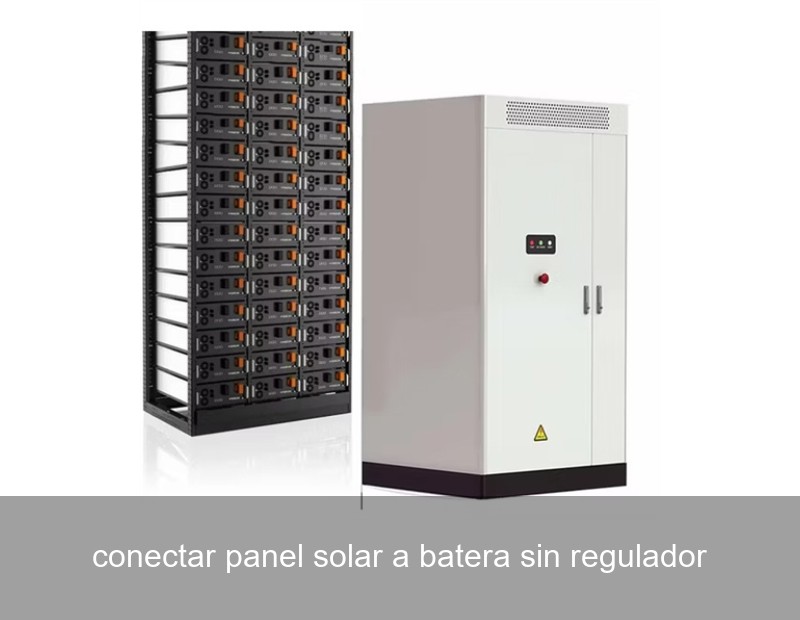
As a homeowner or business looking to maximize energy independence, you've likely explored solar power. A common question that arises, especially for DIY enthusiasts or those seeking to simplify a system, is: can you connect a solar panel to a battery without a regulator (also known as a charge controller)? The short answer is technically "sometimes," but the real-world answer is almost always "you really shouldn't." Let's dive deep into the why, the extreme risks, and the modern, intelligent alternatives that ensure your investment is safe, efficient, and durable.
Table of Contents
- The Phenomenon: The Allure of a Simpler System
- The Hard Data: Why Unregulated Energy is Destructive
- A Cautionary Tale: A Real-World Case from Arizona
- The Modern Solution: Intelligence is Non-Negotiable
- Highjoule's Approach: Beyond Basic Regulation
- Your Energy, Your Responsibility
The Phenomenon: The Allure of a Simpler System
The idea is tempting. You have a solar panel and a battery. Why add another component, another cost, another point of complexity? This thought often stems from a misunderstanding of what a solar panel actually produces. Unlike a steady battery charger, a solar panel's output is wildly variable. Its voltage and current depend entirely on the intensity of sunlight. On a bright, cold day, a 12V nominal panel can easily produce over 20 volts. This is where the danger begins.
Think of it like filling a water balloon with a fire hose. Without a regulator to act as a controlled valve, the sheer power can—and will—overwhelm the battery's delicate internal chemistry.

Image Source: Unsplash - A battery's internal structure is精密 and easily damaged by overvoltage.
The Hard Data: Why Unregulated Energy is Destructive
Let's move beyond analogy and look at the science. Connecting a panel directly to a battery ignores two fundamental, destructive processes:
1. Overcharging: The Silent Killer
A lead-acid battery (common in many storage setups) needs to stop charging at around 14.4-14.8 volts for a 12V system. Exceeding this causes "gassing," where electrolyte water breaks down into hydrogen and oxygen. This leads to:
- Water Loss: The electrolyte level drops, exposing plates and causing permanent sulfation.
- Heat & Pressure Buildup: A significant fire and explosion risk, especially with sealed batteries.
- Plate Corrosion: The positive plates physically degrade, rapidly reducing battery capacity and lifespan.
For Lithium-ion (Li-ion) batteries, the consequences are more immediate and severe. Overvoltage can cause thermal runaway—an uncontrollable self-heating state that leads to fire. Li-ion cells require extremely precise voltage limits, typically within 0.05V per cell of tolerance.
2. Reverse Current Drain: The Nighttime Thief
At night, when the solar panel isn't producing power, it becomes a passive circuit. The higher voltage of the battery can actually cause current to flow backwards through the panel, slowly draining the battery. Over days, this can lead to a deeply discharged, potentially damaged battery.
| Scenario | Battery Lifespan (Expected) | Safety Risk | System Efficiency |
|---|---|---|---|
| Direct Connection (No Regulator) | Months (vs. Years) | High (Fire, Explosion, Damage) | Very Low (Constant Over/Under-charge) |
| With PWM Charge Controller | 3-5 Years | Low | Good (Basic Regulation) |
| With MPPT Charge Controller | 5-7+ Years | Very Low | Excellent (Up to 30% more energy harvest) |
A Cautionary Tale: A Real-World Case from Arizona
A 2019 analysis by the National Fire Protection Association (NFPA) highlighted a residential fire in Phoenix, Arizona. The homeowner had expanded a small off-grid setup for a garden shed, directly wiring two additional 100W panels to an existing battery bank, bypassing the undersized charge controller "temporarily." The sustained overcharge during a sunny week led to excessive gassing in the lead-acid batteries. A spark from a nearby tool ignited the hydrogen, resulting in a fire that destroyed the shed and damaged the home's exterior. The financial loss exceeded $15,000, not including the environmental cleanup cost for the spilled electrolyte. This case underscores that the risk isn't theoretical; it's a costly reality check.
The Modern Solution: Intelligence is Non-Negotiable
Today, the conversation shouldn't be about skipping the regulator. It should be about choosing the right kind of intelligence for your system. The regulator has evolved into a sophisticated charge controller, the essential brain of your solar-battery connection.
- PWM (Pulse Width Modulation): The basic, reliable option. It acts like a rapid switch, protecting from overcharge but not maximizing panel output.
- MPPT (Maximum Power Point Tracking): The industry standard for efficiency. An MPPT controller doesn't just regulate; it actively finds the optimal voltage/current combination from the panel to harvest up to 30% more energy, especially in cool or cloudy weather, and delivers it safely to the battery.
For modern lithium-based systems, the controller is even more critical. It must communicate with the Battery Management System (BMS) for closed-loop control, ensuring every cell is charged within its strict safety window.

Image Source: Unsplash - Modern integrated systems handle regulation seamlessly and safely.
Highjoule's Approach: Beyond Basic Regulation
At Highjoule, with nearly two decades of experience powering homes and businesses across Europe and North America, we view the charge controller not as a separate component to be debated, but as an integral, non-negotiable part of a holistic energy ecosystem. Our philosophy is that safety and efficiency are the foundation of true sustainability.
For instance, our Residential H-ESS Series and Commercial C-IQ Platform never ask you to "connect a solar panel to a battery without a regulator." Instead, we provide fully integrated, AC-coupled systems. Your solar panels connect to a solar inverter, and the system connects to our intelligent battery storage at the AC level. This means:
- Built-In, Advanced Regulation: Our systems include sophisticated power conversion and management systems that perform the functions of multiple MPPT controllers, optimized for our battery chemistry.
- Grid Intelligence: The system doesn't just charge batteries; it decides when to store solar energy, when to use it, when to draw from the grid at low rates, and when to provide backup power—all while keeping the battery in its perfect health zone.
- Remote Monitoring & Management: Through the Highjoule Energy OS, you can track performance, efficiency, and battery health in real-time, ensuring everything operates as designed for maximum longevity.
For DIY or off-grid applications where a DC-coupled system is preferred, we strongly advocate for and can recommend certified, compatible MPPT controllers that are specifically programmed to work with our battery voltage and chemistry profiles, turning a risky direct connection into a optimized, safe energy flow.
Your Energy, Your Responsibility
The quest for simplicity is understandable, but in energy storage, cutting the wrong corner doesn't just risk equipment—it risks safety. The question has evolved from "Can I connect without a regulator?" to "What is the most intelligent way to manage this connection for the life of my system?"
Given the clear data on risks and the availability of intelligent, integrated solutions, what specific goals for your energy independence or backup power are leading you to consider your system design options?
 Inquiry
 Online Chat