


Powering the Future of Living: Sustainable Energy for Container Houses in South Africa
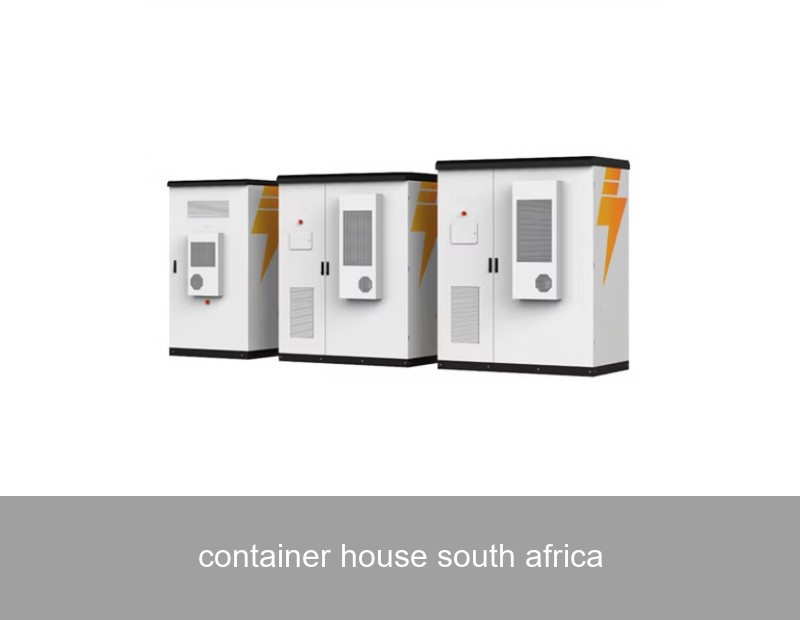
Imagine a home that is both architecturally innovative and a beacon of self-sufficiency. Across South Africa, from the sun-drenched coastlines of the Western Cape to the burgeoning urban landscapes of Gauteng, container house South Africa projects are redefining modern living. These structures offer affordability, durability, and a unique aesthetic. However, their true potential for independence is unlocked not by the steel walls themselves, but by the energy that powers them. The real question for owners and builders is: how do you ensure a reliable, clean, and cost-effective power supply for a home that stands apart from the grid? The answer lies in intelligent energy storage, a field where companies like Highjoule are leading the charge.
Table of Contents
- The Challenge: Beyond Four Steel Walls
- The Data: Why Solar Alone Isn't the Full Solution A Real-World Case: Off-Grid Living in the Overberg
- The Highjoule Solution: Intelligent Power for Intelligent Homes
- Key Components of a Container Home Energy System
- Looking Ahead: The Role of Storage in Sustainable Development
The Challenge: Beyond Four Steel Walls
The appeal of a container house in South Africa is clear. It's a creative response to housing needs, often with a smaller physical and environmental footprint. But this innovative housing model faces a very traditional South African problem: energy insecurity. Whether you're completely off-grid by choice or dealing with the all-too-familiar load-shedding schedules, a consistent power supply is non-negotiable for comfort, safety, and connectivity.
Many turn to solar panels as the first step—a logical move in one of the world's sunniest countries. But here’s the catch solar panels only generate power during the day. What happens at night, during a prolonged bout of cloudy weather, or when you need to run high-power appliances? Without a way to store the abundant energy you produce, you're left in the dark. This gap between generation and consumption is the critical problem that modern battery energy storage systems (BESS) are designed to solve.
The Data: Why Solar Alone Isn't the Full Solution
Let's look at the numbers. South Africa boasts average solar photovoltaic (PV) potential of over 4.5 to 6.5 kWh/m²/day—some of the highest on the globe (World Bank). A typical container home roof can easily accommodate a 5kW solar array, potentially generating 20-30 kWh on a good day. However, residential energy consumption patterns show a significant evening peak—when the sun is down.
Image: A container home with solar panels, highlighting the need for storage when the sun sets. Source: Unsplash

This mismatch creates a surplus of energy during the day that goes to waste if not stored, and a deficit at night that forces reliance on generators or the unstable grid. The financial and environmental logic of adding storage is compelling. By coupling solar with a battery system, a household can increase its self-consumption of solar power from around 30-40% to 70-90%, dramatically reducing payback time and enhancing energy independence.
A Real-World Case: Off-Grid Living in the Overberg
Consider the case of the Van der Merwe family, who built their dream container house South Africa project on a remote farm in the Overberg region. Completely off-grid, their primary goal was 100% reliability for their home office, refrigeration, and basic amenities. They installed a 7kWp solar array but initially struggled with power continuity at night and during the region's occasional winter storms.
Their solution was integrating a Highjoule H-Joule 10 residential energy storage system. This compact, wall-mounted lithium iron phosphate (LiFePO4) battery, with a usable capacity of 10.2 kWh, was seamlessly paired with their existing inverter. The results were transformative:
- Energy Independence Achieved: The system now covers 98% of their annual energy needs.
- Generator Use Eliminated: Their noisy, diesel-fueled backup generator has been relegated to extreme emergency use only, saving them approximately 1500 ZAR per month in fuel costs.
- Seamless Automation: The system's intelligent management automatically switches between solar, battery, and any available grid source without interruption, ensuring the family's work and life are never disrupted.
This case is a microcosm of the broader potential. It's not just about luxury; it's about enabling viable, modern life in locations where traditional grid infrastructure is impractical or unreliable.
The Highjoule Solution: Intelligent Power for Intelligent Homes
At Highjoule, we understand that a container house in South Africa is more than a building; it's a statement of efficiency and sustainability. Our energy storage systems are designed to be the perfect technological partner for such projects. Founded in 2005, Highjoule has grown into a global leader by providing smart, efficient, and sustainable power solutions tailored for residential, commercial, and industrial applications.
For the innovative homeowner or builder, our H-Joule Series of residential battery systems offers plug-and-play compatibility with most major solar inverters. Their modular design means you can start with a base unit and expand capacity as your needs grow—a perfect match for the adaptable nature of container homes. Built with safe, long-life LiFePO4 chemistry, these systems are managed by our proprietary Energy Management System (EMS) software, which optimizes every kilowatt-hour for maximum self-consumption and cost savings.
Image: A modern, wall-mounted home battery system like the Highjoule H-Joule series. Source: Unsplash

Key Components of a Container Home Energy System
To demystify the setup, here’s what a robust, off-grid or backup-ready power system for your container home typically involves:
| Component | Function | Highjoule's Role |
|---|---|---|
| Solar PV Panels | Primary energy generation from sunlight. | We partner with certified installers to ensure optimal panel selection and placement. |
| Hybrid or Off-Grid Inverter | Converts DC solar power to AC for home use, and manages multiple power sources. | Our battery systems are designed for seamless integration with leading inverter brands. |
| Battery Energy Storage System (BESS) | Core Component: Stores excess solar energy for use at night or during outages. | Our core expertise. Highjoule provides safe, high-cycle-life LiFePO4 batteries with intelligent management. |
| Energy Management System | The "brain" that optimizes energy flow, prioritizes loads, and provides user monitoring. | Our proprietary EMS software offers intuitive monitoring via an app, giving you full control. |
Looking Ahead: The Role of Storage in Sustainable Development
The trend towards alternative housing like container houses in South Africa aligns perfectly with the global shift towards distributed, renewable energy. As battery technology continues to advance, with costs falling and efficiencies rising (IRENA), the dream of a fully self-sufficient home becomes accessible to more people. This isn't just a niche market; it's a foundational element for building resilient communities and reducing strain on national infrastructure.
For developers creating eco-estates or for individuals crafting their unique home, integrating a smart storage solution from the design phase is crucial. It transforms a solar installation from a partial aid into a complete power plant. Highjoule's systems are engineered for this very purpose—to provide peace of mind and true energy autonomy, whether you're in a suburban Johannesburg neighborhood bracing for load-shedding or on a remote Karoo farm.
Image: Monitoring and managing home energy consumption through a smart app. Source: Unsplash

As you plan your container house South Africa project, what will be the first step you take to ensure its energy system is as innovative and resilient as its design?
 Inquiry
 Online Chat