


The Household Inverter with Battery: Your Key to Energy Independence and Lower Bills
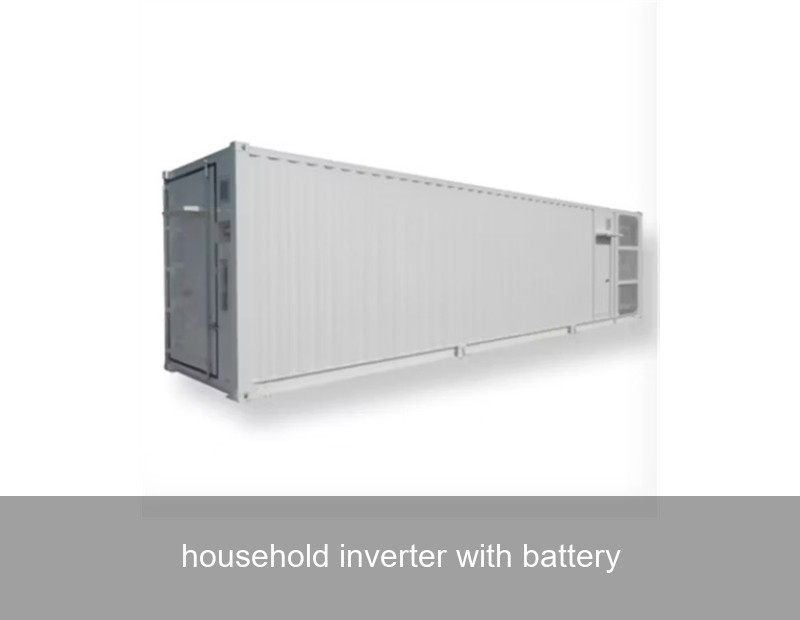
Have you ever watched your electricity meter spin and wondered, "Where is all my money going?" Or felt a flicker of anxiety during a storm warning, knowing the power could go out for hours? You're not alone. Across Europe and the United States, homeowners are facing two converging challenges: volatile energy prices and an aging electrical grid prone to disruptions. The solution, however, is shining brightly on rooftops and resting quietly in garages: the integrated household inverter with battery. This isn't just a backup power source; it's the brain and heart of a modern, self-sufficient home energy system.
The Power Shift Phenomenon: From Passive Consumer to Proactive Prosumer
For decades, our relationship with electricity was one-way. We consumed what the utility provided, paid the bill, and hoped the lights stayed on. The rise of affordable solar panels began to change that, allowing homes to generate their own power. But there was a catch: solar panels often produce the most energy in the middle of the day when you're least likely to be home. Without a way to store that excess, it gets sent back to the grid for often minimal compensation.
This is where the game-changing household inverter with battery comes in. Think of it as your personal energy manager. The solar panels are the producers. The battery is the savings account. And the inverter? It's the savvy financial advisor, constantly deciding the most economical and efficient way to use your energy. It converts the direct current (DC) from your panels and battery into the alternating current (AC) your home appliances use, and it intelligently routes power where it's needed—to your fridge, to charge the battery, or even back to the grid if it makes financial sense.

The Data Behind the Demand
The numbers tell a compelling story. According to the International Energy Agency (IEA), global residential battery storage capacity is set to skyrocket, with installations doubling in key markets like the United States and Germany in recent years. Why the surge? Let's break it down with a simple table:
| Driver | Impact on Homeowner | How a Battery Inverter Helps |
|---|---|---|
| Rising Electricity Prices | Unpredictable and increasing monthly bills. | Uses stored solar energy during peak price hours, slashing costs. |
| Grid Instability | More frequent/longer outages due to extreme weather. | Provides seamless backup power, keeping essentials running. |
| Changing Net Metering Policies | Less credit for solar energy exported to the grid. | Maximizes self-consumption, making every solar watt more valuable. |
| Desire for Sustainability | Goal to reduce carbon footprint. | Enables higher use of renewable self-generated energy, often exceeding 80%. |
Key Components Breakdown: More Than Just a Box
When you invest in a household inverter with battery, you're getting a sophisticated ecosystem. Understanding the parts helps you appreciate the whole.
- The Hybrid Inverter: This is the master controller. Modern versions like Highjoule's Harmony Series are "hybrid" because they can connect to both solar panels and a battery bank simultaneously. They manage the flow of energy with millisecond precision.
- The Battery Pack: Typically lithium-ion (like LiFePO4 for safety and longevity), this is your energy reservoir. Capacity is measured in kilowatt-hours (kWh). A 10-15 kWh battery can cover critical loads in a home for a full day or more.
- The Energy Management System (EMS): The smart software. It learns your consumption patterns, considers weather forecasts, and can be programmed to respond to time-of-use electricity rates, automatically optimizing for savings and resilience.
- Safety & Grid Interface: Critical components that ensure safe operation, prevent islanding (sending power to a downed grid), and meet all local utility regulations.
Real-World Case Study: The Müller Family in Bavaria, Germany
Let's move from theory to practice. The Müller family lives in a suburban home near Munich. In 2021, they installed a 8 kW solar array. While it cut their summer bills, they still bought 60% of their power from the grid, especially in winter evenings. In early 2023, they added a household inverter with battery system—specifically, a Highjoule Harmony 10.0 inverter paired with a 13.5 kWh Valor LFP battery.
- Grid Independence: Their self-consumption of solar power jumped from ~40% to 92%.
- Financial Savings: Their annual electricity expenditure (after the system payment) fell by €1,850. With Germany's high per-kWh costs, the system's payback period is projected to be under 7 years.
- Resilience: During a regional grid outage in December 2023, their home maintained power for 22 hours on battery alone, with the solar panels recharging the system during the day.

"It's not just about the savings," says Frau Müller. "It's the peace of mind. We're no longer stressed by news of energy price hikes or winter storms. Our home is its own power station." This case mirrors findings from the U.S. Department of Energy's Solar Energy Technologies Office, which highlights storage as critical for maximizing solar value.
Choosing the Right System: What to Look For
Not all systems are created equal. As you evaluate a household inverter with battery, consider these factors:
- Efficiency: Look for a round-trip efficiency (AC->battery->AC) above 94%. Highjoule's systems, for instance, achieve up to 96.5%, meaning very little energy is lost in the storage process.
- Scalability: Can you add more battery capacity later if your needs change (e.g., buying an EV)? Modular designs are a future-proof advantage.
- Software & Monitoring: A user-friendly app that shows real-time energy flows, savings, and system health is non-negotiable for the modern homeowner.
- Warranty & Lifespan: Expect a battery warranty of at least 10 years or 10,000 cycles. The inverter should also have a robust warranty (often 10+ years).
Engineered for Real Life: Highjoule's Smart Solutions
At Highjoule, we've been engineering advanced energy storage solutions since 2005. We understand that a household inverter with battery must be more than a collection of components; it must be a reliable, intelligent partner for your home.
Our Harmony Series of hybrid inverters is designed for this exact purpose. They seamlessly integrate with our Valor lithium iron phosphate (LiFePO4) battery packs, known for their exceptional safety and long cycle life. What sets a Highjoule system apart is its Adaptive Learning EMS. This software doesn't just follow pre-set rules; it analyzes your historical usage, local weather patterns, and even real-time grid conditions to make the most economical decision every minute of the day. Whether you're on a complex time-of-use rate plan in California or seeking maximal self-sufficiency in rural Spain, the system configures itself for optimal performance.
For homeowners who already have solar, our systems can often be retrofitted as a storage-ready AC-coupled solution, protecting your initial investment while upgrading your home's energy intelligence. From initial consultation and custom design to professional installation and ongoing monitoring, Highjoule provides a complete service package for customers in Europe and North America.
The Future is Resilient and Decentralized
The trend is clear. The grid is evolving from a one-way highway into a networked community of millions of self-reliant "prosumer" homes. A household inverter with battery is the enabling technology for this transition. It turns your home into a node of stability, reducing strain on the public grid and accelerating the adoption of renewables. As noted by research from institutions like the National Renewable Energy Laboratory (NREL), distributed storage is a cornerstone of a decarbonized, resilient energy future.
So, the question isn't really if you should consider a home battery system, but when and which one. What would you do with a home that protects itself from blackouts, shields you from unpredictable price spikes, and actively reduces your environmental impact? The technology to make that a reality is here, and it's more accessible than you might think.
What's the first appliance you would want to keep running during a power outage, and how would knowing that your home could provide its own clean power change your sense of security?
 Inquiry
 Online Chat