


Container Photovoltaique: The Plug-and-Play Power Plant Revolutionizing Energy
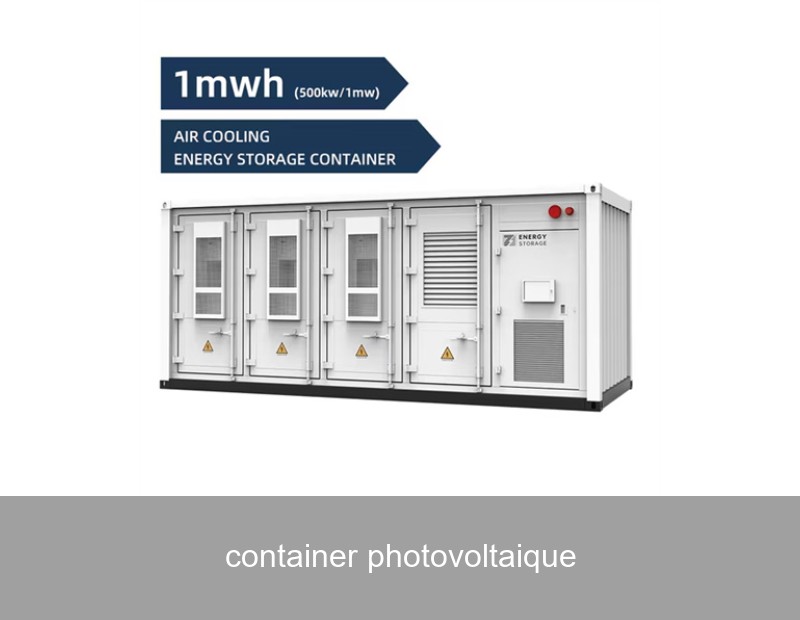
Imagine a standard shipping container arriving at your commercial site. Within days, it's silently converting sunlight into clean, resilient power for your operations. This isn't science fiction; it's the reality of the container photovoltaique—a pre-assembled, all-in-one solar solution that is dramatically simplifying and accelerating the adoption of renewable energy. For businesses, municipalities, and communities across Europe and the US facing grid instability, rising costs, and ambitious sustainability goals, these containerized power plants offer a compelling answer. Let's explore how this innovative technology works and why it's becoming the go-to choice for decentralized energy generation.
What is a Container Photovoltaique?
At its core, a container photovoltaique (often called a solar container or PV container) is a fully integrated solar power system housed within a modified, ruggedized shipping container. Think of it as a "power plant in a box." Unlike traditional solar installations that require extensive on-site construction, mounting, and wiring, these units are factory-built and tested. A typical unit includes:
- High-Efficiency Solar Panels: Mounted on a telescopic or foldable frame that deploys from the container.
- Integrated Energy Storage: Battery systems (typically lithium-ion) to store excess solar energy for use at night or during cloudy periods.
- Power Conversion & Management: Inverters, charge controllers, and the brain of the system—an advanced Energy Management System (EMS).
- Climate Control & Safety: Built-in thermal management, fire suppression, and security systems to ensure durability and safety.
This plug-and-play approach slashes installation time from months to weeks or even days, minimizing site disruption and providing immediate energy independence.

Image: A modern containerized solar solution, showcasing its compact and deployable design. Credit: Unsplash.
The Driving Forces: Why Now is the Time
The surge in demand for container photovoltaique solutions isn't accidental. It's a direct response to a perfect storm of market pressures and technological advancement.
Phenomenon: The Energy Trilemma
Organizations are caught in a trilemma: they need affordable, reliable, and clean energy. Grid power can be volatile and expensive, while traditional renewables require significant upfront commitment and space.
Data: The Compelling Numbers
According to the International Energy Agency (IEA), global renewable capacity additions jumped by almost 50% in 2023, with solar PV accounting for three-quarters of this growth. Furthermore, the levelized cost of electricity (LCOE) from solar has fallen by over 80% in the past decade. Containerized solutions capitalize on this by reducing "soft costs" like engineering and labor, which can constitute up to 65% of a traditional project's cost in the US and Europe.
Insight: Mobility as a Strategic Advantage
The true genius of the container photovoltaique lies in its mobility. If a business relocates, or if a temporary site (like a construction site or festival) needs power, the system can be packed up and moved. This transforms a capital expenditure into a transportable asset, future-proofing the investment.
Key Benefits & Technical Advantages
Let's break down the tangible advantages that make these systems so disruptive.
| Benefit | Description | Impact |
|---|---|---|
| Rapid Deployment | Pre-engineered, pre-wired, and pre-tested. Requires only a foundation pad, grid connection (or not, for off-grid), and fuel-free commissioning. | Operational in weeks, not months. Immediate ROI and energy cost savings. |
| Unmatched Resilience | Integrated storage provides backup power during grid outages. The system can operate in island mode, ensuring critical operations continue. | Business continuity and enhanced energy security, crucial for industrial processes and remote communities. |
| Scalability & Flexibility | Units can be combined in parallel to form larger microgrids. Configurations can be tailored to specific load profiles and space constraints. | Grow your power plant as your needs grow. Ideal for phased projects or expanding facilities. |
| Reduced Operational Complexity | Centralized, protected components and remote monitoring drastically reduce maintenance needs and on-site technical visits. | Lower lifetime operational costs (OPEX) and peace of mind through 24/7 system visibility. |
Highjoule's Integrated Solution: Beyond the Container
At Highjoule, with nearly two decades of expertise in advanced energy storage and power conversion, we see the container photovoltaique as more than just hardware. It's the physical embodiment of an intelligent energy ecosystem. Our H-PowerCube series is engineered for the demanding climates of Europe and North America, featuring:
- High-Density, Safe Battery Technology: Utilizing LFP (Lithium Iron Phosphate) chemistry for longer lifecycles and superior thermal stability.
- Adaptive Power Conversion: Our proprietary inverters seamlessly manage bi-directional flow between solar, storage, the grid, and the load.
- AI-Powered Energy Management: The Highjoule Neuron™ EMS platform is the true differentiator. It doesn't just react—it predicts. By analyzing weather forecasts, energy price signals (crucial in EU and US markets), and consumption patterns, it autonomously optimizes for cost savings or carbon reduction.
We provide a full-service partnership, from initial site assessment and financial modeling to commissioning, remote monitoring, and lifetime performance guarantees. Our goal is to deliver a worry-free, turnkey energy asset.

Image: Advanced energy management software, like Highjoule Neuron™, is critical for optimizing containerized systems. Credit: Unsplash.
A Real-World Case Study: Powering a Belgian Dairy Farm
The theory is powerful, but let's look at a concrete example. A medium-sized dairy cooperative in Flanders, Belgium, faced two challenges: volatile electricity prices impacting their milk cooling and processing costs, and a corporate mandate to reduce their carbon footprint. A traditional rooftop solar installation was complicated due to the heritage status of some barn roofs.
The Solution
Highjoule deployed a single H-PowerCube 100 unit on an unused corner of their property. The system features 85kW of solar capacity and 240kWh of integrated storage. It was connected to the farm's main distribution panel.
The Data & Results
- Deployment Time: On-site work completed in 5 days.
- Energy Independence: The system now covers 75% of the farm's annual electricity consumption.
- Financial Impact: By leveraging the Neuron™ EMS to maximize self-consumption and participate in a local flexibility market (selling stored power during peak price hours), the farm achieved a projected payback period of under 7 years. You can explore similar case studies on the U.S. Department of Energy's Solar Office website.
- Resilience: Critical cooling systems can now operate through grid outages, preventing spoilage.
This case highlights how a container photovoltaique provides a practical, non-intrusive, and financially savvy path to sustainability for agribusiness.
The Future of Modular Energy
The trajectory is clear. As energy systems become more decentralized and digital, the modular, intelligent container photovoltaique is set to play a pivotal role. We are moving towards networks of these autonomous units forming resilient community microgrids, supporting grid stability, and democratizing access to clean power. Research into next-generation batteries and AI, like that published by institutions such as the Nature Energy journal, will only enhance their capabilities.
For a facility manager, a factory owner, or a town planner, the question is no longer just "Should we go solar?" but rather, "What is the most agile, resilient, and intelligent way to harness the sun for our specific needs?" Could a containerized solution be the key to unlocking your energy independence and sustainability goals faster than you thought possible?
 Inquiry
 Online Chat