


Conversor para Paneles Solares: Your Guide to Choosing the Right Solar Converter
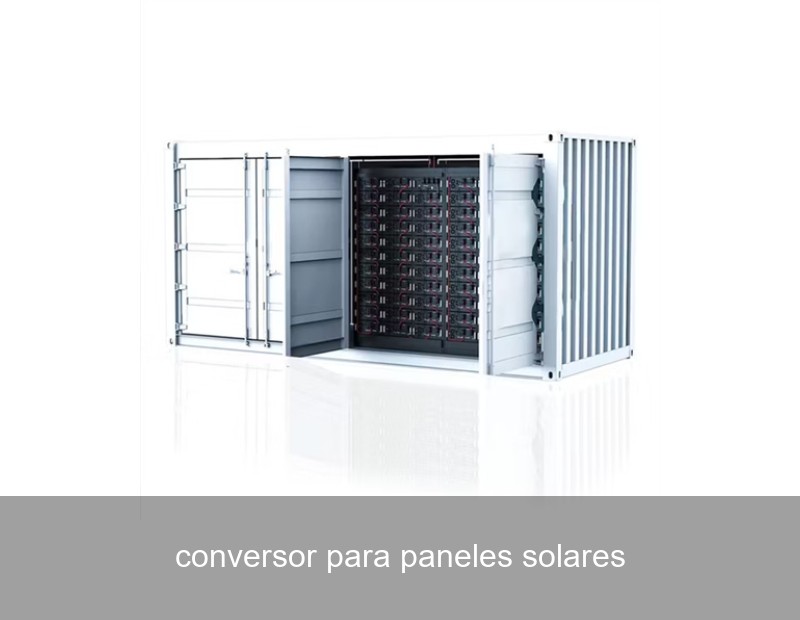
You've made the smart decision to invest in solar panels. You see them on rooftops everywhere, from sunny California to the historic neighborhoods of Lisbon. But here's a question that often puzzles new adopters: how does the DC electricity my panels produce actually become usable AC power for my home or business? The unsung hero making this possible is the conversor para paneles solares, more commonly known as a solar inverter or converter. Think of it as the sophisticated "brain" and "translator" of your photovoltaic (PV) system. Without a high-quality converter, the energy harvested from the sun simply can't power your appliances, charge your EV, or feed back into the grid. As a product technology expert at Highjoule, I've seen firsthand how the right converter choice is the single most critical factor in determining your system's efficiency, reliability, and long-term return on investment.
The Three Main Types of Solar Converters: String, Micro, and Hybrid
Not all solar converters are created equal. The technology has evolved dramatically to meet different needs and challenges. Let's break down the three primary architectures.
String Inverters: The Traditional Workhorse
String inverters are the most established type. Here, panels are connected in a series "string," and the combined DC output is fed to a single, centrally located inverter. It's a cost-effective and reliable solution for installations where all panels receive consistent, unshaded sunlight throughout the day.
- Pros: Lower cost per watt, simple installation and maintenance, proven track record.
- Cons: The entire string's performance is limited by the lowest-performing panel (the "Christmas light effect"). Not ideal for complex roofs with shading.
Microinverters: The Panel-Level Optimizers
Microinverters represent a decentralized approach. A small inverter is attached to each individual solar panel, converting DC to AC right at the source.
- Pros: Maximizes energy harvest from each panel, ideal for shaded or multi-orientation roofs. Enhanced system monitoring per panel.
- Cons: Higher initial equipment cost. Maintenance on rooftop units can be more complex.

Image: Systems with microinverters excel on complex roof designs. Source: Unsplash
Hybrid or Battery-Ready Inverters: The Future-Proof Choice
This is where the industry is rapidly heading. A hybrid inverter is a multi-talented device that not only converts DC from your panels to AC but is also designed to seamlessly integrate with a battery storage system. It can manage bidirectional energy flow, charging batteries with excess solar and discharging them when needed. This capability is central to Highjoule's integrated energy solutions. Our HPS Series Hybrid Power Systems are built around advanced hybrid converters that act as the central command unit, intelligently managing energy between solar arrays, battery storage, the grid, and your home's loads. This isn't just an inverter; it's an energy management system.
Key Factors in Choosing Your Solar Converter
Selecting the right converter goes beyond just type. Here are the technical and practical considerations our engineers focus on.
| Factor | Why It Matters | What to Look For |
|---|---|---|
| Efficiency | Directly impacts how much of your harvested sunlight becomes usable electricity. A 2% efficiency gain can yield significant extra energy over 25 years. | Peak efficiency of 97% or higher. Look at both "peak" and "weighted" (CEC or EU) efficiency ratings. |
| Warranty & Reliability | Inverters are the most likely component to need service. A strong warranty indicates manufacturer confidence. | Standard warranties of 10-12 years, extendable to 20-25 years. Robust design for outdoor use (high IP rating). |
| Grid Services & Compliance | Your system must safely connect to the local grid and may need to provide stability functions. | Certification for your region (UL 1741 in the US, VDE-AR-N 4105 in Germany). Features like frequency-watt response or voltage support. |
| Monitoring & Smart Features | Knowledge is power. Detailed monitoring helps you optimize consumption and identify issues. | User-friendly apps, real-time energy flow data, alerts, and integration with smart home systems. |
Case Study: Maximizing ROI for a Bavarian Dairy Farm
Let's move from theory to practice with a real example from our European operations. A family-run dairy farm in Bavaria, Germany, faced two challenges: volatile energy costs and the need for 100% reliable cooling for their milk storage. Their existing 50 kW rooftop solar system used a basic string inverter, but shading from a silo and seasonal roof snow caused significant production dips.
The Solution: Highjoule's team recommended a retrofit upgrade to a distributed power electronics architecture. We installed power optimizers on every panel (mitigating the shading/snow issues) paired with a high-efficiency string inverter. Crucially, we integrated a Highjoule HES 30 kWh battery storage system managed by a smart hybrid converter.
The Data-Driven Results (after 12 months):
- Energy Self-Consumption: Increased from 35% to over 80%.
- Energy Bill Reduction: Total grid electricity costs reduced by 92%, despite the farm's operations expanding.
- Reliability: The battery backup provided seamless power during two grid outages, preventing spoilage of thousands of liters of milk.
- ROI: Projected payback period of 6-7 years, thanks to Germany's EEG (Renewable Energy Act) incentives for self-consumption and the avoided cost of a diesel backup generator.
This case highlights that the optimal conversor para paneles solares isn't always a single device; it can be a synergistic system of components designed for a specific use case.
Future-Proofing Your System: The Role of Smart Converters
The energy landscape is shifting from one-way consumption to two-way, interactive "prosumer" models. Your solar converter is the gateway to this future. Modern smart inverters enable:
- Vehicle-to-Grid (V2G) Integration: Your future electric vehicle could act as a backup battery for your home.
- Virtual Power Plants (VPPs): Aggregators can combine the power of thousands of home systems to support the grid during peak demand, potentially earning you revenue. A study by the National Renewable Energy Lab (NREL) explores this potential in depth.
- Advanced Time-of-Use Management: The converter can be programmed to run non-essential loads or charge batteries only when solar production is high or grid rates are low.
At Highjoule, our EnergyOS software platform turns our hybrid converters into intelligent energy routers, making these advanced scenarios a simple, user-controllable reality today.

Image: A modern home energy system with storage and monitoring. Source: Unsplash
Making the Right Choice for Your Energy Goals
So, how do you navigate this crucial decision? Start by asking yourself and your installer these questions: Is my roof prone to shading? Do I experience frequent short grid outages? What are my local net metering or feed-in-tariff policies? (For instance, rules are changing in markets like California's NEM 3.0, making storage more valuable). Am I planning to buy an electric vehicle in the next few years?
The conversation about a conversor para paneles solares is ultimately a conversation about control—over your energy costs, your carbon footprint, and your resilience. It's about choosing a component that won't become obsolete as energy technology advances.
Given your unique energy profile and future aspirations, which energy challenge—maximizing self-consumption, ensuring backup power, or preparing for electric vehicle integration—is the most pressing for you to solve with your solar investment?
 Inquiry
 Online Chat