


Hybrid Systems in Renewable Energy: The Future of Power is Integrated
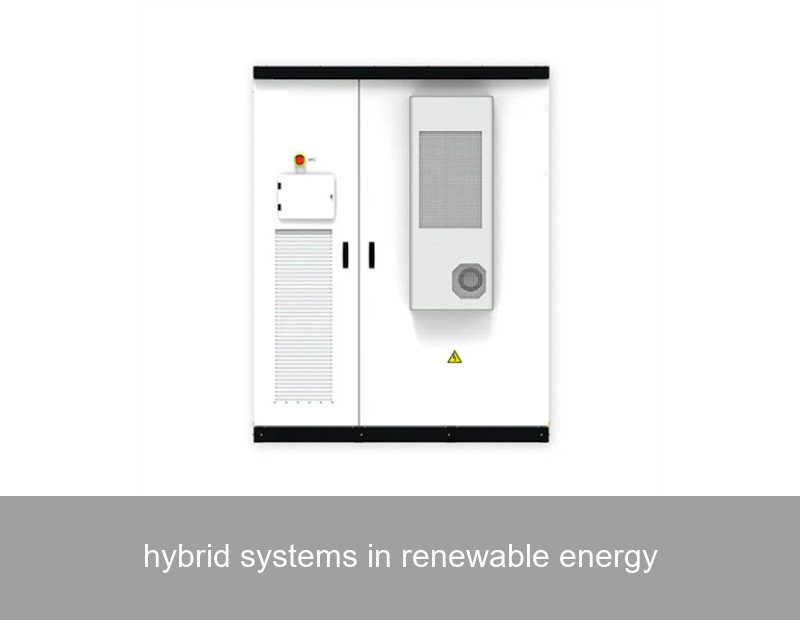
Table of Contents
- The Renewable Energy Dilemma: Sun Doesn't Always Shine, Wind Doesn't Always Blow
- What Are Hybrid Renewable Energy Systems? A Simple Breakdown
- The Data: Why Hybrid Systems Are Outperforming Standalone Solutions
- A Real-World Case: Powering a German Industrial Park
- Key Components of a Modern Hybrid Energy System
- Highjoule's Intelligent Approach to Hybrid Systems
- The Future Landscape: Microgrids and Energy Independence
You've likely seen the headlines: solar and wind power are breaking records, and the transition to clean energy is accelerating. But if you're a business owner, facility manager, or even a homeowner investing in renewables, you've probably also encountered a frustrating reality. Your solar panels produce a surplus at noon but nothing at night. Your wind turbine is idle on calm days. This intermittency is the single greatest challenge for a grid powered by nature. The solution? Hybrid systems in renewable energy. By intelligently combining multiple generation sources with advanced storage, these systems don't just generate power—they deliver reliable, resilient, and cost-effective energy. Let's explore how this integrated approach is redefining our energy future.
The Renewable Energy Dilemma: Sun Doesn't Always Shine, Wind Doesn't Always Blow
Renewable energy sources like solar PV and wind are fantastic—until they're not. Their output is variable and often doesn't align with when we need electricity most (think evenings when solar production plummets but demand remains high). This creates a two-fold problem: curtailment (wasting excess energy) and reliability gaps (needing backup from fossil fuels).
This is more than a technical hiccup; it's an economic and operational hurdle. For a commercial operation, an unexpected power dip can mean ruined inventory or halted production. For the grid at large, managing these fluctuations becomes increasingly complex and expensive as renewable penetration grows. The question becomes: how do we capture the clean energy bounty and make it available on-demand?

The answer lies in moving from single-source thinking to a systems-based approach. Enter the hybrid renewable energy system.
What Are Hybrid Renewable Energy Systems? A Simple Breakdown
At its core, a hybrid system combines two or more renewable energy sources—typically solar and wind—with an energy storage system (ESS), usually battery-based. A sophisticated energy management system (EMS) acts as the "brain," orchestrating the entire operation.
Think of it like a well-managed household budget:
- Solar and Wind are your income streams (irregular but substantial).
- The Battery Storage is your savings account (storing surplus for lean times).
- The Energy Management System is your financial planner (deciding when to spend, when to save, and when to draw from the grid if needed).
This setup can operate connected to the main grid (grid-tied) or independently (off-grid), providing unparalleled flexibility. The primary goal is to maximize self-consumption of renewable energy, minimize grid dependency, and ensure a constant, stable power supply.
The Data: Why Hybrid Systems Are Outperforming Standalone Solutions
The value proposition of hybrid systems isn't theoretical; it's backed by compelling data. According to a landmark study by the National Renewable Energy Laboratory (NREL), hybrid power plants (combining generation with storage) can significantly increase the value and utilization of the generated electricity. The study found that co-locating storage with renewables can reduce grid integration costs and provide more predictable power output.
| Metric | Standalone Solar PV | Hybrid (Solar + Storage) |
|---|---|---|
| Capacity Factor (Effective Use) | ~20-25% | Can be boosted to 50%+ with storage dispatch |
| Energy Self-Consumption | Typically 30-50% (without storage) | 80%+ |
| Grid Dependency During Peak Hours | High | Low to None |
| Ability to Provide Grid Services | Limited | High (Frequency regulation, peak shaving) |
For businesses, this translates directly to the bottom line: reduced peak demand charges, income from grid services, protection against volatile energy prices, and enhanced sustainability credentials.
A Real-World Case: Powering a German Industrial Park
Let's look at a concrete example from Bavaria, Germany. A mid-sized manufacturing park with high daytime energy consumption invested in a 2 MW solar carport system. While it cut their daytime grid draw, they still faced high costs in the early evening and on cloudy days.
Their solution was a turnkey hybrid system integration:
- Existing: 2 MW Solar PV Array
- Added: 1.2 MWh Highjoule CubeStack™ Battery Energy Storage System (BESS)
- Added: Highjoule Neuron™ Energy Management Platform
The results after one year of operation were striking:
- Self-Consumption of Solar Energy: Increased from 48% to 94%.
- Peak Grid Demand (Peak Shaving): Reduced by 68%, saving tens of thousands in annual demand charges.
- Grid Stability: The system now provides automatic frequency response to the local grid operator, creating a new revenue stream.
- CO2 Reduction: Increased by an additional 220 tonnes annually.
This case exemplifies the transformative power of hybridization. It's not about replacing one asset with another; it's about making all assets work smarter together.
Key Components of a Modern Hybrid Energy System
Building a reliable hybrid system requires more than just connecting equipment. It requires seamless integration of core components:
1. Generation Mix (Solar PV, Wind, others)
Diversifying sources smooths out generation profiles. Solar peaks midday; wind often picks up in the evening or winter. Together, they provide a more consistent baseload.
2. The Storage Backbone: Battery Energy Storage System (BESS)
This is the heart of the hybrid system. Modern lithium-ion batteries, like those used in Highjoule's systems, offer high energy density, rapid response, and long cycle life. The BESS stores any excess generation for later use.
3. The Intelligence: Energy Management System (EMS)
This software platform is the command center. A top-tier EMS like Highjoule's Neuron™ uses AI and real-time data to make millisecond decisions: store energy, power the load, sell to the grid, or provide grid support—all while optimizing for cost and efficiency.
4. Power Conversion System (PCS)
This critical hardware converts DC power from solar panels and batteries to AC power for your facility and the grid, and vice-versa for charging. Its efficiency and reliability are paramount.

Highjoule's Intelligent Approach to Hybrid Systems
At Highjoule, with nearly two decades of experience since 2005, we view hybrid systems as the default standard for modern energy solutions. Our philosophy is based on intelligent integration, not just assembly.
Our product suite is designed specifically for this purpose:
- Highjoule CubeStack™ BESS: Our modular, containerized battery systems offer scalable storage from 100 kWh to multi-MWh projects. They feature built-in safety systems, thermal management, and are designed for seamless coupling with new or existing solar/wind farms.
- Highjoule Neuron™ EMS: This proprietary platform is what sets our systems apart. It doesn't just manage energy flows; it learns your consumption patterns, forecasts weather and generation, and optimizes for multiple economic objectives simultaneously (e.g., minimizing costs while maximizing self-sufficiency).
- Highjoule Integration Services: Our team of experts handles the entire process—from feasibility study and system design to grid compliance, installation, and long-term performance monitoring. We ensure your hybrid system is a cohesive, high-performing asset.
For a dairy farm in California combining agrivoltaics with storage, or a remote microgrid in Scandinavia using wind, solar, and storage, Highjoule provides the unified technology and expertise to make hybrid energy simple, reliable, and profitable.
The Future Landscape: Microgrids and Energy Independence
The logical evolution of the hybrid system is the renewable-powered microgrid. These are self-sufficient energy islands that can disconnect from the main grid ("island mode") during outages or price spikes, powered entirely by their hybrid renewable core. This is a game-changer for resilience.
As noted by the International Energy Agency (IEA), the growth of variable renewables makes flexibility solutions like storage and hybrid plants essential for energy security. The future grid will be a network of interconnected, intelligent hybrid systems and microgrids.
The journey doesn't stop at technology. Policy and markets in Europe and the U.S. are increasingly rewarding flexibility. Programs for frequency regulation, capacity markets, and demand response turn your hybrid system from a cost-saver into a revenue generator.

So, as you consider your next step in energy—whether it's achieving net-zero goals, locking in long-term energy costs, or simply ensuring your operations never go dark—ask yourself this: Is it time to think beyond a single source and explore how an intelligently integrated hybrid system could transform your energy profile?
 Inquiry
 Online Chat