


Understanding the True Cost of a 1MW Solar Energy Storage Cabinet
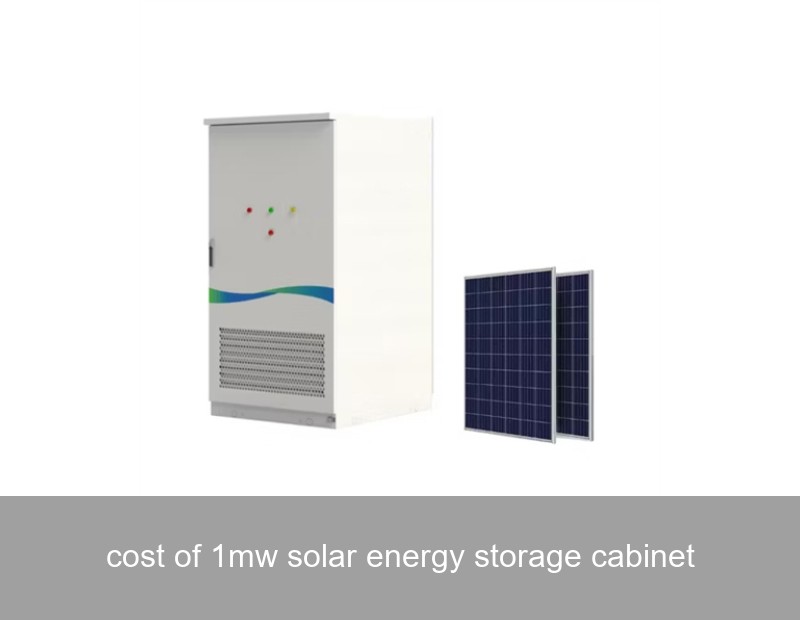
If you're exploring large-scale solar energy storage, you've likely asked the crucial question: "What is the actual cost of a 1MW solar energy storage cabinet?" As a product technology expert at Highjoule, I hear this daily. The answer isn't a simple figure on a price tag. It's a nuanced calculation involving hardware, intelligence, and long-term value. This guide will break down the components, reveal the hidden factors, and show you how to evaluate this critical investment for your commercial, industrial, or microgrid project.
Table of Contents
The Price Puzzle: More Than Just a Cabinet
Let's address the elephant in the room first. When industry reports cite average energy storage system costs—like the U.S. National Renewable Energy Laboratory's (NREL) 2023 figures—they're often referring to a dollar-per-kilowatt-hour ($/kWh) metric for the battery pack itself. For a 1MW system, this is just the starting point. Think of "cost" in two layers: the Capital Expenditure (CapEx)—the upfront price of the physical cabinet and its components—and the Levelized Cost of Storage (LCOS)—the total cost over the system's lifetime, factoring in performance, degradation, and operational savings. A cheaper cabinet with lower efficiency and shorter lifespan often has a much higher LCOS, making it a poor investment.
Key Cost Components of a 1MW Storage System
Dismantling a 1MW solar energy storage cabinet reveals several core cost drivers. Understanding these helps you compare quotes intelligently.
1. The Battery Cells & Module Assembly
This is typically the largest single cost block, accounting for 50-70% of the hardware cost. The chemistry (e.g., Lithium Iron Phosphate/LFP is dominant for stationary storage due to safety and cycle life), cell quality, and manufacturing origin significantly influence price. A 1MW/2MWh system requires a massive number of these cells integrated into modules.

Image Source: Unsplash - Representative image of battery cell technology.
2. The Battery Management System (BMS) & Power Conversion System (PCS)
Here's where "smart" storage separates from a simple battery box. The BMS is the brain, ensuring safety, balancing cells, and monitoring health. The PCS (or inverter) is the muscle, converting DC battery power to AC grid power. The sophistication of these systems dramatically impacts efficiency, responsiveness, and grid-support capabilities. Cutting corners here is risky.
3. Thermal Management, Safety, and Enclosure
A 1MW system generates heat. An effective thermal management system (liquid cooling is becoming standard for large cabinets) ensures longevity and safety. The cabinet itself must be robust, with proper fire suppression and containment. These are non-negotiable costs for a reliable, insurable installation.
4. System Integration & Software Intelligence
This is the hidden gem—or the missing piece. The cost includes the energy management system (EMS) software that decides when to charge, discharge, or hold. Can it participate in grid services? Does it use AI for predictive optimization? This software layer is what turns a capital expense into a revenue-generating or cost-saving asset.
| Cost Component | Approx. % of Hardware Cost | What It Affects |
|---|---|---|
| Battery Cells & Modules | 50-70% | Energy capacity, cycle life, safety |
| BMS & PCS (Inverter) | 15-25% | Efficiency, power quality, grid interaction |
| Thermal Mgmt. & Enclosure | 10-15% | Longevity, safety, operational range |
| Integration & Software | 5-10% | Operational intelligence, ROI, asset value |
The Highjoule Advantage: Where Value Outweighs Cost
At Highjoule, we engineer our 1MW+ GridSynergy MegaCabinet solutions with a total lifecycle perspective. Our approach often results in a higher initial CapEx but a significantly lower LCOS, delivering greater net value. Here’s how:
- Proprietary Cell Screening & Pack Design: We use top-tier LFP cells but subject them to rigorous grading. Our pack design ensures even thermal distribution, reducing stress and extending calendar life beyond standard warranties.
- Advanced Liquid Cooling & Safety: Our closed-loop liquid cooling system maintains optimal temperature, reducing degradation. Coupled with a multi-stage fire detection and suppression system, it provides peace of mind that is priceless.
- AI-Powered Energy Management Platform (JouleMind): This is our crown jewel. JouleMind doesn't just react; it forecasts weather, energy prices, and load patterns. For a factory in Germany or a microgrid in California, it autonomously optimizes for self-consumption, peak shaving, or even frequency regulation revenue, as permitted. This software is continuously updated, increasing your asset's value over time.
Therefore, when evaluating the cost of a 1MW solar energy storage cabinet, the critical question shifts from "What is the price?" to "What is the net value over 15 years?"
Real-World Case Study: A German Manufacturing Plant
Let's ground this in reality. In 2023, Highjoule deployed a 1.5MW/3MWh GridSynergy system for a mid-sized automotive parts manufacturer in Bavaria. The challenge: high peak demand charges and volatile daytime energy prices despite a large rooftop solar array.
- Goal: Reduce peak grid draw, maximize solar self-consumption, and provide backup for critical processes.
- Highjoule Solution: Two integrated 750kW cabinets with JouleMind software, configured for peak shaving and time-of-use optimization.
- Data & Results (First 12 Months):
- Peak Demand Charges Reduced: By 28%, saving approximately €65,000 annually.
- Solar Self-Consumption Increased: From 35% to over 70%, reducing grid purchases.
- System Availability: 99.8%, thanks to predictive maintenance alerts from the platform.
The project's payback period, factoring in German energy policy incentives, is projected at under 7 years. The plant manager's feedback was telling: "We chose Highjoule not for the lowest bid, but for the clearest roadmap to savings and resilience. The intelligence of the system is what makes the economics work."

Image Source: Unsplash - Representative image of a commercial/industrial facility with solar panels.
Making the Investment: Key Questions to Ask
As you move forward, arm yourself with these questions for any vendor discussing a 1MW storage cabinet:
- Beyond the cabinet price, what is the all-in installed cost, including commissioning and grid connection?
- What is the projected round-trip efficiency and annual degradation rate under my specific duty cycle? (E.g., Highjoule guarantees < 2% annual degradation under defined conditions).
- How does the EMS software create value? Can it integrate with my existing solar inverters and building management system?
- What is the total cost of ownership over 10-15 years, including expected service and potential performance loss?
The journey to a resilient, cost-effective energy future starts with looking beyond the sticker price. It's about partnering with a provider whose technology is built for endurance and intelligence. At Highjoule, we believe the most expensive system is the one that fails to deliver on its promise.
What specific energy challenge—be it demand charges, renewable integration, or backup power—is driving you to consider a 1MW storage solution today, and how can we help you model its true economic potential?
 Inquiry
 Online Chat