


Solar Battery Calculations: The Key to Unlocking True Energy Independence
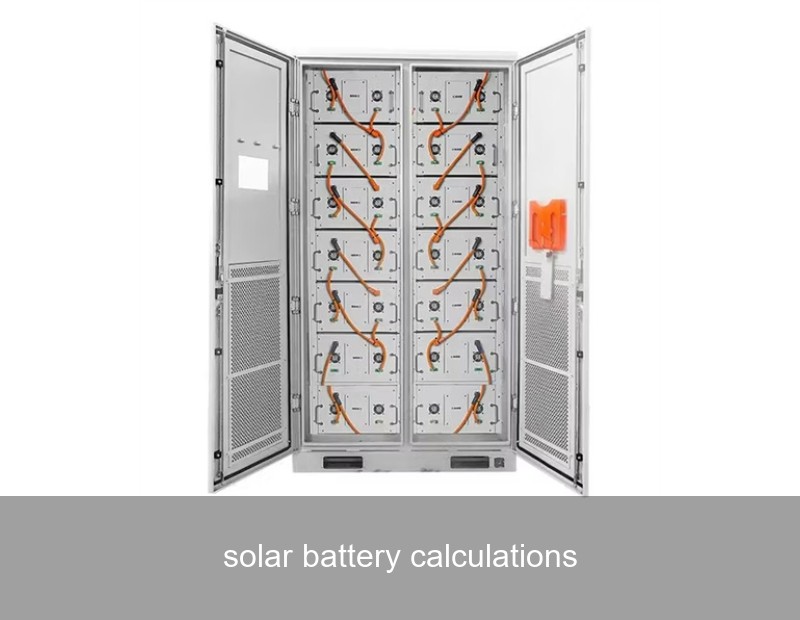
You've made the smart decision to invest in solar panels. The sun is shining, your panels are generating clean energy, and you're feeling good about reducing your carbon footprint. But then evening comes, or a cloudy day rolls in, and you find yourself pulling just as much power from the grid as before. This common experience highlights a critical missing piece: solar battery storage. The real power of your solar investment isn't fully realized until you can store that daytime sunshine for use anytime. The bridge between a standard solar setup and complete energy resilience is built on one essential task: accurate solar battery calculations. Getting this math right determines whether your system powers you through the night or leaves you in the dark.
Table of Contents
Why Calculations Matter: Beyond the Basics
Think of solar battery calculations as the architectural blueprint for your personal energy ecosystem. An undersized battery bank will leave you constantly reliant on the grid, eroding your expected savings. An oversized system, while perhaps ensuring supply, leads to unnecessary upfront costs and a longer payback period. It's not just about capacity; it's about aligning technology with your unique energy lifestyle.
For over 18 years, Highjoule has been at the forefront of this complexity. We've seen that the most successful installations—those that deliver promised ROI and resilience—are rooted in meticulous, personalized solar battery calculations. This process considers not just kilowatt-hours (kWh), but also peak power demands, seasonal weather patterns, and future energy needs.
The 5 Core Calculations for Your Solar Battery System
Let's break down the essential math. While professional assessment is crucial, understanding these components empowers you to make informed decisions.
1. Daily Energy Consumption (Load Profile)
This is your starting point. You need to know not just how much energy you use, but when you use it. Review your utility bills for your average daily kWh use, but then dig deeper. When does your consumption spike? Is it in the morning when appliances kick on, or in the evening when lighting, TV, and cooking converge?
- Tool: Smart meter data or a home energy monitor.
- Goal: Identify the amount of energy you need to shift from grid-purchase to battery-supply.
2. Usable Battery Capacity & Depth of Discharge (DoD)
Not all battery capacity is created equal. If a battery is rated at 10 kWh, you likely cannot use all 10 kWh without damaging it. The Depth of Discharge (DoD) is the percentage of the battery that can be safely used. A 10 kWh battery with a 90% DoD has 9 kWh of usable energy.
| Battery Type | Typical Recommended DoD | Impact on Calculations |
|---|---|---|
| Lithium Iron Phosphate (LFP) | 90-100% | More usable energy per unit of rated capacity. |
| Older Lithium-Ion | 80-90% | Requires a larger rated capacity for the same usable energy. |
| Lead-Acid | ~50% | Significantly larger system needed, affecting space and cost. |
Highjoule's EnerCore LFP series utilizes stable Lithium Iron Phosphate chemistry, allowing for a consistent 100% Depth of Discharge. This means what you see on the label is exactly what you get to use, simplifying your solar battery calculations immensely.
3. Solar Production & Energy Autonomy Goals
How much of your daily consumption do you want the battery to cover? This is your energy autonomy target. Is it 70%, 90%, or 100%? Remember, aiming for 100% off-grid autonomy often requires a disproportionately large and expensive system due to rare, multi-day cloudy periods. Most homeowners target 70-90% self-sufficiency for optimal cost-effectiveness.
Calculation Tip: (Daily Consumption in kWh x Autonomy Target %) = Required Usable Battery Storage.
4. Inverter Power Rating (Continuous & Surge)
Capacity (kWh) is about energy quantity (like the size of a fuel tank). The inverter power rating (kW) is about energy flow rate (like the size of the fuel line). Can your system deliver enough power at once to run your refrigerator, air conditioner, and washing machine simultaneously? You must calculate your home's peak load.
- Continuous Power: Must meet the sum of running watts for appliances you use concurrently.
- Surge Power: Must handle the short, high burst from motors starting (e.g., AC compressors, well pumps).
5. System Efficiency & Round-Trip Losses
Energy is lost in the storage process—in converting DC to AC and back, and in battery chemistry. Typical round-trip efficiency for modern LFP systems is 90-95%. This must be factored in: if you need 10 kWh of energy at the outlet, the battery must store and deliver about 10.5 kWh.
Real-World Case Study: A German Household's Journey
Let's make this concrete. The Schmidt family in Bavaria, Germany, had a 8 kWp solar array but still imported 60% of their power after sunset. Their goal was to increase self-consumption and gain backup power for occasional grid outages.
- Data: Average daily use: 28 kWh. Evening/Night load: 12 kWh. Peak load (with heat pump): 7 kW.
- Initial DIY Calculation: They initially considered a 10 kWh battery (rated).
- Professional Assessment (with Highjoule's System Design Tool): Factoring in a 95% round-trip efficiency, a desired 90% evening autonomy, and the heat pump's 4 kW surge, the simple 10 kWh unit was insufficient.
- The Solution: A Highjoule EnerCore 13 system (13.3 kWh usable) paired with a PowerHub 8kW hybrid inverter. This provided the required energy buffer and met the peak/surge demands.
- Outcome: Post-installation, their grid import for the critical evening period dropped by over 95%. Their calculated payback period, considering rising German energy prices, fell to under 8 years.
Image: A clean, modern home battery installation similar to the Highjoule EnerCore system. Source: Unsplash
Beyond the Basics: Advanced Calculation Factors
For a truly optimized system, especially in variable climates like the Pacific Northwest or Mediterranean coasts, deeper analysis is key.
Weather & Seasonal Variance
Your solar production in December is not the same as in June. Robust solar battery calculations use annual production data, not just averages. Systems designed for year-round resilience often size the battery to cover consumption over several low-production days.
Future-Proofing
Are you planning an electric vehicle? A heat pump? Your future load profile should influence today's sizing. Modular systems, like Highjoule's EnerCore, allow for capacity expansion by simply adding more battery modules, protecting your initial investment.
Grid Services & Rate Arbitrage
In many US and European markets, you can earn revenue or savings by interacting with the grid. This might mean discharging to the grid during peak price periods (Time-of-Use arbitrage) or providing grid services. Calculations for these systems prioritize power (kW) output and cycle life, not just capacity. Highjoule's GridSync Intelligence platform automates this, maximizing your system's economic return based on real-time utility rates.
How Highjoule Simplifies Solar Battery Calculations
We believe this complexity shouldn't fall on your shoulders. That's why Highjoule builds intelligence into both our products and our process.
- Pre-Installation: Our proprietary Energy Profile Analyzer software, used by our certified partners, takes your utility data, location, and goals to generate a precise system specification. It handles the complex solar battery calculations for you, modeling performance across all seasons.
- In the Product: The EnerCore battery's 100% usable DoD removes a major variable. Our PowerHub Hybrid Inverter offers high surge power capabilities (often 2x continuous rating) to handle demanding starts without oversizing the entire system.
- Ongoing Optimization: Once installed, the GridSync platform continuously learns your usage patterns and adjusts charging/discharging strategies to evolving weather and tariff structures, ensuring your system always performs as calculated—or better.
For commercial and microgrid applications, our engineering team uses advanced modeling tools that consider three-phase power, demand charge management, and generator integration, providing a level of calculation depth trusted by utilities and businesses. You can explore the foundational importance of storage for grid stability from the U.S. Department of Energy.
 Image: A home with solar panels, the first step toward energy independence. Source: Unsplash
Your Path to Precision
The journey from a simple idea—"I want a solar battery"—to a system that delivers reliable, cost-saving power is paved with data. While the calculations we've outlined provide a framework, the nuance lies in the application to your specific home, business, and energy goals. A generic online calculator can't capture the unique profile of your life or business operations.
So, here is the most important question to consider as you move forward: What specific energy goal—be it total blackout protection, slashing your time-of-use charges, or maximizing your renewable footprint—is driving your interest in storage, and how will you measure its success?
Understanding your own metrics for success is the first step. The next is partnering with experts who can translate that goal into the precise solar battery calculations that guarantee it. We invite you to connect with a Highjoule Certified Installer who can turn this critical math into your personal energy solution.
 Inquiry
 Online Chat