


Understanding the True Cost to Install Solar Panels in Malaysia: A 2024 Guide for Homeowners and Businesses
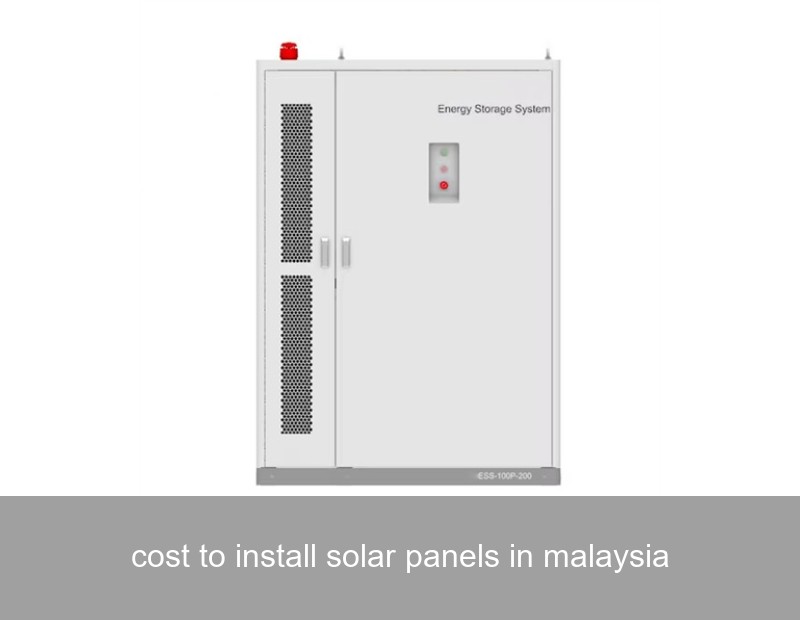
If you're considering solar energy in Malaysia, the first question is likely, "What's the cost to install solar panels in Malaysia?" It's a smart question, but the answer is more than just a single price tag. It's a journey from initial investment to long-term energy freedom. While Malaysia enjoys abundant sunshine, making it an ideal candidate for solar, the final cost is influenced by system size, technology, financing, and the quality of the solution you choose. As a global leader in advanced energy storage, Highjoule understands that a solar installation isn't just about panels on a roof; it's about creating a resilient, intelligent, and cost-effective energy ecosystem for decades to come.
Table of Contents
- Breaking Down the Cost: More Than Just Panels
- Key Factors Influencing Your Solar Panel Installation Price
- A Real-World Case: Residential Solar in Subang Jaya
- The Hidden Game-Changer: Adding Battery Storage
- How Highjoule's Expertise Elevates Your Malaysian Solar Project
- Is Your Roof Ready for an Investment That Pays You Back?
Breaking Down the Cost: More Than Just Panels
Let's demystify the cost structure. The total expense to install a solar photovoltaic (PV) system in Malaysia is typically quoted in RM per watt (RM/W) or as a total package price. For a standard residential system, prices can range from RM 18,000 to RM 50,000 or more, depending on scale. But what are you actually paying for?
- Solar Panels (Modules): The most visible component. Prices vary by efficiency and brand (monocrystalline panels are typically more efficient and cost slightly more).
- Inverter(s): The brain of the system, converting DC electricity from the panels to AC for your home. This is a critical component for system performance.
- Mounting System & Hardware: The racking that securely attaches panels to your roof, designed for local weather conditions.
- Installation & Labor: Professional design, wiring, and installation by certified technicians.
- Permits & Documentation: Costs associated with applying for net energy metering (NEM) with SEDA and local authority approvals.
- Optional - Battery Storage System: This is where true energy independence begins. While an added upfront cost, it dramatically increases self-consumption and provides backup power.
Key Factors Influencing Your Solar Panel Installation Price
Think of your solar installation like building a custom home. Several variables directly impact the final quote:
| Factor | Impact on Cost | Why It Matters |
|---|---|---|
| System Size (kWp) | Largest determining factor. Larger systems cost more upfront but have a lower cost per watt. | Based on your historical electricity consumption (check your TNB bill). |
| Roof Type & Condition | Complex roofs (multiple angles, skylights) or weak structures may require more labor and materials. | A site survey is essential to identify any needed reinforcements or special mounting. |
| Component Quality | High-efficiency panels and premium inverters (e.g., hybrid inverters) cost more but yield better long-term performance. | Quality components often come with longer warranties and better degradation rates. |
| Installation Company | Established, accredited companies may charge a premium for proven expertise and reliable after-sales service. | This is not an area to choose based on lowest bid alone. Quality installation prevents future issues. |
| Inclusion of Battery Storage | Adds significant upfront cost but transforms the system's value proposition. | Enables use of solar power at night, provides backup during grid outages, and maximizes ROI. |
A Real-World Case: Residential Solar in Subang Jaya
Let's look at concrete data. In 2023, a family in a double-story terrace house in Subang Jaya installed a 6.6 kWp solar PV system. Their average monthly electricity bill was RM 450. Their goal was to offset 80-90% of their daytime consumption.
- System Details: 18 units of 370W monocrystalline panels, paired with a 5kW string inverter.
- Total Installed Cost: Approximately RM 32,000 (after considering available incentives).
- Outcome: Post-installation, their monthly TNB bill was reduced to an average of RM 80-100, a saving of about RM 350-370 per month.
- Simple Payback Period: RM 32,000 / (RM 370 x 12 months) ≈ 7.2 years.
This is a solid return, but note: this system operates under Malaysia's Net Energy Metering (NEM) program. Excess energy is exported to the grid for credits. However, without batteries, they still rely entirely on the grid at night. What if they wanted true 24/7 solar usage and backup power? That's where the equation evolves.

Image Source: Unsplash - Representative image of a residential solar installation.
The Hidden Game-Changer: Adding Battery Storage
This is the critical insight many miss when evaluating the cost to install solar panels in Malaysia. A solar-only system is a great first step. But a solar-plus-storage system is a complete energy solution. Why? Because it allows you to store the excess solar energy you produce during the day and use it at night, dramatically increasing your self-consumption rate from maybe 30-40% to over 80%.
Imagine the Subang Jaya family adding a 10 kWh battery system. Their upfront cost increases, but their grid dependence at night plummets. They are now protected from grid outages and can better manage energy during peak tariff times if time-of-use rates are introduced in the future. The long-term financial and resilience benefits often outweigh the additional investment.
How Highjoule's Expertise Elevates Your Malaysian Solar Project
This is where Highjoule's global experience becomes directly relevant to your Malaysian solar journey. While we operate worldwide, our core technology principles apply universally: intelligence, efficiency, and sustainability.
For a Malaysian homeowner or business, partnering with a solar installer who utilizes Highjoule's integrated battery storage solutions means accessing:
- High-Efficiency Battery Systems: Our lithium iron phosphate (LiFePO4) based battery energy storage systems (BESS) are designed for safety, long cycle life (10,000+ cycles), and optimal performance in tropical climates.
- Intelligent Energy Management: The real magic is in the software. Our systems don't just store energy; they intelligently decide when to charge, discharge, or hold based on your usage patterns, weather forecasts, and grid conditions, maximizing your savings automatically.
- Scalable Architecture: Start with what you need and expand later. Our modular systems allow you to increase storage capacity as your family grows or your business expands.
- Reliability for Critical Loads: For businesses, a power outage can mean lost revenue. For families, it's a major inconvenience. Highjoule systems provide seamless backup power to keep essential appliances running.
When discussing your installation quote with a local provider, ask if they offer integrated, intelligent storage solutions like those from Highjoule. It transforms your solar array from a daytime supplement into your personal, 24-hour power plant.

Image Source: Unsplash - Example of a sleek, wall-mounted home battery storage unit.
Is Your Roof Ready for an Investment That Pays You Back?
So, we've moved beyond a simple number. The cost to install solar panels in Malaysia is an investment in a tangible asset that generates electricity—and financial returns—for 25 years or more. The key is to think long-term. Will a slightly cheaper system with lower-efficiency components save you more money over two decades than a robust, intelligently managed system with storage?
The energy landscape is shifting. As you evaluate proposals, consider this open question: In five years, will you value having merely reduced your bills, or will you value having taken definitive control of your energy costs, reliability, and sustainability? The initial cost difference may be far smaller than you think, especially when measured against decades of energy security.
 Inquiry
 Online Chat