


Understanding the Cost of Solar Panels in Sweden: A 2024 Investment Guide
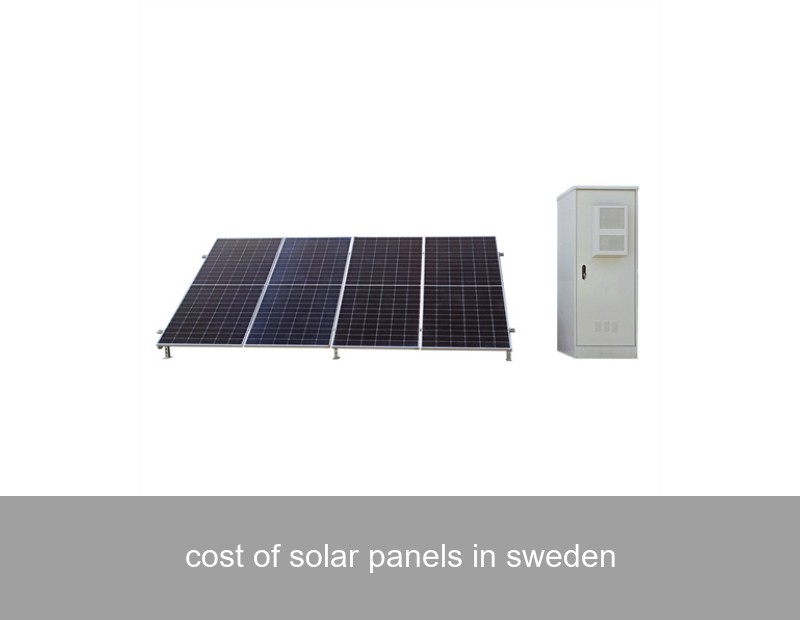
If you're a homeowner or business leader in Sweden, you've likely felt the pinch of electricity prices and the growing call for sustainability. The question isn't just *if* solar power is a good idea, but what is the real cost of solar panels in Sweden today, and what return can you expect on that investment? This guide cuts through the complexity. We'll explore the current price landscape, break down the factors that matter, and show you how the right technology—particularly advanced energy storage—is the key to maximizing your solar investment, making you less reliant on the grid and more in control of your energy future.
Table of Contents
- The 2024 Price Breakdown: What You Actually Pay For
- Key Factors Influencing Your Solar Panel Cost in Sweden
- Looking Beyond the Panels: The System That Powers Your Savings
- A Real Swedish Case Study: From Cost to Concrete Results
- Maximizing Your ROI: The Smart Storage Advantage
- Your Energy Independence Journey: What's the Next Step?
The 2024 Price Breakdown: What You Actually Pay For
When we talk about the "cost of solar panels," we're really discussing the price of a complete photovoltaic (PV) system. In Sweden for 2024, a typical residential installation ranges from 70,000 to 150,000 SEK before any subsidies. But what does that sum include? It's not just the panels on your roof.
- Solar Panels (Modules): Typically 25-35% of total cost. Prices have dropped dramatically globally, with efficient monocrystalline panels being the standard choice for Swedish conditions.
- Inverter(s): 10-15% of cost. This crucial device converts the DC power from your panels into usable AC power for your home.
- Mounting System & Hardware: 10-15% of cost. This must be robust to handle Swedish snow loads and weather.
- Installation & Labor: 20-30% of cost. Expertise is critical for optimal angle, safety, and long-term performance.
- Planning, Permits, & Grid Connection: 5-10% of cost. Administrative costs vary by municipality.
The real conversation starter, however, is the Levelized Cost of Energy (LCOE)—the total lifetime cost of your system divided by the energy it produces. For solar in Sweden, this figure has become highly competitive, often beating retail electricity prices over a 25-year lifespan. The Swedish Energy Agency (Energimyndigheten) regularly publishes data on energy costs, highlighting solar's increasing viability.

Image: A typical solar installation on a Swedish home. Credit: Unsplash.
Key Factors Influencing Your Solar Panel Cost in Sweden
Why does one quote differ from another? Several Sweden-specific factors are at play:
| Factor | Impact on Cost & Performance |
|---|---|
| System Size (kWp) | Larger systems have a lower cost per kWp due to economies of scale. Your roof size and energy consumption dictate this. |
| Panel Efficiency | High-efficiency panels (22%+) cost more upfront but produce more kWh per square meter—a key consideration for limited roof space. |
| Swedish Climate & Location | Southern Sweden enjoys more sun hours than the north, affecting annual yield. Snow reflection can sometimes boost production in winter! |
| Roof Type & Condition | A simple, south-facing tile roof is easier and cheaper to fit than a complex metal or green roof. |
| Battery Storage Integration | Adding storage increases initial cost but dramatically increases self-consumption and energy security. |
This last point is where the narrative shifts. The true value of your solar investment isn't fully realized if excess energy produced on a sunny summer day simply flows back to the grid for a modest credit. To truly tackle the cost of solar panels in Sweden, you must think about capturing and using that power on your terms.
Looking Beyond the Panels: The System That Powers Your Savings
A solar array is just one part of a modern energy ecosystem. The intelligence of the inverter and the capacity of the storage system determine how much of your self-generated power you actually use. This is where companies like Highjoule redefine the equation. As a global leader in advanced energy storage since 2005, we don't just see batteries; we see the brain of your personal energy grid.
Our Highjoule HPS Series for residential and commercial use is designed for the Nordic climate. These lithium iron phosphate (LiFePO4) battery systems are safe, have a long lifespan, and are coupled with an intelligent energy management system (EMS). This EMS doesn't just store energy; it learns your consumption patterns, integrates with real-time electricity prices (like spot prices in Sweden), and automatically decides when to store, use, or even sell back energy to maximize your economic return. By integrating a Highjoule system, you're not just buying solar panels—you're investing in a resilient, intelligent power plant for your property.
A Real Swedish Case Study: From Cost to Concrete Results
Let's move from theory to practice. Consider a real-world example: A medium-sized manufacturing workshop in Västra Götaland. Facing volatile energy costs and a desire to reduce their carbon footprint, they installed a 50 kW solar array in early 2022.
- Initial Challenge: Despite a large roof, over 60% of their solar generation was being exported to the grid during weekends and low-production hours, missing the opportunity to offset high-cost consumption during weekday mornings and evenings.
- Solution: In 2023, they integrated a Highjoule CIB-50 commercial battery storage system with advanced peak-shaving software.
- Data & Results:
- Self-Consumption Rate: Increased from ~40% to over 85%.
- Grid Demand Charges: Reduced by approximately 70% by avoiding short, high-power draws from the grid.
- Payback Period: The combined solar+storage system's payback time was projected to improve by an estimated 4 years compared to solar alone, thanks to optimized arbitrage and demand charge management.
This case, documented in part through public reports from the Regional Energy Agencies in Sweden, illustrates the transformative impact of pairing generation with smart storage. The upfront cost of solar panels in Sweden was a gateway, but the storage system unlocked the full financial and operational value.

Image: A modern commercial battery storage installation. Credit: Unsplash.
Maximizing Your ROI: The Smart Storage Advantage
So, how do you ensure your investment is sound? Think in terms of total energy independence, not just panel price per watt.
- Calculate Total Energy Needs, Not Just Roof Size: Work with an installer who models your year-round consumption, not just summer peaks. Highjoule's partner network specializes in this holistic analysis.
- Design for Storage from the Start: Even if you phase the purchase, ensure your inverter and system architecture are "storage-ready." This avoids costly retrofits later.
- Leverage Swedish Support: Explore opportunities like investment grants for energy storage from the Swedish Energy Agency, which can significantly offset the cost of a battery system.
- Choose Technology Built for the Long Haul: In energy storage, safety, cycle life, and warranty matter. Highjoule's systems are engineered for decades of reliable service in demanding conditions, protecting your investment's core.
The goal is to create a system where your cost of solar panels in Sweden becomes a historical footnote in your journey to near-total energy self-sufficiency. Your solar panels generate the fuel, and a Highjoule intelligent storage system ensures not a single kilowatt-hour is wasted, giving you peace of mind and price predictability.
Your Energy Independence Journey: What's the Next Step?
The landscape of energy is shifting from centralized consumption to decentralized production and control. The initial investment in solar technology is just the beginning of that story. With the right partner and the right integrated system, you transform from a passive consumer into an active manager of your clean, affordable, and reliable power.
What specific energy challenge—be it unpredictable bills, grid instability, or a sustainability target—is motivating you to look into the true cost and potential of solar power for your Swedish home or business today?
 Inquiry
 Online Chat