


Why the CATL Energy Storage System is Reshaping Global Power Management
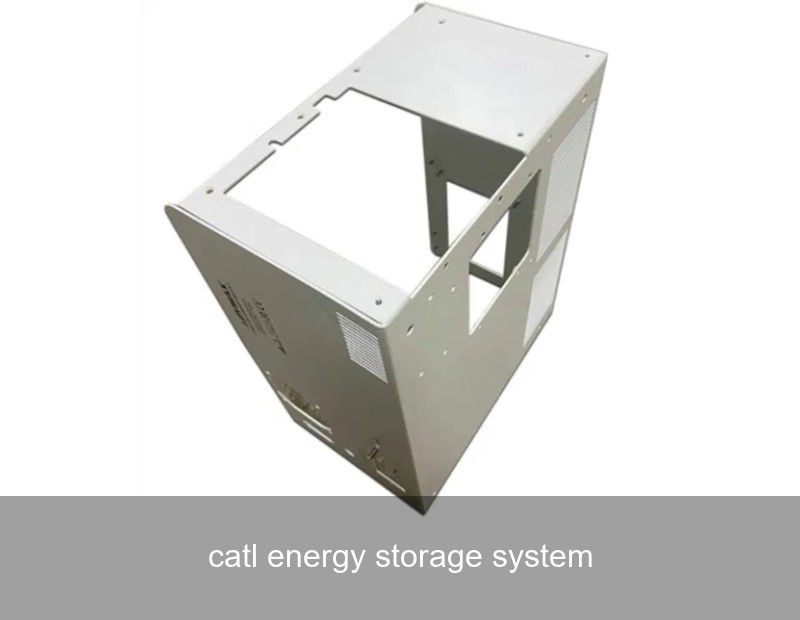
You've likely seen the headlines: renewable energy is booming, yet grid stability is a growing concern. This paradox – having abundant but intermittent solar and wind power – is a central challenge of our energy transition. At the heart of the solution lies advanced battery technology. Among the leaders pushing the boundaries is CATL, whose large-scale CATL energy storage system platforms are becoming synonymous with reliability and efficiency. But what makes these systems so impactful, and how are they being deployed in real-world scenarios from California to Bavaria? As Highjoule, a global provider of intelligent energy storage solutions since 2005, we integrate cutting-edge battery technology like CATL's into systems designed for the unique demands of commercial, industrial, and residential applications. Let's explore the phenomenon.
Table of Contents
- The Intermittency Problem: More Sun, More Complexity
- The CATL ESS Breakthrough: Data Behind the Dominance
- Case Study: A California Microgrid's Resilience Story
- Beyond the Battery: The Highjoule Integration Advantage
- The Future Grid: What Does Widescale Adoption Look Like?
The Intermittency Problem: More Sun, More Complexity
Picture a brilliantly sunny day in Southern Europe, with solar panels generating at peak capacity. By midday, there's more power than the local grid can immediately use. Now, fast-forward to a cloudy evening when demand peaks but solar generation is zero. This "duck curve" – a deep dip in net demand during the day followed by a steep ramp-up in the evening – stresses traditional power plants and can lead to inefficiencies or even blackouts. The U.S. Energy Information Administration notes that the variability of renewables requires flexible resources to maintain grid stability. Simply put, we need a "bank" for electrons – a way to store surplus energy and release it precisely when needed. This is the fundamental role of the modern Battery Energy Storage System (BESS).

Image Source: Unsplash - A visual representation of solar generation paired with storage units.
The CATL ESS Breakthrough: Data Behind the Dominance
So, why is the CATL energy storage system often the battery of choice for major projects? The answer lies in a relentless focus on core performance metrics that matter most to system integrators and end-users: longevity, safety, and energy density.
- Unmatched Cycle Life: CATL's latest generation lithium iron phosphate (LFP) batteries are engineered for over 12,000 cycles while maintaining a high level of capacity. For a system performing one full cycle daily, this translates to a functional lifespan of over 30 years, dramatically reducing the levelized cost of storage.
- Inherent Safety of LFP Chemistry: Compared to other chemistries, LFP batteries are thermally more stable and far less prone to thermal runaway, a critical factor for dense installations near communities or commercial facilities.
- High Energy Density: CATL continuously innovates in cell-to-pack (CTP) technology, removing modular layers to pack more active cells into the same space. This means a CATL energy storage system can deliver more MWh in a smaller footprint, saving valuable real estate.
These aren't just lab specs. The U.S. Department of Energy's global storage database shows a significant portion of newly announced utility-scale projects are leveraging LFP technology, with CATL being a leading supplier. The data points to a clear industry trend towards safer, longer-lasting storage.
Case Study: A California Microgrid's Resilience Story
Let's make this concrete. Consider a mid-sized winery in Sonoma County, California. This region is celebrated for its vineyards but is also increasingly vulnerable to Public Safety Power Shutoffs (PSPS) – proactive grid blackouts to prevent wildfires. For the winery, a power outage during fermentation isn't just an inconvenience; it can ruin an entire vintage, representing millions in lost revenue.
Their solution? A behind-the-meter microgrid featuring a 2.5 MW solar array coupled with a 6 MWh CATL energy storage system, integrated and managed by Highjoule. Here’s the impact:
| Metric | Result |
|---|---|
| Energy Independence During Shutoffs | 100% critical operations powered for 72+ hours |
| Peak Shaving Savings | Reduced monthly demand charges by 40% |
| Solar Self-Consumption | Increased from 35% to over 80% |
| ROI Timeline | Projected payback in under 5 years |
This isn't a hypothetical. It's a real Highjoule project where the robustness of the CATL battery packs, combined with our intelligent energy management system (EMS), allows the winery to operate as a grid-independent island during outages. The EMS constantly forecasts load and generation, deciding the optimal time to charge from solar or the grid and when to discharge to avoid peak tariffs. This case exemplifies the dual value proposition: resilience against grid instability and significant operational cost savings.
Beyond the Battery: The Highjoule Integration Advantage
A CATL energy storage system provides the exceptional "engine," but the vehicle's performance depends on the overall design and controls. This is where Highjoule's nearly two decades of expertise becomes pivotal. We don't just supply batteries; we deliver turnkey, smart power solutions.
For our commercial and industrial clients across Europe and North America, we integrate CATL battery racks with our proprietary power conversion systems (PCS) and advanced EMS. Our platform offers:
- AI-Driven Optimization: Our EMS uses machine learning to analyze utility rate structures, weather patterns, and consumption habits to autonomously maximize financial returns.
- Seamless Grid Interaction: Systems are designed for grid services like frequency regulation, providing an additional revenue stream for operators in markets that support it.
- Scalable Architecture: From a single containerized solution for a factory to a multi-MW distributed storage network for a municipality, our designs using CATL technology are modular by nature.
- Comprehensive Monitoring & Support: Highjoule's 24/7 monitoring platform ensures system health, performance, and remote troubleshooting, providing peace of mind.

Image Source: Unsplash - Modern energy management control room.
The Future Grid: What Does Widescale Adoption Look Like?
The trajectory is clear. As noted by the International Energy Agency (IEA), energy storage is the linchpin for secure and sustainable energy transitions. Widespread deployment of systems like those built on CATL technology will transform our grids from passive, one-way networks into active, intelligent, and resilient ecosystems. We'll see virtual power plants (VPPs) aggregating thousands of distributed residential systems—like Highjoule's HomePower solutions—to bid capacity into wholesale markets. Industrial parks will become prosumers, actively balancing their local network.
This future hinges not just on the cost of batteries, but on their intelligence, safety, and total lifecycle value—the very pillars of the CATL and Highjoule partnership. The question is no longer *if* large-scale storage will become mainstream, but *how quickly* organizations can adapt to harness its benefits.
Is your business or community evaluating how an intelligent CATL energy storage system could future-proof your operations, cut energy costs, and contribute to grid stability? What is the single biggest energy resilience challenge you're facing today?
 Inquiry
 Online Chat