


Unlocking Greater Efficiency: The DC Hybrid Energy Storage Cabinet Explained
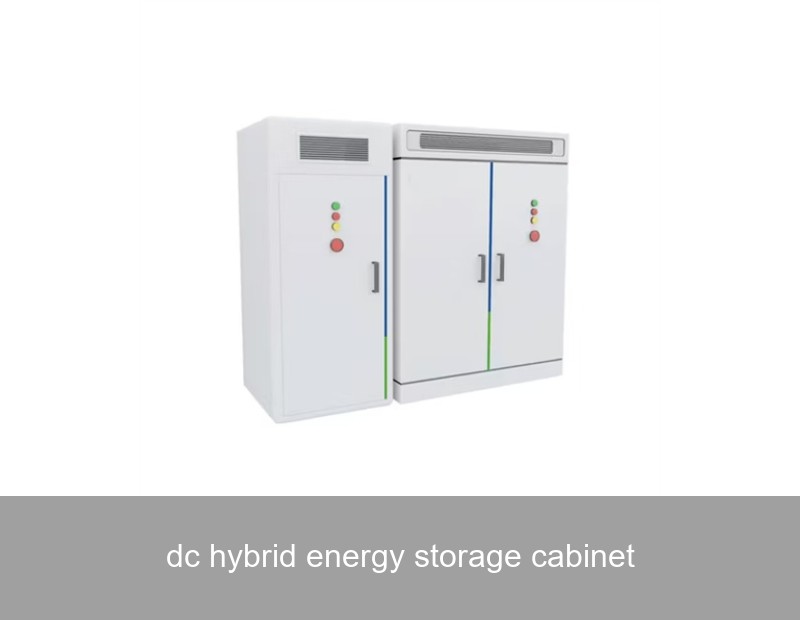
If you're exploring energy independence for your business or home, you've likely encountered a maze of terms: solar inverters, battery storage, AC coupling, DC coupling. Today, we're cutting through the complexity to focus on a game-changing solution gaining rapid traction: the DC hybrid energy storage cabinet. At its core, this system is an integrated powerhouse that combines solar generation and battery storage on a single, direct current (DC) circuit before converting to the alternating current (AC) your building uses. This architecture isn't just a minor tweak; it represents a fundamental shift towards more efficient, resilient, and cost-effective power management. As a leader with nearly two decades of experience, Highjoule has been at the forefront of designing and deploying intelligent DC hybrid energy storage cabinet solutions that make this advanced technology accessible and reliable for commercial, industrial, and large residential applications.
The Phenomenon: Why the Shift to DC-Coupled Systems is Accelerating
For years, the standard approach involved an AC-coupled system: solar panels connect to one inverter, batteries to another, and they meet on the AC side of your electrical panel. It works, but it's like having two separate conversations that need a translator. The rise of the DC hybrid energy storage cabinet solves this by facilitating a "direct conversation" between solar panels and batteries. The primary driver? The explosive growth of behind-the-meter solar and the urgent need for backup power and energy arbitrage. Grid instability in regions like California and Texas, coupled with volatile energy prices across Europe, has created a perfect storm where maximizing every kilowatt-hour of self-generated solar energy isn't just ideal—it's essential for operational continuity and financial savings.

Image Source: Unsplash - Representative image of advanced energy storage hardware.
The Data Advantage: Efficiency and Cost Metrics You Can't Ignore
Let's talk numbers, because they tell a compelling story. The key advantage of a DC hybrid energy storage cabinet lies in its reduction of energy conversion losses.
- Round-Trip Efficiency (RTE): A typical AC-coupled battery system might have an RTE of 90-92%. This means for every 100 kWh you put in, you get 90-92 kWh back out, with energy lost in multiple AC/DC conversions. A well-designed DC hybrid system can achieve an RTE of 96-98%. That extra 4-8% of energy stays in your system, directly impacting your payback period.
- Partial Load Performance: Hybrid inverters within these cabinets often maintain high efficiency across a wider power range, optimizing performance even when solar production is low.
- Balance of System (BOS) Costs: By integrating functions into one cabinet—housing the hybrid inverter, battery management system (BMS), and safety equipment—you reduce material, shipping, and installation labor costs. Studies by the National Renewable Energy Laboratory (NREL) highlight how DC-coupled architectures can lower overall system costs.
| Metric | Traditional AC-Coupled System | Integrated DC Hybrid Cabinet |
|---|---|---|
| Typical Round-Trip Efficiency | 90% - 92% | 96% - 98% |
| Conversion Steps (Solar to Battery) | DC->AC->DC (Multiple Inverters) | DC->DC (Single Hybrid Inverter) |
| Hardware Footprint | Larger (Multiple Units) | Compact, Single Cabinet |
| Installation Complexity | Higher | Lower |
| Potential for Peak Shaving | Good | Excellent (Faster Response) |
Case Study: A Real-World Application in California
Consider a mid-sized winery in Napa Valley, California. Their challenges were peak demand charges from irrigation pumps and cooling loads, coupled with concerns over Public Safety Power Shutoffs (PSPS). Their existing 150 kW solar array was AC-coupled. In 2022, they installed a Highjoule DC hybrid energy storage cabinet system, integrating a new battery bank directly with their solar PV input. The results after one year were telling:
- Demand Charge Reduction: By using the cabinet's intelligent controls to discharge batteries during peak grid demand periods (4-9 PM), they slashed their peak demand by 85%, saving over $18,000 annually in demand charges alone.
- Increased Self-Consumption: The higher efficiency captured an additional ~12,000 kWh of solar energy annually that would have been lost in conversion, powering more nighttime operations.
- Seamless Backup: During a 10-hour grid outage, the system provided critical backup to refrigeration units, preventing spoilage of an estimated $40,000 worth of inventory.
This case underscores the tangible, multi-faceted ROI of a modern DC hybrid energy storage cabinet in a high-stakes environment.
The Highjoule Solution: Engineered for Performance and Simplicity
At Highjoule, we've translated these principles into robust, user-friendly products. Our HPS Series DC Hybrid Energy Storage Cabinet is designed as a complete, pre-engineered solution. We don't just sell components; we deliver a fully integrated power management system.
What sets the Highjoule cabinet apart?
- Unified Intelligence: Our proprietary energy management system (EMS) is the brain of the cabinet, making real-time decisions to optimize for cost savings, backup readiness, or grid services.
- Scalable Design: Modular architecture allows for capacity expansion as your energy needs grow, protecting your initial investment.
- Grid-Interactive Capabilities: For markets with virtual power plant (VPP) or frequency regulation programs, our cabinets are firmware-ready to participate, creating a potential new revenue stream.
- Safety-First Engineering: With UL 9540 and IEC 62619 certifications as standard, each cabinet includes integrated fire suppression, thermal management, and multi-layer electrical protection.
Our services extend beyond the hardware. Highjoule provides comprehensive site assessment, system design, and remote monitoring via our Highjoule Insight platform, giving you a clear window into your energy production, consumption, and savings 24/7.

Image Source: Unsplash - Representative image of energy system monitoring interface.
Expert Insights: The Future of On-Site Power Management
The trend is clear: the future of distributed energy is integrated, intelligent, and DC-optimized. As noted by the International Energy Agency (IEA), innovation in storage system integration is crucial for decarbonizing power systems. The DC hybrid energy storage cabinet is a cornerstone of this transition. We anticipate these systems becoming the central hub for not just solar and storage, but also for integrating electric vehicle charging and managing other DC-native loads, further boosting overall site efficiency. The question for facility managers, business owners, and homeowners is no longer if to add storage, but how to architect it for maximum benefit.
Is your current energy setup leaving valuable efficiency and savings on the table? What would a 6-8% boost in your usable solar energy mean for your annual operational budget? We invite you to connect with a Highjoule energy specialist for a personalized analysis of how a modern DC hybrid system could transform your energy resilience and economics.
 Inquiry
 Online Chat