


Solar Panels Top for Sale: The Real Metrics That Define a Premium Home Energy System
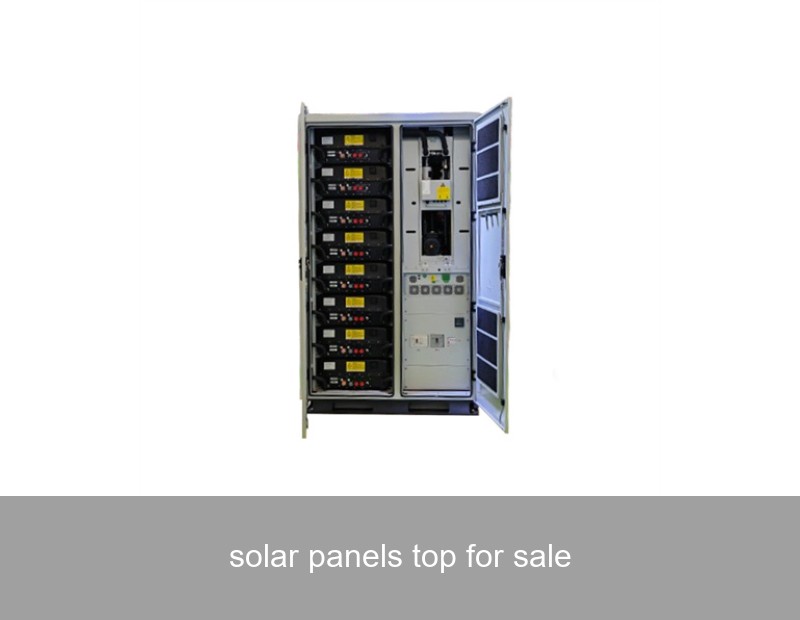
When you search for "solar panels top for sale," you're likely inundated with specs: wattage, efficiency ratings, and brand names. But here's a truth every seasoned energy expert knows: the panel itself is just the beginning. A truly "top" solar solution for your home or business isn't defined by a single component, but by an intelligent system that captures, stores, manages, and optimizes every kilowatt-hour. In today's energy landscape, especially in markets like Europe and the U.S. with variable rates and grid demands, the real value lies in integration and control. Let's explore what a modern, premium solar investment really entails.
Beyond the Panel: What Makes a Solar System Truly "Top for Sale"
Think of it like buying a high-performance car. You don't just buy the engine (the panels); you care about the transmission, brakes, fuel system, and onboard computer that make it safe, efficient, and a joy to drive. Similarly, a top-tier solar energy system comprises four key pillars: high-efficiency generation, intelligent storage, smart management, and resilient backup. Missing one can leave significant value—and savings—on the table.
The Phenomenon: More Panels, More Problems?
A common scenario unfolds for many early solar adopters: they install a sizable array, excited to see their meter spin backwards. By noon, their system is producing a massive surplus, which they sell back to the grid at a low feed-in tariff. Then, as the sun sets and family energy use peaks, they're forced to buy back expensive electricity from the utility. This "peak-shaving" challenge is a fundamental economic flaw in a solar-only setup. The phenomenon creates a frustrating cycle of generating wealth you can't fully keep.

The solar panel is a brilliant daytime worker, but it clocks out right when you need it most. This mismatch between production and consumption profiles is the core problem that the next evolution of home energy aims to solve.
The Data: Why Generation is Only Half the Story
Let's look at the numbers. According to the U.S. Department of Energy, the average residential solar system can cover 80-100% of daytime needs. However, overall self-consumption—the fraction of solar energy you use directly—often falls between 20% and 50% without storage. This means up to half of your clean, self-produced power is exported, often for minimal compensation.
Now, consider time-of-use (TOU) rates, prevalent in California and spreading across the U.S. and Europe. The cost difference can be staggering:
| Period | Typical California TOU Rate (¢/kWh) | Solar Production | Home Demand |
|---|---|---|---|
| Off-Peak (Late Night) | ~25 | None | Low |
| Super Off-Peak (Midday) | ~20 | Maximum | Low |
| On-Peak (Evening) | ~60 | None | Maximum |
You're selling low and buying high. A "top" system addresses this financial leak head-on.
Case Study: A California Winery's Smart Energy Transformation
Let's examine a real-world example from Sonoma County, California. A mid-sized winery had a 100kW solar array but faced crippling demand charges and unreliable grid power during critical fermentation and cooling periods. Their solar-only setup was underperforming financially.
They integrated a 200kWh battery energy storage system (BESS) with advanced energy management software. The results over 12 months were transformative:
- Demand Charge Reduction: By discharging stored solar energy during brief periods of peak grid draw, they slashed monthly demand charges by 92%.
- Self-Consumption Boost: Direct use of solar energy rose from 35% to over 80%.
- ROI Acceleration: The combined system payback period was cut by nearly 40% compared to solar alone, thanks to stacked value streams (demand charge management, TOU arbitrage, and backup power).
- Resilience: During a planned public safety power shutoff (PSPS), the system kept critical cooling and security systems online for 18 hours.
This case highlights the paradigm shift: from viewing solar as a simple offset to treating it as the core of a resilient, revenue-grade asset.
Key Components of a Top-Tier Solar + Storage Solution
So, what should you look for beyond the panel spec sheet?
1. The Battery: The Heart of Independence
Lithium-ion phosphate (LFP) chemistry is now the benchmark for safety, longevity, and cycle life. Look for a battery designed for daily, deep cycling. Capacity is important, but so is continuous power rating (how many appliances it can run simultaneously).
2. The Inverter/System Architecture
Do you opt for a DC-coupled or AC-coupled system? DC-coupling, where solar and storage share a single, high-efficiency inverter, is often more efficient for new installations. Leading systems offer hybrid inverters that manage both solar input and battery dispatch seamlessly.
3. The Energy Manager: The Brain
This is the software that turns hardware into intelligence. It should forecast weather, learn your consumption patterns, understand utility rate structures, and automatically choose the most economical strategy—charge from solar, discharge to avoid peak rates, or reserve for backup.

Where Highjoule Fits In: Intelligent Energy Orchestration
This is precisely where Highjoule's expertise transforms a good solar purchase into a top-tier investment. Since 2005, we've moved beyond being just a component provider to becoming an architect of integrated energy resilience.
Our HES (Highjoule Energy Stack) platform is the operating system for your personal energy microgrid. For homeowners, our ResilienceOne series of integrated storage systems is designed to work with high-efficiency solar panels. It's not just a battery in a box; it's a pre-engineered unit combining our LFP battery modules, a high-efficiency hybrid inverter, and the HES brain all in one, UL-certified cabinet for simplified installation and unmatched reliability.
What makes it "top for sale"?
- Adaptive Learning: HES software continuously analyzes grid prices (leveraging real-time data in supported regions) and your habits to optimize financial outcomes.
- Seamless Backup: During an outage, the system transitions to backup power in milliseconds, keeping lights and essentials on without you lifting a finger.
- Scalability: Start with what you need and add more battery capacity as your needs evolve, protecting your initial investment.
- Global Standards: Our systems are designed to meet the stringent safety and grid compliance codes of both the North American and European markets, giving you peace of mind.
We partner with leading solar installers to ensure that when you buy "solar panels top for sale," you're really getting a holistic Highjoule energy solution.
The Future is Integrated, Not Isolated
The energy market is evolving towards dynamic grids and complex tariffs. The International Energy Agency (IEA) consistently highlights the critical role of storage in enabling higher solar penetration. Your home energy system needs to be a proactive participant in this new landscape.
So, when you evaluate options for "solar panels top for sale," ask yourself and your installer the broader questions: How will I use the power I generate when I need it most? How will this system adapt to changing utility policies? How does it prepare my home for an electrified future with EVs and heat pumps?
The most sophisticated panel on your roof is only as valuable as the intelligence that manages its output. Isn't it time we measured a top solar system not just by the peak wattage it generates, but by the dependable, affordable, and resilient power it delivers to your doorstep—day and night?
 Inquiry
 Online Chat