


How Much Does a Grid Cabinet Cost? Unpacking the Investment in Grid-Forming Energy Storage
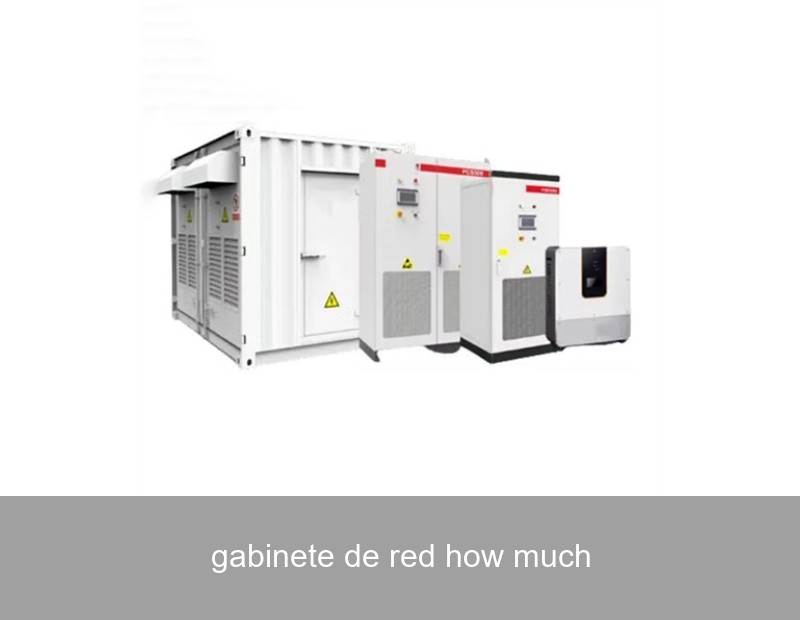
If you're managing a commercial facility, industrial plant, or developing a microgrid, you've likely encountered the term "grid cabinet" or "battery energy storage system (BESS) enclosure." And the immediate question that follows is almost always: "Gabinete de red, how much?" or more broadly, "What's the total cost?" The truth is, there's no single price tag. Asking for the cost of a grid cabinet alone is like asking for the price of a car engine without specifying the car. The cabinet is a critical housing, but the real value—and cost—lies in the integrated system within: the high-performance batteries, the intelligent power conversion system (PCS), and the sophisticated energy management software. This article will guide you through the real factors that determine the investment for a robust, grid-forming storage solution.
Table of Contents
The Phenomenon: Beyond the Box Mentality
In the renewable energy transition, businesses are increasingly looking to gain control. The "gabinete de red" or grid cabinet is often the visible face of this ambition. However, focusing solely on this enclosure is a common pitfall. The market is flooded with varying levels of quality—from basic metal containers housing commodity cells to highly engineered, all-in-one energy storage systems designed for decades of reliable, safe service. The real cost driver isn't the steel; it's the intelligence, safety, and longevity engineered inside it. An under-specified system might have a lower upfront "cabinet" cost but lead to underperformance, safety risks, and a much shorter, more expensive lifecycle.

Image Source: Unsplash - A modern battery storage enclosure is more than just a cabinet; it's an integrated power asset.
Key Cost Factors: It's a System, Not a Silo
To understand the investment, you must dissect the core components. Think of it as a layered cake:
- Core Hardware (The "Guts"):
- Battery Cells & Chemistry: Lithium Iron Phosphate (LFP) is now the dominant, safer chemistry for stationary storage. Costs vary by brand, cycle life (e.g., 6,000 vs. 10,000 cycles), and degradation warranty.
- Power Conversion System (PCS): This inverter/rectifier is the heart. Grid-forming capabilities, which allow the system to "create" a stable grid without external support, add cost but are essential for true energy independence and microgrids.
- Thermal Management: A premium liquid cooling system, like those used by Highjoule, ensures even temperature distribution, extending battery life by up to 30% compared to basic air cooling, justifying a higher initial outlay.
- Intelligence & Software (The "Brain"):
- Advanced Energy Management System (EMS) software is what transforms stored electrons into savings. Its ability to forecast energy prices, optimize dispatch for peak shaving, and participate in grid services is where ROI is generated.
- Integration & Services (The "Nervous System"):
- This includes engineering, procurement, and construction (EPC), grid interconnection permits, and long-term service agreements. A system from a provider like Highjoule includes seamless integration, which avoids costly delays and compatibility issues.
| Cost Component | Low-End Estimate (Per kWh) | High-End/Performance Estimate (Per kWh) | What You're Paying For |
|---|---|---|---|
| Battery & Basic Enclosure | $300 - $400 | $450 - $600+ | Commodity cells, basic BMS, air cooling, standard warranty. |
| Integrated System (Hardware) | $500 - $650 | $700 - $900+ | Premium LFP cells, liquid cooling, grid-forming PCS, robust safety systems. |
| Fully Installed System (Turnkey) | $800 - $1,100 | $1,200 - $1,800+ | Everything above + engineering, installation, commissioning, and grid connection. This is the most relevant figure for budgeting. |
Note: Ranges are indicative for commercial/industrial scale (100kWh - 1MWh+) in US/European markets as of 2024. Source: Compiled from industry reports including NREL's cost benchmarks.
The Data: How the Investment Pays Back
The conversation must shift from "cost" to "value creation." A higher-performing system commands a higher price but delivers a superior financial return through multiple revenue and savings streams:
- Peak Shaving: Avoiding demand charges from utilities. This alone can slash a commercial electricity bill by 20-30%.
- Energy Arbitrage: Buying cheap grid power (off-peak) to charge, and using it during expensive peak hours.
- Grid Services: In markets like the US (ERCOT, PJM) and Europe, systems can earn revenue through frequency regulation and capacity markets.
- Resilience: The value of avoiding downtime for a factory or data center can be enormous, often running into thousands per minute.
Case Study: A German Manufacturing Plant
Let's ground this with a real-world example. A mid-sized automotive parts manufacturer in Bavaria faced rising grid costs and sought to integrate their 500 kW rooftop solar array more effectively.
Challenge: High peak demand charges, solar curtailment during weekends, and a desire for backup power during grid instability.
Solution: They installed a turnkey Highjoule HEC 500 system—a 500 kWh / 250 kW grid-forming storage solution. The system's liquid-cooled design was key for the plant's variable operating environment, and its advanced EMS was programmed for peak shaving, solar self-consumption optimization, and islanding capability.
- Demand Charge Reduction: €28,000 saved.
- Increased Solar Self-Consumption: €8,500 in additional value.
- Grid Service Participation (Regelenergie): €6,200 in revenue.
- Total Annual Financial Benefit: ~€42,700.
With a total turnkey project investment of approximately €385,000, the simple payback period is under 9 years—well within the system's 15-year performance warranty period. The gabinete de red here was a Highjoule-certified, all-weather outdoor enclosure, but the financial return was generated entirely by the intelligent system inside.

Image Source: Unsplash - Operational intelligence is key to unlocking the full value of an energy storage investment.
The Highjoule Approach: Integrated Value Over Isolated Cost
Since 2005, Highjoule has moved beyond simply supplying cabinets. We provide intelligent, turnkey power solutions. Our products, like the HEC Series for C&I applications and the GridSynergy platform for utilities, are designed with total cost of ownership (TCO) in mind.
- Proprietary Liquid Cooling: Maximizes cycle life and ensures consistent performance, reducing the long-term cost per cycle.
- Grid-Forming Inverters: Standard in our advanced systems, enabling you to become a proactive grid citizen or achieve true off-grid resilience.
- Athena EMS AI Software: This is where your system earns its keep. It continuously learns your load patterns and market signals to optimize every kilowatt-hour for maximum financial return.
When you partner with Highjoule, you're not buying a commodity "gabinete." You're investing in a long-term energy asset with a clear, software-driven ROI pathway and comprehensive support from our global team.
Making the Right Decision for Your Project
So, when you ask, "Gabinete de red, how much?", the most productive response is to ask better questions: What is my primary goal—cost savings, resilience, or renewable integration? What are my site's specific energy consumption patterns? What is the total value of avoided downtime for my operation? The answers will point you toward the right system specifications.
We encourage you to move beyond the initial price quote. Download a sample Energy Storage Value Assessment template from an industry body like the Smart Electric Power Alliance (SEPA) and start mapping your own data. Then, ask potential providers: Can your system's software actively manage all these value streams? What is the projected degradation and performance guarantee over 10 years?
What specific energy challenge is driving your search for a storage solution today, and how can we help you model its true potential?
 Inquiry
 Online Chat