


Understanding the Key Disadvantages of Grid-Level Energy Storage Systems
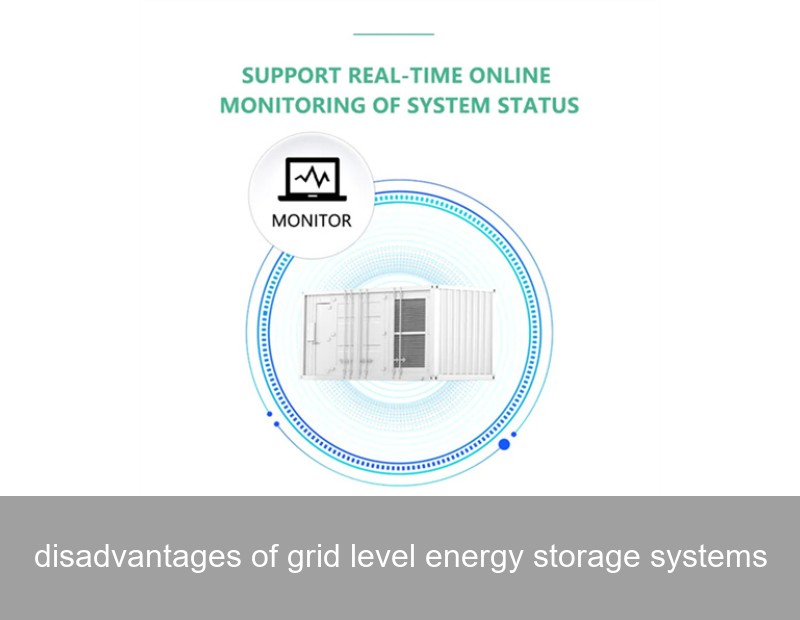
As nations across Europe and America aggressively pursue ambitious renewable energy targets, a critical piece of the puzzle has taken center stage: grid-level energy storage systems. While hailed as the enabler for a wind and solar-dominated future, the conversation often glosses over the very real challenges and disadvantages of grid-level energy storage systems. Acknowledging these hurdles isn't about dismissing the technology; it's about driving smarter innovation and deployment. Let's delve into the complexities behind the headlines.
Table of Contents
The Economic Hurdle: High Capital and Lifetime Costs
Let's start with the most talked-about barrier: cost. Deploying storage at the grid scale represents a massive upfront investment. We're not talking about a backyard powerwall; these are vast installations of containerized battery systems or pumped-hydro facilities with price tags in the hundreds of millions.
The financial challenge extends beyond installation. Consider:
- Capital Expenditure (CAPEX): The initial cost for lithium-ion battery packs, power conversion systems (PCS), thermal management, and grid interconnection remains high, though declining.
- Operational Expenditure (OPEX): Ongoing costs include energy for system losses, maintenance, and replacement of components.
- Degradation & Replacement: Batteries degrade with each cycle. A system might need a partial or full replacement years before the end of the grid asset's expected life, a cost often underestimated in simple payback models.
This creates a "valley of death" for project financing. Revenue streams from frequency regulation or energy arbitrage can be uncertain, making investors wary. The question becomes: who pays for this essential grid infrastructure, and how is the value accurately captured?
Technical Limitations: More Than Just Capacity
When we imagine grid storage, we often think of a simple "bucket" of energy. The reality is far more nuanced and presents significant technical disadvantages of grid-level energy storage systems.
- Energy Density vs. Power Density: Some technologies provide high power (discharge quickly) but low energy (short duration). Others offer long duration but respond slowly. Matching the right tech to grid needs—be it seconds for frequency or hours for load shifting—is complex.
- Duration Dilemma: The industry standard of 4-hour storage may not be sufficient for future grids relying heavily on renewables. "Dunkelflaute" periods in Europe—calm, cloudy winter days—can last for days, requiring weeks of storage, which is economically unfeasible with today's dominant battery tech.
- Efficiency Losses: No system is 100% efficient. Round-trip efficiency for lithium-ion batteries is typically 85-95%, meaning energy is lost in the charge/discharge cycle. For other technologies like hydrogen or pumped hydro, losses can be significantly higher.
These limitations force grid operators to think in terms of a diverse portfolio, not a single silver-bullet solution.

Image: Managing the technical complexities of large-scale storage requires sophisticated control systems. (Credit: Unsplash)
The Environmental and Supply Chain Trade-Off
It's an uncomfortable paradox: storage systems designed to green the grid carry their own environmental footprint. This is a critical consideration for environmentally-conscious markets in the EU and USA.
- Resource Extraction: Lithium, cobalt, nickel, and graphite mining for batteries raises concerns about water use, pollution, and human rights. Sourcing these materials sustainably is a major challenge.
- Lifecycle Emissions: Manufacturing batteries is energy-intensive. A grid-scale battery's true carbon debt depends heavily on the cleanliness of the grid that produced it.
- End-of-Life Management: Recycling infrastructure for thousands of tons of spent battery modules is still in its infancy. Without proper recycling, we risk creating a new waste crisis.
This is where a holistic approach from manufacturers is vital. Companies like Highjoule are tackling this head-on by designing for circularity from the start. Our GridMAX BESS utilizes a modular architecture that allows for easier repair, refurbishment, and eventual recycling of core components. Furthermore, we partner with certified suppliers who adhere to the EU's proposed Critical Raw Materials Act standards, ensuring a more transparent and responsible supply chain for our clients.
The Regulatory and Market Integration Challenge
Technology is only half the battle. Outdated regulatory frameworks and electricity market designs are perhaps the most significant non-technical disadvantage.
In many regions, storage is legally classified as either a generation asset or a transmission asset, but it's fundamentally both—and neither. This creates confusion over:
| Regulatory Hurdle | Consequence |
|---|---|
| Double Charging | Storage owners may be charged grid fees both when drawing power to charge *and* when injecting it to discharge. |
| Market Access Barriers | Storage may be excluded from capacity markets or face minimum size requirements that favor large, traditional plants. |
| Unclear Ownership Models | Should utilities, independent developers, or transmission operators own grid storage? The rules are often murky. |
These barriers stifle investment. Progressive markets like the UK's National Grid ESO, with its specialized frequency response tenders, have shown how clear rules can unlock storage's value.
Case Study: California's Lessons in Scale - The 2022 Heatwave Test
The real-world test of grid storage often comes during extreme events. California provides a compelling, data-rich case study. The state has the most ambitious storage deployment goals in the US, aiming for 52 GW by 2045.
During a prolonged September 2022 heatwave, demand shattered records. California's fleet of over 3 GW of grid batteries (primarily lithium-ion) performed heroically, discharging a record 3.4 GWh of energy in a single evening, effectively preventing rolling blackouts. The data from CAISO, the grid operator, is telling.
However, the event also exposed limitations:
- Duration Shortfall: The batteries provided critical power for about 2-4 hours at peak, but the grid stress lasted longer. Their contribution dropped sharply as state of charge depleted.
- Dependency on Timing: Their effectiveness was maximized because solar output was high during the day to recharge them. In a multi-day crisis with reduced solar generation (e.g., from wildfire smoke), their performance would diminish.
- Economic Stress: The high demand caused wholesale electricity prices to spike, making it extremely expensive for storage operators to *recharge* their systems the next day, squeezing their arbitrage margins.
This case underscores that while storage is now a vital grid asset, its limitations in duration and its vulnerability to the same market volatilities it's meant to mitigate are very real.
Mitigating the Disadvantages: The Path Forward with Intelligent Solutions
So, are we stuck? Absolutely not. The disadvantages of grid-level energy storage systems are not dead-ends; they are innovation roadmaps. The solution lies in technological advancement, smarter system design, and evolved business models.
At Highjoule, our approach is to build intelligence and sustainability into the core of our systems. We don't just sell battery containers; we provide integrated GridMAX Intelligent Energy Platforms. Here’s how this tackles the classic disadvantages:
- For Economic Hurdles: Our AI-driven Helios Energy Management System maximizes revenue by dynamically stacking value streams—frequency regulation, capacity, arbitrage—in real-time, improving project ROI and bankability.
- For Technical Limitations: We offer hybrid storage solutions, pairing our high-cycle-life lithium-ion batteries for daily cycling with longer-duration flow battery modules for seasonal balancing, all managed as a single asset. This extends system lifespan and capability.
- For Integration Challenges: Our platform is designed for grid-friendly interconnection and comes with the compliance and grid-code support needed in complex markets like the EU and North America, reducing development time and risk.

Image: The future lies in integrated, hybrid renewable plants that include smart storage. (Credit: Unsplash)
Where Do We Go From Here?
The journey to a resilient, renewable grid is a marathon, not a sprint. Grid-level storage is an indispensable teammate in that race, but we must be clear-eyed about its weaknesses to train it better. The focus must shift from simply deploying more megawatts to deploying smarter, more sustainable, and more integrated systems.
As you plan for your organization's energy resilience or your community's clean energy future, what specific challenge—be it duration, regulatory uncertainty, or total lifecycle cost—is the biggest barrier you face in considering large-scale storage?
 Inquiry
 Online Chat