


Photovoltaic System Design: The Blueprint for Energy Independence and ROI
When you think of solar power, you likely picture gleaming panels under a bright sun. But what truly determines your success—whether you're a homeowner in California, a factory manager in Germany, or a municipality in Spain—is what happens long before the first panel is mounted. The cornerstone of any successful solar project is expert photovoltaic system design. This isn't just about placing rectangles on a roof plan; it's the intricate engineering blueprint that dictates your system's efficiency, reliability, and, ultimately, your return on investment for decades to come. A superior design harmonizes technology, environment, and economics to create a resilient power asset.
The Phenomenon: Why So Many Solar Projects Underperform
Across Europe and the U.S., a quiet disappointment plagues some solar adopters. Their systems are operational, but the promised energy bills don't plummet as expected, or the system struggles during peak demand. The culprit is rarely the equipment itself—modern solar panels and inverters are highly reliable. The root cause is almost always in the initial photovoltaic system design. Common pitfalls include underestimating local shading patterns, improper inverter sizing leading to "clipping" losses, neglecting future energy needs, and, most critically, treating storage as an afterthought rather than the system's intelligent core.
The Data: Quantifying the Design Gap
The impact of design isn't theoretical. According to a comprehensive study by the National Renewable Energy Laboratory (NREL), factors controlled at the design phase—like array orientation, tilt, and system configuration—can cause performance variations of up to 30% for otherwise identical hardware. Furthermore, the IEA PVPS Task 13 highlights that poor design leading to mismatch and inefficiencies is a leading contributor to long-term energy yield degradation. This isn't just about losing a few kilowatt-hours; it's about extending your payback period and undermining the financial and environmental goals of your project.
A Real-World Case: The Spanish Logistics Center
Consider a recent project for a large logistics center near Valencia, Spain. Their initial proposal from a standard vendor was a 500 kWp system designed primarily to cover baseload consumption. However, their real pain point was the exorbitant demand charges from short, intense periods of forklift charging and cooling system operation. A simplistic design would have left them still vulnerable to grid price spikes.
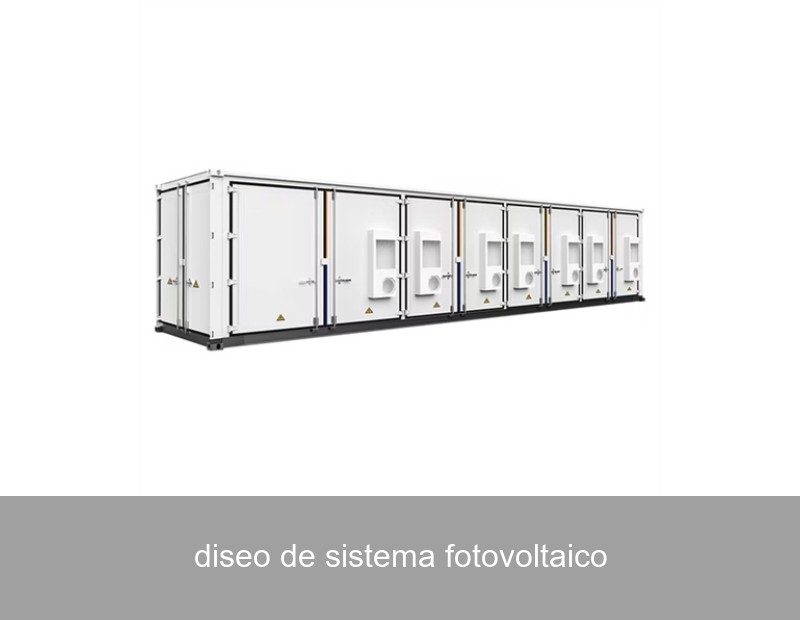
Our team at Highjoule re-engineered the approach. We conducted a granular load profile analysis and designed a photovoltaic system integrated with a Highjoule HI-Stack Commercial 500 kWh battery energy storage system (BESS). The design wasn't just "PV + battery"; it was a unified system where the BESS was strategically sized and controlled to shave peak demand. The result? The 550 kWp solar array meets daily energy needs, while the intelligent BESS dispatches power during the 30-minute peak windows. The outcome: a 42% reduction in overall electricity costs and complete backup power for critical refrigeration, achieving a return on investment in under 6 years. This showcases how design thinking shifts the focus from mere generation to comprehensive energy management.

Image: A well-designed commercial solar array, similar to logistics center projects. Source: Unsplash
Key Elements of a High-Performance Photovoltaic System Design
1. Comprehensive Site & Energy Assessment
This is the non-negotiable foundation. It goes beyond a satellite image. It involves:
- True Solar Potential: Using on-site tools or advanced software like PVsyst to model hourly irradiance, accounting for micro-shading from vents, future tree growth, and adjacent structures over all seasons.
- Load Analysis Deep Dive: Not just annual consumption, but analyzing 12 months of utility bills to understand time-of-use rates, demand charges, and identifying exactly when and how power is used.
- Structural & Regulatory Review: Ensuring roof integrity or ground conditions, navigating local grid connection codes (like VDE-AR-N 4105 in Germany or UL 1741 SA in the U.S.), and securing permits.
2. Intelligent Component Selection & Sizing
Matching components is a symphony, not a solo act.
| Component | Design Consideration | Impact of Poor Choice |
|---|---|---|
| Solar Panels | Efficiency vs. cost, temperature coefficient (critical in hot climates), degradation rate warranty. | Lower energy yield, faster degradation, higher land/roof space needed. |
| Inverters | DC/AC ratio ("clipping" vs. under-utilization), number of MPP trackers for complex roof planes, grid-support functionality. | Energy losses, reduced reliability, inability to comply with grid codes. |
| Mounting System | Wind/snow loads, roof penetration vs. ballasted, cooling airflow behind panels. | Structural risk, roof damage, reduced panel efficiency due to heat. |
3. The Game Changer: Smart Storage Integration
This is where modern photovoltaic system design separates from the past. Storage is no longer optional for maximizing value. The design must answer:
- Purpose: Is it for self-consumption (using more of your solar), backup power, demand charge reduction, or grid services?
- Sizing: Battery capacity (kWh) and power (kW) are sized based on the specific load profile and goals, not a rule of thumb.
- Technology & Chemistry: Lithium Iron Phosphate (LFP), like that used in all Highjoule battery systems, is now the preferred choice for safety, longevity (often over 6000 cycles), and stable performance, making it ideal for both daily cycling and reliable backup.
For instance, Highjoule's HI-Power Residential and HI-Stack Commercial BESS solutions are designed from the ground up for seamless solar integration. Their built-in energy management system (EMS) is the "brain" that decides, in real-time, whether to send solar energy to the home, to the grid, or to the battery based on cost, consumption, and weather forecasts—all configured during the initial design phase.

Image: A modern Battery Energy Storage System rack, core of intelligent solar designs. Source: Unsplash
4. Future-Proofing with Monitoring & Control
A design is only as good as its ongoing performance. Proactive design includes a plan for monitoring at the inverter, circuit, and even panel level (using optimizers or microinverters). This allows for the early detection of issues—like a underperforming string or a faulty connection—protecting your investment. Highjoule's Highjoule Energy Cloud platform provides this visibility, turning raw data into actionable insights for system owners and operators.
The Highjoule Approach: Intelligent Design for Maximum ROI
At Highjoule, we view photovoltaic system design as the most critical service we provide. Since 2005, our process has evolved to deliver not just hardware, but guaranteed energy outcomes. Our technical experts across Europe and North America begin every project by modeling your unique energy fingerprint. We then create a tailored system architecture that may feature our high-efficiency bifacial panels, our robust string inverters, and, most importantly, the perfectly sized Highjoule BESS controlled by our advanced EMS.
For a hospital in Texas needing resilience, the design prioritizes backup duration. For a manufacturing plant in Italy facing steep demand charges, the design optimizes for peak shaving. For a residential community in the Netherlands, it maximizes self-consumption under net metering changes. This bespoke, goal-oriented design philosophy is what transforms a capital expenditure into a strategic, value-generating asset.

Image: Collaborative design review ensures the system meets precise needs. Source: Unsplash
Your Energy, Your Design
The journey to energy independence and sustainability is exciting, but its success is locked in the design phase. It's the difference between having a solar system and owning a high-performance energy asset. As you contemplate your project, what is the primary driver—is it absolute cost reduction, resilience against outages, or achieving corporate sustainability targets? How might an intelligently designed system, with storage at its heart, transform not just your energy bill but your operational reliability?
We invite you to challenge your next proposal. Ask not just for the number of panels, but for the detailed simulation report, the 25-year financial projection, and the specific control strategy for the battery. The right photovoltaic system design is your blueprint for a empowered, sustainable future.
 Inquiry
 Online Chat