


Lipton Battery How Much? Unpacking the Real Cost of Energy Storage
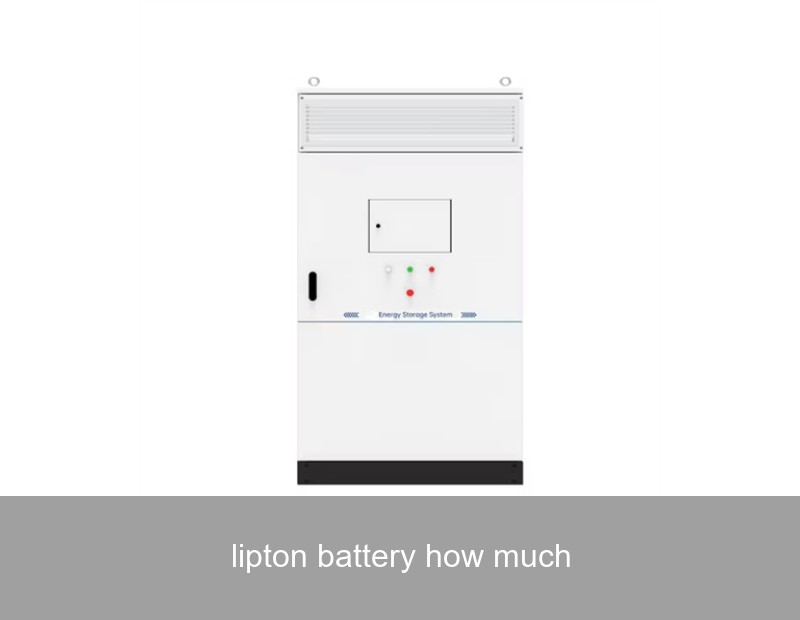
If you've found yourself searching "Lipton battery how much?", you're not alone. This common query, often a starting point for homeowners and business owners alike, points to a fundamental question in the renewable energy transition: what is the true investment for energy independence? While it might seem like a simple question about price, the answer to "how much for a battery?" is layered, involving technology, long-term value, and system intelligence. Let's move beyond the sticker shock and explore what you're really paying for when you invest in a modern battery storage system.
The "Lipton Battery" Question: More Than Just Price Per Kilowatt-Hour
The search for a "Lipton battery" cost often reflects a market looking for trusted, household-name reliability in a complex field. People want a solution they can understand and trust. In energy storage, the cost isn't just for a box of batteries. You're investing in a complete energy resilience and management system. Think of it like buying a car: the invoice isn't just for the engine; it includes the safety systems, the comfort features, the efficiency technology, and the warranty that protects your journey. The initial "how much" is quickly followed by "what do I get for it?" and "how much will it save or earn me over time?"

Image: A modern home energy system integrating solar and storage. Source: Unsplash
Decoding the True Cost: What "How Much?" Really Asks
To answer accurately, we need to break down the components. A functional battery storage system consists of:
- Battery Cells & Modules: The core energy storage medium (e.g., Lithium Iron Phosphate or LFP, known for safety and longevity).
- Battery Management System (BMS): The essential brain that monitors cell health, temperature, and state of charge to maximize safety and lifespan.
- Power Conversion System (PCS)/Inverter: The component that converts stored DC electricity to usable AC power for your home or business.
- System Integration & Software: The intelligent platform that decides when to charge, discharge, or hold, often optimizing for self-consumption, time-of-use rates, or grid services.
- Installation & Commissioning: Professional design, electrical work, permitting, and grid interconnection.
According to a U.S. Department of Energy report, while battery pack costs have fallen dramatically, the "soft costs" of installation, permitting, and customer acquisition remain a significant portion of the total system price. This is where choosing an experienced, integrated provider makes a critical difference in value.
A Real-World Case: The California Winery's Energy Transformation
Let's ground this with data from a real project. A mid-sized winery in Sonoma County, California, faced three challenges: high demand charges from the utility, unreliable grid power during fire-prevention shutoffs, and a desire to reduce its carbon footprint. Their question started as "how much for a battery?" but evolved into "how much can we save and secure?"
| Project Component | Details | Outcome & Data |
|---|---|---|
| System Installed | Highjoule HI-Stack Commercial 150 kWh LFP System with Advanced Energy Management | Designed to cover critical loads and peak shaving. |
| Financial Impact | Reduction in Utility Demand Charges & Time-of-Use Optimization | Average monthly demand charge reduced by 65%, yielding approx. $2,800/month in savings. |
| Resilience Value | Backup Power During Grid Outages | Kept refrigeration and critical processing online during a 36-hour Public Safety Power Shutoff (PSPS), preventing an estimated $40,000 in product loss. |
| Sustainability | Increased Solar Self-Consumption | Increased on-site use of their existing solar from 30% to over 80%. |
For this business, the system's payback period was calculated at just under 5 years, not even factoring in the avoided loss from a single outage. The question of "how much" transformed from an expense to a strategic investment with a clear ROI.
Highjoule's Approach: Delivering Value Beyond the Battery Cell
At Highjoule, with nearly two decades of experience since 2005, we've learned that the right answer to "how much" is a solution tailored to your specific energy profile and goals. For our residential clients, the Highjoule HomePower Series offers scalable LFP storage (from 10-30 kWh) with seamless integration to new or existing solar. Our AI-driven EnergyOS platform automatically optimizes for your utility rate plan, maximizing bill savings.
For commercial and industrial applications, our HI-Stack Modular Systems (50 kWh to multi-MWh scale) are engineered for peak shaving, demand charge management, and uninterrupted power. We act as a single point of responsibility—from design and advanced components to commissioning and long-term monitoring—ensuring performance that matches the financial model.

Image: A technician overseeing a commercial-scale battery storage system. Source: Unsplash
Key Factors That Influence Your System's Total Cost
So, what determines your final number? Here are the primary levers:
- Energy Capacity (kWh): How much energy you can store. This determines how long you can power your home or facility during an outage.
- Power Rating (kW): How much power the system can deliver at once. This determines how many large appliances (e.g., air conditioners, machinery) you can run simultaneously.
- Technology & Chemistry: LFP (Lithium Iron Phosphate) batteries, like those used by Highjoule, typically have a higher upfront cost than some older chemistries but offer superior cycle life, safety, and longevity, providing better total cost of ownership.
- System Intelligence: A "dumb" battery is cheaper. A smart system that integrates with solar, the grid, and your loads to create value streams is a more powerful financial tool.
- Installation Complexity: Electrical panel upgrades, distance from main systems, and local permitting fees vary widely. The Solar Energy Industries Association (SEIA) provides resources on local market factors.
- Incentives: In the U.S., the federal Investment Tax Credit (ITC) can cover 30% of the cost of a solar-coupled storage system. Many European countries and U.S. states offer additional rebates or performance-based incentives.
Getting to Your Number: It Starts with a Conversation
You might be wondering, "This is helpful, but I still need a ballpark figure." For a typical U.S. home looking to pair storage with solar, fully installed systems often range from $12,000 to $25,000 before incentives, depending heavily on the factors above. A commercial system's cost per kWh scales more efficiently but is project-specific.
From Inquiry to Investment: Your Next Steps
The journey from "Lipton battery how much" to a humming system on your property requires a shift in perspective. It's not a commodity purchase; it's a capital investment in resilience, efficiency, and sustainability. The most insightful step you can take is to move from a general search to a specific analysis.
What does your last 12 months of utility bills reveal about your energy consumption patterns, peak demand, and pain points during outages? Armed with that data, a reputable provider like Highjoule can model a system that targets your specific financial and operational goals, giving you a clear, justified "how much" and, more importantly, a compelling "why."
 Inquiry
 Online Chat