


Dometic Obsidian Series 100W Portable Solar Kit: Your Ultimate Guide to Off-Grid Power
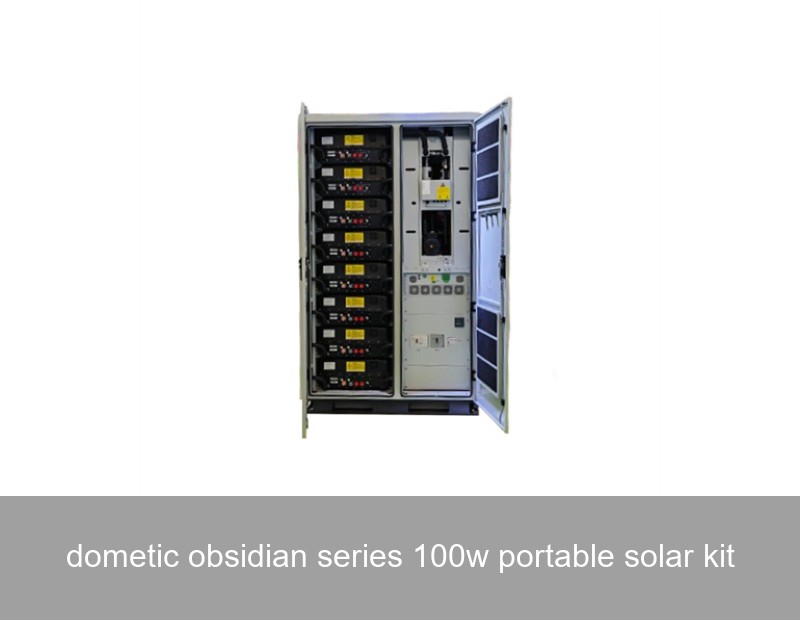
Ever been on a road trip, settled into a perfect remote campsite, only to watch your phone battery dip into the red zone? Or perhaps you're a weekend warrior relying on a portable fridge to keep provisions cool, but the anxiety of draining your vehicle's starter battery looms large. You're not alone. The quest for reliable, clean power off the grid is a modern challenge for adventurers and remote workers alike. This is where portable solar solutions, like the Dometic Obsidian Series 100W Portable Solar Kit, shine. But is 100 watts enough? And how does this portable kit fit into the broader, powerful world of solar energy storage? Let's unpack the technology, the real-world performance, and how it compares to larger-scale solutions from industry leaders like Highjoule.
Table of Contents
- What is the Dometic Obsidian 100W Kit?
- The 100W Reality: Data & Expectations
- Beyond Portable: The Highjoule Ecosystem for Larger Needs
- Choosing the Right Solar Solution for You
What is the Dometic Obsidian Series 100W Portable Solar Kit?
At its core, the Dometic Obsidian Series 100W kit is a self-contained, foldable solar charging system designed for mobility. It typically includes one or two monocrystalline solar panels that fold into a compact case, a charge controller, and necessary cables. Its key selling point is portability and ease of use—you unfold it, point it at the sun, connect it to a compatible power station or battery, and harvest energy.
Image: Portable solar solutions enable energy independence in remote locations. Source: Unsplash
Think of it as a tactical, on-demand power plant for your adventures. It's perfect for:
- Keeping personal electronics (phones, laptops, cameras) charged.
- Trickle-charging a vehicle's auxiliary battery.
- Supporting small appliances like portable coolers or LED lights for a few hours.
The Technology Inside
Monocrystalline cells, like those used in the Obsidian series, are known for higher efficiency rates (often 20-23%) compared to other types, meaning they convert more sunlight into electricity in the same space. This is crucial for a portable kit where panel size is limited. The included charge controller is the brain, regulating voltage and current to safely charge your battery, preventing overcharging.
The 100W Reality: Data & Expectations
Here’s a crucial reality check: A 100W panel rating is its output under ideal laboratory conditions (Standard Test Conditions, or STC). In the real world, factors like the sun's angle, cloud cover, temperature, and panel cleanliness reduce output. On a perfect, clear day with the panel angled directly at the sun, you might average 70-85 watts over peak sun hours.
So, what can 70-100 watts actually *do*? Let's break it down with some real energy math:
| Device | Approximate Power Draw | Runtime on 500Wh Battery* (Charged by 100W Solar) |
|---|---|---|
| Smartphone | 5-10W | 50-100+ charges |
| Laptop | 50W | ~10 hours |
| 12V Portable Fridge (small) | 30-50W (cycling) | ~10-16 hours |
| LED Camping Lights | 5-10W | 50-100 hours |
*A common capacity for mid-sized portable power stations. Assumes 5 peak sun hours to fully recharge the battery from 0% with the 100W kit.
The key insight is that a 100W kit is excellent for energy maintenance—offsetting the drain from small to medium devices and extending the life of your portable power station. It's less suited for quickly recharging a large, completely empty battery or powering high-wattage appliances like electric kettles or air conditioners.
Case Study: Powering a Digital Nomad Van in Arizona
Consider "Sarah," a graphic designer living and working from her converted van in the Southwestern US. Her core power needs are a laptop (50W), an external monitor (20W), a cellular router (10W), and a small 12V fridge (avg. 40W). Her daily energy consumption is roughly 1.2 kilowatt-hours (kWh).
She uses a Dometic Obsidian 100W kit as her primary charging source for a 1kWh lithium power station. In Arizona, she averages about 5.5 peak sun hours per day(Source: NREL). On a typical day, her kit can generate:
100W x 5.5 hours x 0.75 (real-world efficiency factor) = ~412 watt-hours.
This 412Wh harvest covers about one-third of her daily needs. To achieve full energy independence, Sarah has two options: 1) Add a second 100W portable kit, or 2) Invest in a permanently mounted, higher-wattage rooftop solar system paired with a robust battery bank. This is precisely where the line between portable and permanent solutions blurs, and where companies like Highjoule enter the narrative.
Beyond Portable: The Highjoule Ecosystem for Larger Needs
While the Dometic Obsidian kit is a brilliant tool for individual mobility, our energy needs often scale up. What powers a remote cabin, a workshop, an entire home, or a commercial facility? This is Highjoule's domain.
Founded in 2005, Highjoule is a global leader in advanced, intelligent energy storage systems (ESS). We don't just provide batteries; we provide integrated power resilience solutions. Think of the Dometic kit as a superb tactical tool, while a Highjoule system is the strategic energy infrastructure.
Image: Residential energy storage systems provide whole-home backup and energy management. Source: Unsplash

For a customer whose needs have outgrown portable kits, Highjoule offers scalable solutions:
- For Homes (Residential ESS): Our systems, like the Highjoule H2 Series, seamlessly integrate with home solar arrays. They store excess daytime solar energy for use at night, provide backup power during grid outages, and can be managed intelligently to reduce electricity costs through time-based control.
- For Businesses & Industry (C&I ESS): Highjoule's commercial systems help businesses manage demand charges, ensure operational continuity, and meet sustainability goals. A manufacturing plant can use a Highjoule ESS to shave peak loads, saving thousands on utility bills.
- For Remote Sites & Microgrids: In locations where grid connection is unreliable or nonexistent, Highjoule designs turnkey solar-plus-storage microgrids. These systems, often in the hundreds of kilowatt-hours to megawatt-hour scale, provide 24/7 renewable power for communities, telecom towers, or agricultural operations.
The underlying principle is the same as the portable kit: capture and store solar energy. But the engineering, software intelligence, scalability, and grid-interactive capabilities are on a different level, designed for decades of reliable service.
Choosing the Right Solar Solution for You
So, how do you decide? It's a spectrum of energy independence.
Scenario 1: The Mobile Adventurer
If your power needs revolve around weekends, road trips, and portable devices, a Dometic Obsidian Series 100W Portable Solar Kit paired with a quality power station is likely your perfect match. It's simple, effective, and moves with you.
Scenario 2: The Homeowner Seeking Resilience
If you're looking to back up essential home circuits, maximize your rooftop solar self-consumption, or protect your family from increasing grid instability, a Highjoule residential storage system is the answer. It's a permanent, automated, and powerful upgrade to your home's electrical system.
Scenario 3: The Business or Landowner
For operational cost savings, mission-critical backup, or powering a large off-grid property, you need a customized solution. This is where Highjoule's expertise in designing commercial, industrial, and microgrid systems delivers tangible ROI and energy security.
The journey often starts with a portable kit. It's a fantastic introduction to the power of solar. But as your reliance on and understanding of clean energy grows, your system might need to grow with you.
What's the first energy-dependent item you would secure in a power outage, and how would a solar solution—from a portable kit to a whole-home battery—change your sense of security and freedom?
 Inquiry
 Online Chat