


Smart Storage Battery: The Intelligent Core of Modern Energy Resilience
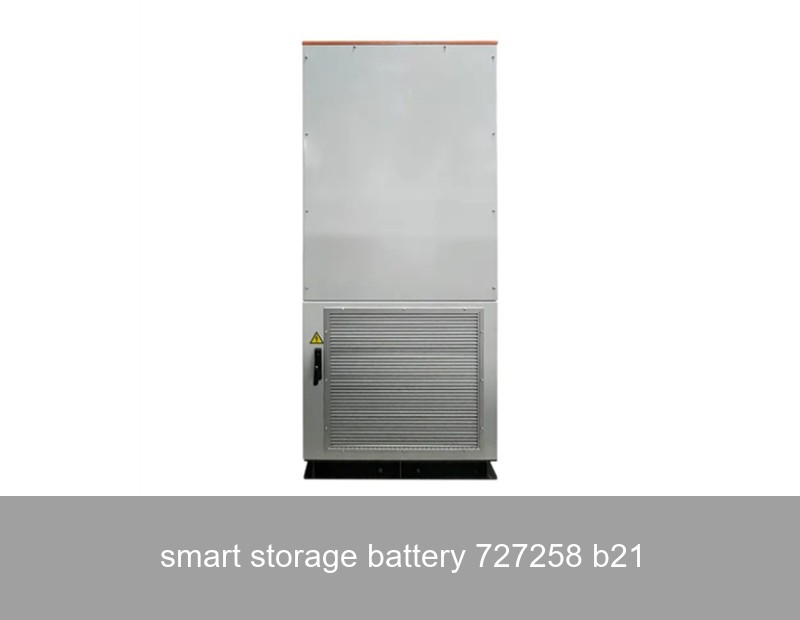
Have you ever wondered what happens when the sun sets on your solar panels, or the grid goes down during a storm? This is where the true hero of the modern energy landscape steps in: the smart storage battery. Far more than just a simple power bank, these intelligent systems are revolutionizing how we generate, store, and use electricity, particularly for savvy homeowners and businesses across Europe and the US. They're not just about backup; they're about optimizing every kilowatt-hour for maximum savings, efficiency, and independence. Let's delve into what makes a storage battery truly "smart" and why it's becoming an indispensable part of a sustainable energy future.
Table of Contents
What is a Smart Storage Battery?
At its core, a smart storage battery is an integrated energy system that combines advanced battery technology (like Lithium Iron Phosphate or LFP) with sophisticated software and power electronics. Unlike a basic battery, a smart system continuously monitors energy production (e.g., from solar panels), consumption patterns, grid conditions, and even weather forecasts. It uses this data to make autonomous, real-time decisions on when to store energy, when to discharge it, and how to prioritize loads. This intelligence transforms a passive component into an active energy manager for your home or business.
Companies like Highjoule have been at the forefront of this evolution since 2005. We don't just provide batteries; we deliver complete, intelligent energy storage systems designed for commercial, industrial, residential, and microgrid applications. Our solutions are built to seamlessly integrate with renewable sources, ensuring that clean energy is available precisely when and where it's needed most.
How Does a Smart Battery System Work? The Intelligence Cycle
Think of a smart battery as the brain of your personal energy ecosystem. Its operation is a continuous, four-step cycle:
- 1. Monitoring & Data Acquisition: Sensors constantly collect data on solar generation, household/business electricity demand, grid voltage and frequency, and battery state-of-charge.
- 2. Analysis & Forecasting: The system's software analyzes historical data and uses algorithms to predict short-term energy needs and production. For instance, it knows if a cloudy afternoon is expected tomorrow.
- 3. Decision Making: Based on pre-set user preferences (e.g., "maximize self-consumption," "peak shaving," or "backup priority"), the system decides the optimal action. Should it store excess solar now? Should it discharge to avoid drawing expensive peak-grid power?
- 4. Execution & Control: The battery management system (BMS) and inverter execute the decision, safely charging or discharging the battery bank, and potentially islanding the property from the grid during an outage.

Credit: Photo by Andreas Gücklhorn on Unsplash. A modern smart home energy setup, integrating generation and storage.
Key Benefits: Beyond Simple Backup Power
The value of a smart storage battery extends far beyond emergency power. Here are the primary advantages driving adoption:
| Benefit | Explanation | Impact |
|---|---|---|
| Increased Self-Consumption | Stores surplus solar energy generated during the day for use at night. | Can increase the direct use of your solar power from ~30% to 60% or more, drastically reducing grid imports. |
| Peak Shaving & Load Shifting | Discharges battery during periods of high grid demand (and high electricity rates) and charges during low-rate periods. | Significant reduction in demand charges for businesses and lower time-of-use bills for homeowners. |
| Enhanced Grid Resilience & Backup | Provides seamless, instantaneous power during grid outages. | Keeps critical loads running, ensuring safety, comfort, and business continuity. |
| Grid Services Support | Advanced systems can participate in virtual power plants (VPPs) to help stabilize the grid. | Potential for additional revenue streams by providing frequency regulation or capacity services. |
A Real-World Case: The Smithson Manufacturing Story
Let's look at a concrete example from the US Midwest. Smithson Manufacturing, a medium-sized metal fabrication plant, faced two major challenges: volatile time-of-use electricity rates that spiked during their afternoon operational peak, and occasional grid instability that risked damaging sensitive equipment.
In 2022, they installed a Highjoule Industrial Energy Storage System with 500 kWh capacity and intelligent peak-shaving software. The results, monitored over one year, were compelling:
- Demand Charge Reduction: The system automatically discharged during the utility's peak window (1 PM - 7 PM), reducing their peak demand by an average of 40%.
- Annual Savings: This led to a direct reduction of over $28,000 in annual electricity costs, yielding a return on investment in under 5 years.
- Reliability: During three brief grid outages, the system provided seamless backup for critical control systems, preventing an estimated $15,000 in production line restart costs and potential equipment damage.
"It's like having an automated energy manager on staff," noted the plant's facilities manager. "The system just handles it, and we see the savings on our bill." This case underscores the tangible financial and operational benefits of smart storage in a commercial setting. For more on how businesses are leveraging storage, see this report from the U.S. Department of Energy.
Choosing the Right Smart Storage System for Your Needs
Selecting a system isn't one-size-fits-all. Key considerations include:
- Capacity & Power: How much energy do you need to store (kWh), and at what rate do you need to discharge it (kW)? This depends on your daily consumption and peak loads.
- Battery Chemistry: LFP (Lithium Iron Phosphate) is now the preferred choice for stationary storage due to its long cycle life, safety, and stability, a technology Highjoule has extensively integrated into its product lines.
- Integration Capability: Does it seamlessly integrate with your existing solar inverters or new installations? A holistic approach is key.
- Software Intelligence: The "smart" factor is in the software. Look for user-friendly apps, customizable operating modes, and the potential for future grid service participation.
- Scalability: Can you easily add more battery modules later if your needs grow?
Highjoule's Role: Delivering Intelligent Energy Solutions
For nearly two decades, Highjoule has been engineering solutions that address these exact considerations. Our smart storage systems, such as the Highjoule H-Series for residential applications and the more robust M-Series for commercial & industrial sites, are built with LFP battery cells, modular architecture, and our proprietary Energy Synapse OS.
This operating system is the true intelligence hub, allowing users to set goals via a simple dashboard—whether it's maximizing solar self-sufficiency, achieving peak shaving, or ensuring 24/7 backup for essential circuits. For microgrids and larger installations, our systems are designed to communicate and coordinate, creating resilient local energy networks. Our global experience in diverse markets, from sunny California to grid-challenged areas in Europe, informs every product we design. You can explore independent performance data for various storage technologies at resources like the National Renewable Energy Laboratory (NREL).

Credit: Photo by American Public Power Association on Unsplash. A technician inspecting a large-scale battery storage installation.
The Future is Adaptive and Connected
The next frontier for smart storage batteries is deeper grid interaction and adaptability. We're moving towards systems that can automatically respond to real-time grid signals (a concept known as demand response) and aggregate to form virtual power plants. This turns distributed storage assets into a powerful tool for grid stability, facilitating higher penetration of renewables like wind and solar. Understanding these grid dynamics is complex; authoritative bodies like the International Energy Agency (IEA) provide valuable macro insights.
So, as you consider taking control of your energy costs and resilience, ask yourself: Is my current energy setup just a cost center, or can it be transformed into an intelligent, responsive asset that works for me 24/7?
 Inquiry
 Online Chat