


Understanding Solar Panel Durability: A Guide to Long-Term Performance and Value
You've made the smart decision to invest in solar energy. You're thinking about clean power, lower bills, and energy independence. But there's a quiet question in the back of every savvy homeowner's or business owner's mind: "How long will these panels actually last?" This concern goes beyond the simple warranty period and touches the core of your investment: solar panel durability. It's not just about the panels surviving; it's about them thriving and producing abundant energy for decades. Let's explore what true durability means and how it protects your green investment for the long haul.
Table of Contents
- What is Solar Panel Durability, Really?
- Key Factors That Affect Solar Panel Longevity
- The Data Behind Durability: Performance & Warranties Decoded
- Real-World Proof: A Case Study from Southern Spain
- Durability Beyond the Panel: The System-Wide Perspective
- How to Maximize the Durability of Your Solar Investment
What is Solar Panel Durability, Really?
When we talk about solar panel durability, we're not just referring to a panel that doesn't crack. True durability is a multi-faceted concept encompassing:
- Mechanical Robustness: Resistance to physical stress from hail, wind loads (often rated for 140+ mph), and snow.
- Environmental Endurance: The ability to withstand decades of UV exposure, temperature cycling (from freezing winters to scorching summers), humidity, and corrosive coastal air.
- Electrical Longevity: The slowest possible rate of power degradation, meaning the panel's output remains high over time.
- Material Stability: Prevention of issues like potential-induced degradation (PID) or delamination, which silently sap performance.
Think of it as the difference between a watch that merely ticks for 30 years and a precision timepiece that remains accurate for 30 years. You want the latter for your energy system.
Key Factors That Affect Solar Panel Longevity
Several environmental and technical factors act as the primary adversaries of long-term panel performance.
| Factor | Impact on Durability | Mitigation in Quality Panels |
|---|---|---|
| UV Radiation & Thermal Cycling | Degrades encapsulant (EVA), causing yellowing; stresses solder joints and cells. | Use of UV-resistant materials, robust cell interconnects, and rigorous testing (e.g., 1000+ hour damp heat test). |
| Moisture & Humidity | Can lead to corrosion of metal contacts and internal circuitry. | Impermeable backsheets, sealed junction boxes, and high-quality framing with solid corner seals. |
| Mechanical Loads | Wind, snow, and hail can cause microcracks in silicon cells, reducing output. | High rigidity frames, toughened anti-reflective glass, and hail impact certification (e.g., withstands 25mm hail at 80km/h). |
| Electrical Stress | System voltage and stray currents can cause Potential Induced Degradation (PID). | Use of PID-resistant solar cells and specialized encapsulants that prevent charge build-up. |

Image: Quality materials and construction are key to durability. (Photo by American Public Power Association on Unsplash)
The Data Behind Durability: Performance & Warranties Decoded
Manufacturers quantify durability through two critical warranties, which are your primary data-backed contracts:
- Product/Workmanship Warranty: Typically 12-15 years for defects. Top-tier manufacturers now offer 20-25 years, signaling immense confidence in their build quality.
- Performance Warranty: This is the golden metric. It guarantees a minimum power output over time. The industry standard is 90% output after 10 years and 80-85% after 25 years. Leading panels now promise 92% or higher after 25 years, a testament to improved solar panel durability.
This linear degradation rate, often around 0.3-0.5% per year, is backed by decades of field data. Studies by institutions like the U.S. Department of Energy show that well-manufactured panels installed correctly are exceeding their warranty timelines, with many systems operating effectively well beyond 30 years.
Real-World Proof: A Case Study from Southern Spain
The theory is solid, but real-world data is convincing. Consider a commercial installation we analyzed in the harsh climate of Almería, Spain—a region with extreme UV exposure and high temperatures.
- System: 500 kW rooftop array on an agricultural processing facility.
- Panels: High-durability monocrystalline modules with anti-PID technology and a 92% performance guarantee at year 25.
- Installation Date: 2012.
- 2023 Performance Report: After 11 years of continuous operation, the system's average annual degradation rate was measured at just 0.28%. This puts it on track to retain approximately 93% of its original nameplate capacity at year 25, outperforming its already strong warranty.
This case underscores that selecting panels engineered for durability from the start pays continuous dividends, ensuring a stable and predictable energy yield that secures the project's financial returns.
Durability Beyond the Panel: The System-Wide Perspective
A durable panel is useless if the inverter fails in 10 years or the mounting structure corrodes. True, long-term energy security requires a system-level approach to durability. This is where the expertise of a holistic solution provider becomes critical.
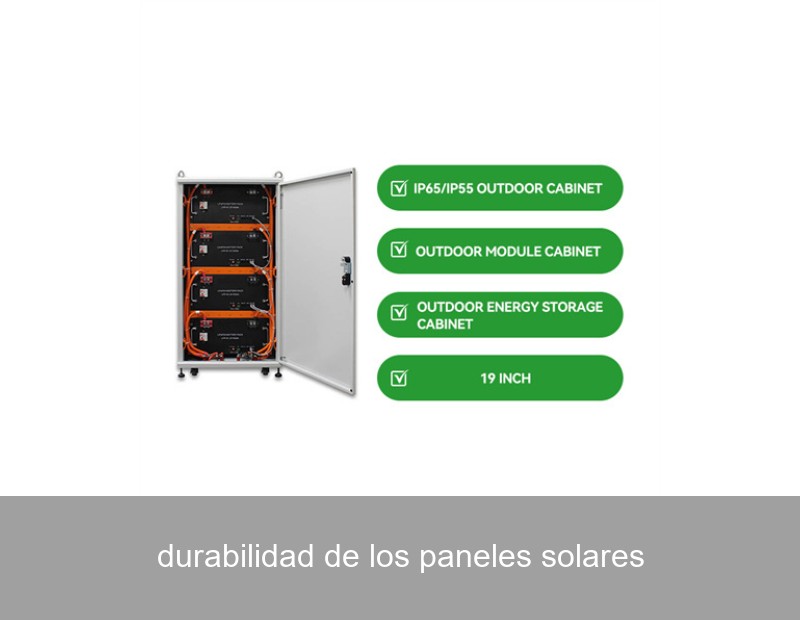
At Highjoule, we engineer durability into every component of our integrated energy systems. Our smart battery storage solutions, like the Highjoule HPS Series, are built with premium lithium-ion cells housed in robust, thermally managed enclosures, designed for a long cycle life even in demanding conditions. Paired with our AI-driven energy management system, the entire installation—panels, storage, inverters, and software—is optimized not just for today's efficiency, but for decades of reliable, high-performing service. We ensure that the durability of your panels is matched and leveraged by the entire ecosystem.

Image: Durability extends to the entire energy ecosystem, including storage. (Photo by Andreas Gücklhorn on Unsplash)
How to Maximize the Durability of Your Solar Investment
Your role in ensuring durability is centered on informed selection and professional partnership.
1. Choose Quality Over (Just) Price:
Invest in panels from manufacturers with a long track record, strong warranties, and independent certifications (like IEC 61215, IEC 61730). Look for products specifically tested for PID resistance and high mechanical loads.
2. Prioritize Professional Installation & Design:
A poorly installed panel will underperform and degrade faster. Ensure your installer conducts proper shading analysis, uses certified mounting hardware, and follows electrical best practices to minimize stress on the system.
3. Consider a Comprehensive Energy Partner:
Working with a provider like Highjoule means you're not just buying components; you're investing in a resilient energy asset. We provide end-to-end solutions—from durable panel selection and system design to integrating long-life storage and intelligent monitoring that proactively identifies any performance anomalies, ensuring your system's health for its full lifespan.
4. Implement Simple, Proactive Monitoring:
Use your system's monitoring platform to track energy production. A sudden, sustained drop can be an early indicator of an issue, allowing for prompt maintenance.
So, as you contemplate harnessing the sun's power, ask yourself this: Is your plan merely to install solar panels, or is it to build a resilient, high-yielding energy asset that will steadfastly power your ambitions for generations to come?
 Inquiry
 Online Chat