


Understanding the Dyness B4850 LiFePO4 48V 50Ah 2400W Battery: A Deep Dive into Modern Energy Storage
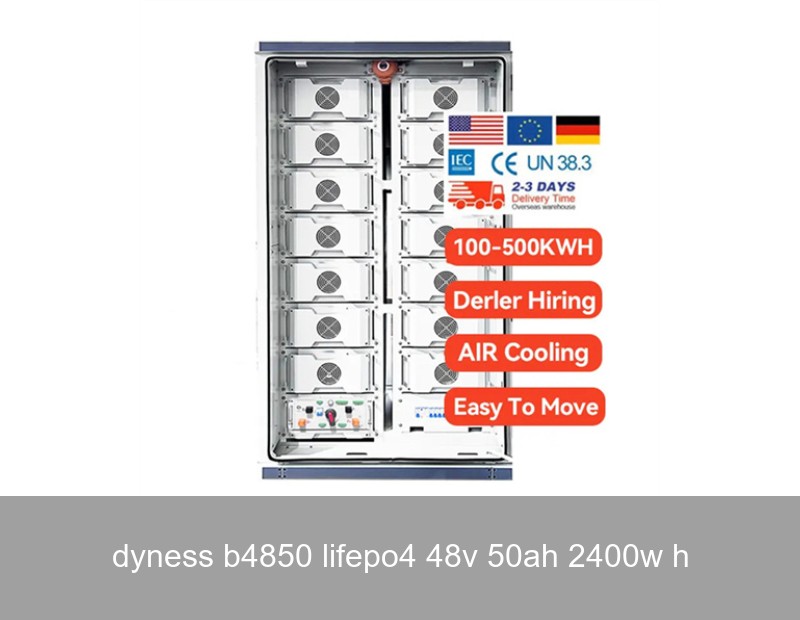
If you're exploring the world of home energy independence or looking to upgrade your commercial backup power, you've likely encountered a key player: the Dyness B4850 LiFePO4 48V 50Ah 2400W battery. This model represents a significant shift in how we store and use electricity, moving away from traditional, less efficient technologies. But what makes this particular battery specification so relevant today? The answer lies in the global push for resilient, sustainable power. As grid instability and energy costs rise, intelligent battery storage systems like these are no longer a luxury but a strategic necessity for homes and businesses alike. Companies like Highjoule, a global leader in advanced energy storage systems since 2005, integrate such high-quality battery cells into sophisticated, smart solutions that do more than just store power—they manage it intelligently for commercial, industrial, residential, and microgrid applications.
Table of Contents
- The LiFePO4 Revolution: Why Chemistry Matters
- Decoding the Specs: 48V, 50Ah, and 2400W Explained
- Real-World Performance: Beyond the Data Sheet
- Case Study: Enhancing a German Bed & Breakfast's Resilience
- The System Approach: Why Your Battery Needs a Brain
- Choosing Your Storage Partner: Key Considerations
The LiFePO4 Revolution: Why Chemistry Matters
Let's start with the foundation: LiFePO4, or Lithium Iron Phosphate. This isn't just another battery chemistry; it's a game-changer for stationary storage. You might ask, "Aren't all lithium batteries similar?" The difference is crucial. Compared to older lithium-ion variants (like NMC), LiFePO4 offers superior thermal and chemical stability, which translates directly into enhanced safety—a non-negotiable priority for home and business installations. Furthermore, they provide a significantly longer cycle life. We're talking about 3,500 to 6,000 deep cycles compared to perhaps 1,000-2,000 for lead-acid batteries. This longevity makes the total cost of ownership remarkably lower, even if the initial investment is higher. For a product like the Dyness B4850, this chemistry ensures it can handle daily charge and discharge cycles for well over a decade, making it a cornerstone for reliable systems. Highjoule's product engineers specifically select LiFePO4 cells for their safety and endurance, ensuring that our integrated storage solutions are built to last and protect your property.
Decoding the Specs: 48V, 50Ah, and 2400W Explained
These numbers might look like technical jargon, but they tell the story of the battery's capability. Think of it as the personality profile of your energy storage unit.
- 48V (Volts): This is the system voltage. A 48V platform is the industry standard for mid-to-large-scale residential and light commercial solar storage systems. It's a sweet spot that balances efficiency, cost, and power capability, allowing for meaningful energy transfer without the excessive costs or safety complexities of very high-voltage systems.
- 50Ah (Amp-hours): This is the battery's capacity rating at the specified voltage. Simply put, it tells you how much "fuel" is in the tank. A 48V battery with a 50Ah capacity stores 48V x 50Ah = 2,400 Watt-hours (2.4 kWh) of energy. This means it could theoretically deliver 2,400 watts of power for one hour, or 1,200 watts for two hours, before needing a recharge.
- 2400W (Watts): This is the power rating—how much electricity the battery can deliver at one moment in time. A 2400W rating means it can power a combination of appliances whose total wattage does not exceed 2400W. This is sufficient to run essential loads like refrigerators, lighting, computers, and even a well pump simultaneously during a grid outage.
It's vital to understand that a battery module like this is a building block. For example, Highjoule's H-Residential Series often uses such high-quality cells in modular designs, allowing homeowners to start with a base capacity (like 5-10 kWh using multiple modules) and expand over time as their needs and budget grow.

Image: Modular lithium battery installation, similar to systems utilizing units like the Dyness B4850. Source: Unsplash (Photographer: American Public Power Association)
Real-World Performance: Beyond the Data Sheet
Specifications are one thing, but how does a battery like the Dyness B4850 perform in your basement or utility room? The real advantage of modern LiFePO4 systems lies in their operational characteristics. They have a high round-trip efficiency (often over 95%), meaning you lose very little energy when storing and retrieving it. They can also discharge to nearly 100% of their capacity regularly without damage, unlike lead-acid batteries which suffer if discharged beyond 50%. This gives you access to your full stored energy investment. Furthermore, their wide operating temperature range ensures functionality in both hot attics and cold garages, a critical factor for diverse climates across Europe and North America.
Case Study: Enhancing a German Bed & Breakfast's Resilience
Let's look at a concrete example from Bavaria, Germany. A family-run Bed & Breakfast, dependent on a reliable power supply for guest comfort and its small commercial kitchen, faced frequent short grid outages and rising electricity tariffs. Their goal was to increase energy self-consumption from their existing solar panels and ensure uninterrupted power.
The Solution: A local installer deployed a system using multiple Dyness B4850 battery modules (totaling 14.4 kWh of storage) paired with a compatible hybrid inverter. This system was then integrated with a broader energy management platform, similar to the smart control systems found in Highjoule's H-Commercial ESS offerings, which optimize for cost and resilience.
The Data-Driven Outcome (12-month period):
| Metric | Before Installation | After Installation |
|---|---|---|
| Grid Energy Consumption | 8,200 kWh/year | 3,100 kWh/year |
| Solar Self-Consumption Rate | 35% | 82% |
| Grid Outage Impact | Business disruption | Zero disruption (critical loads backed up) |
| Estimated Annual Savings | - | €1,850+ |
This case illustrates the tangible benefits: financial savings, increased sustainability, and crucial peace of mind. The battery modules provided the reliable energy buffer, while the system intelligence—a core principle of Highjoule's design philosophy—maximized its economic and operational value.
The System Approach: Why Your Battery Needs a Brain
A battery is only as good as the system it's in. You can have the best cells in the world, but without intelligent management, you're not unlocking their full potential. This is where companies like Highjoule differentiate themselves. We don't just supply battery modules; we provide integrated Power Conversion Systems (PCS) and advanced Energy Management Systems (EMS).
Think of it this way: the Dyness B4850 is a strong, reliable muscle. Highjoule's technology adds the brain and nervous system. Our EMS can:
- Prioritize charging from solar excess.
- Decide when to draw from the battery or the grid based on real-time electricity prices (a feature increasingly valuable in markets with dynamic tariffs).
- Seamlessly manage grid outages with sub-20ms switchover times.
- Provide remote monitoring and diagnostics via user-friendly apps.
For microgrid and industrial applications, this intelligence scales further, allowing for peak shaving, demand charge reduction, and integration with generators. It transforms a simple storage unit into a strategic energy asset. You can learn more about the importance of system integration from the U.S. Department of Energy's resources on microgrids.

Image: Modern energy management software interface, crucial for maximizing battery value. Source: Unsplash (Photographer: Andreas Gücklhorn)
Choosing Your Storage Partner: Key Considerations
So, when evaluating a solution built around reliable batteries like the Dyness B4850, what should you look for in a provider?
- System Integration & Warranty: Ensure the provider offers a fully compatible system (battery, inverter, management) with a single, comprehensive warranty. Highjoule, for instance, provides end-to-end system warranties with dedicated support.
- Scalability: Can you easily add more battery modules later? Modular design is key for future-proofing your investment.
- Smart Features: Look for software that offers actionable insights, customizable operating modes, and firmware updates that improve functionality over time.
- Compliance & Safety: Verify all components have necessary regional certifications (e.g., UL in the U.S., CE in Europe). Highjoule products are rigorously tested to meet the highest international standards. For independent safety standards information, you can refer to resources from UL Solutions.
Ultimately, the goal is to move from simply buying a battery to implementing a tailored energy solution. The right partner will help you analyze your load profiles, solar production, and energy goals to design a system that delivers optimal return on investment and reliability.
Ready to Transform Your Energy Profile?
The Dyness B4850 LiFePO4 48V 50Ah 2400W module exemplifies the robust hardware available today. But the true power is unleashed when it's part of a thoughtfully engineered, intelligent system. Whether you're a homeowner seeking independence, a business owner mitigating operational risk, or a community developing a microgrid, the question is no longer *if* you need storage, but *how* to implement it most effectively. What specific energy challenge—be it unpredictable bills, grid reliability concerns, or sustainability goals—is most pressing for your home or business right now?
 Inquiry
 Online Chat