


The Dyness PowerBrick 51.2V 280Ah: Unlocking a New Era of Energy Storage
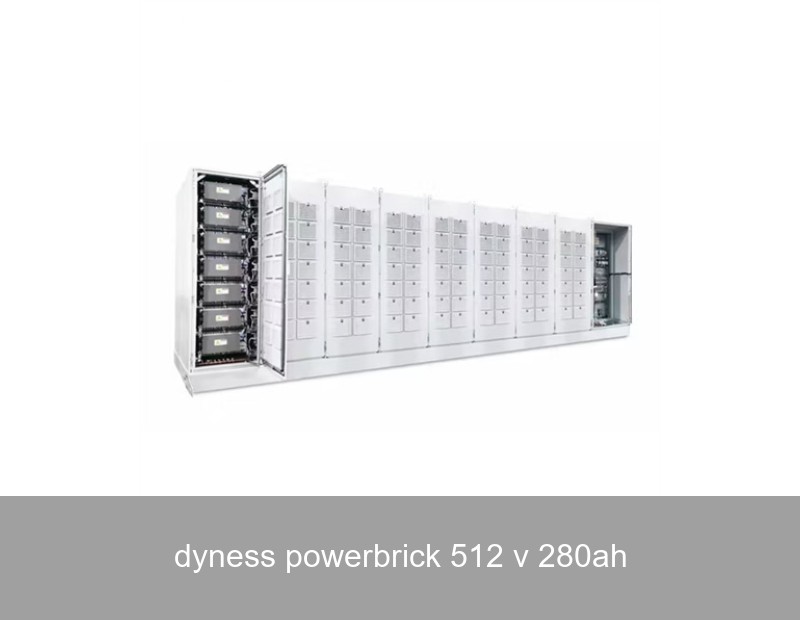
Have you ever watched your electricity bill climb, wondered about your carbon footprint, or worried about what happens during the next grid outage? You're not alone. Across Europe and the US, homeowners and business leaders are actively seeking solutions to take control of their energy. The conversation has shifted from "if" to invest in renewable energy to "how" to make it work reliably, day and night. At the heart of this energy revolution lies a critical component: the advanced lithium iron phosphate (LiFePO4) battery. And one model that's consistently generating buzz in professional circles is the Dyness PowerBrick 51.2V 280Ah. But what makes this particular battery module a standout choice, and how does it translate into real-world savings and security? Let's dive in.
What is the Dyness PowerBrick 51.2V 280Ah?
In simple terms, think of the Dyness PowerBrick 51.2V 280Ah as a super-efficient, long-lasting power bank for your entire property. It's a single, modular battery unit built with Lithium Iron Phosphate (LiFePO4) chemistry. The numbers tell a powerful story: 51.2 Volts is a standard voltage for residential and commercial energy systems, allowing for efficient integration, while the 280 Ampere-hour (Ah) rating signifies its massive energy capacity. A single module stores approximately 14.3 kWh of electricity. That's enough to run the average European household's essential loads—refrigeration, lights, communication—for a full day or more during an outage.
Its "PowerBrick" design is key. These units are engineered to be stacked and connected in parallel, allowing you to start with a system that meets your current needs and expand your storage capacity seamlessly as those needs grow. This scalability is a game-changer, transforming energy storage from a fixed cost into a flexible investment.

Image Source: Unsplash - Illustrative of modular battery design
Core Technical Advantages:
- Safety & Longevity: The LiFePO4 chemistry is inherently stable, significantly reducing thermal runaway risks compared to other lithium-ion types. It also boasts an exceptional cycle life, often exceeding 6000 cycles at 80% depth of discharge. This means decades of reliable service.
- High Efficiency: With round-trip efficiency typically over 95%, you lose very little of the precious solar energy you capture between charging and using it.
- Wide Operating Temperature: Designed to perform reliably in both the chilly winters of Scandinavia and the hot summers of Southern California.
Why High-Energy Density Batteries Matter for Your Energy Independence
The phenomenon is clear: energy prices are volatile, and climate-consciousness is rising. The data supports action. According to the International Energy Agency (IEA), global renewable capacity additions jumped by almost 50% in 2023, with solar PV accounting for three-quarters of this growth. But solar panels only produce when the sun shines. The true liberation from the grid comes from storing that surplus energy.
This is where high-capacity, durable batteries like the Dyness PowerBrick 51.2V 280Ah become the cornerstone. They allow you to:
| Goal | How the Battery Helps |
|---|---|
| Reduce Electricity Bills | Store cheap solar energy or off-peak grid power to use during expensive peak-rate hours (time-of-use arbitrage). |
| Ensure Backup Power | Provide seamless, automatic power during grid failures, keeping your home or business operational. |
| Maximize Self-Consumption | Increase the percentage of your own solar generation you use directly, sometimes from 30% to 70% or more. |
| Support the Grid | Advanced systems can provide grid services, potentially creating a new revenue stream. |
A Real-World Case: Powering a German Dairy Farm
Let's move from theory to practice. Consider a medium-sized dairy farm in Bavaria, Germany. The farm had a 100 kW rooftop solar array but was only using about 35% of the generation directly, selling the rest to the grid at a low feed-in tariff. Their cold storage and milking operations were vulnerable to grid instability, and energy costs were a significant overhead.
The Solution: The farm partnered with a system integrator to install an energy storage system centered on a bank of Dyness PowerBrick 51.2V 280Ah modules, totaling 286 kWh of storage. This was integrated with their existing solar inverters and a smart energy management system.
The Data-Driven Results (after 12 months):
- Self-Consumption Rate: Increased from 35% to 82%.
- Grid Energy Cost Reduction: Saved over €18,000 annually by avoiding peak-time grid draws.
- Backup Reliability: The system provided full backup for critical cooling and ventilation for 14 hours during a regional winter storm outage, preventing spoilage.
- ROI Timeline: Projected payback period of just under 7 years, thanks to combined savings and Germany's support for renewable self-consumption.
This case, mirrored by many commercial operations in the US and EU, shows that the right battery technology isn't an expense—it's a strategic asset.
Beyond the Brick: Integrating into a Complete Energy Ecosystem
A battery module, even one as capable as the Dyness PowerBrick, is only one piece of the puzzle. Its performance and safety are maximized when it's part of a seamlessly integrated system. This is where the expertise of a provider like Highjoule becomes critical.
Since 2005, Highjoule has evolved from a component supplier to a global leader in complete, intelligent energy storage solutions. We don't just sell batteries; we engineer resilience. For residential and commercial clients, our Highjoule HES Series integrated energy storage systems are a prime example. These systems can incorporate high-quality modules like the Dyness PowerBrick alongside our proprietary battery management system (BMS), hybrid inverters, and AI-driven energy management software.
Why integration matters: Our platform constantly optimizes your energy flow. It decides when to charge from solar, when to discharge to power your home, when to store for backup, and even when to sell back to the grid if it's advantageous. It ensures all components communicate perfectly, extending battery life and guaranteeing safety. For larger-scale needs like microgrids for industrial campuses or remote communities, Highjoule's Containerized Battery Energy Storage Systems (BESS) provide utility-scale power in a pre-engineered, rapidly deployable format.
Image Source: Unsplash - Illustrative of a modern home energy setup
Choosing the Right System and Partner
So, you're convinced of the value of energy storage. How do you navigate the market? First, look beyond the spec sheet. The Dyness PowerBrick 51.2V 280Ah is a superb component, but its success depends on:
- System Design: Is the system correctly sized for your consumption patterns and future goals?
- Integration Quality: Are the inverter, BMS, and software from a single, trusted provider or a compatible, proven ecosystem?
- Safety Certifications: Does the complete system have necessary regional certifications (like UL 9540 in the US, CE in Europe)?
- Partner Expertise: Does your provider have a proven track record in your specific application—be it a home, a factory, or a farm?
Highjoule's approach is to act as your long-term technology partner. Our teams in Europe and North America work with certified local installers to conduct detailed energy audits, design optimized systems, and provide 24/7 monitoring and support. We ensure the robust Dyness PowerBrick modules perform at their peak within a smarter, safer whole.
Your Energy Future: What's the Next Step?
The journey to energy independence is exciting, but it starts with a question. Look at your last 12 months of utility bills. How much did you spend during peak rate periods? What critical loads would need to run during a 24-hour outage? The answers begin to define the scale of your opportunity.
Are you ready to see how a scalable, high-capacity storage solution, built with components like the Dyness PowerBrick and the intelligent integration Highjoule provides, can transform your energy profile from a cost center into a pillar of resilience and savings?
 Inquiry
 Online Chat