


German Solar Energy Companies: Powering the Future with Innovation and Storage
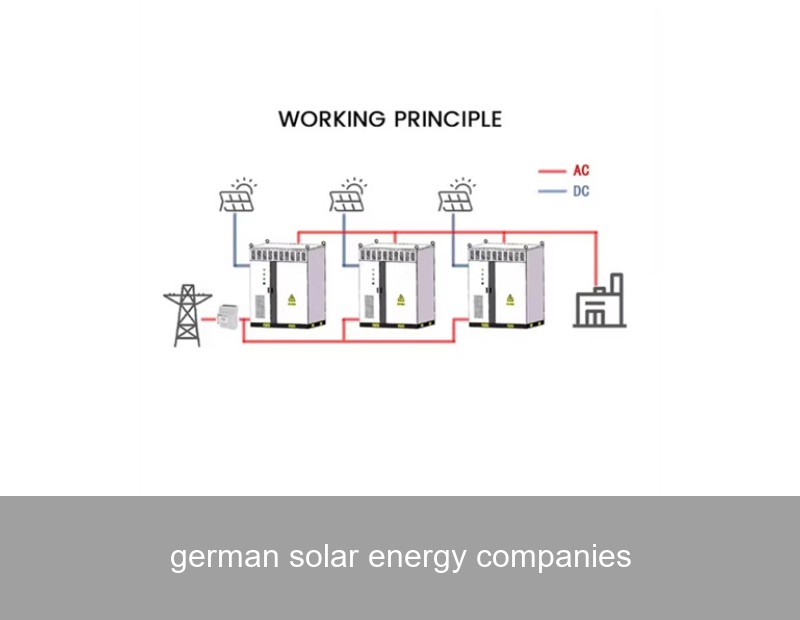
You've likely noticed the transformation. Across Germany's cityscapes and countryside, rooftops are shimmering with photovoltaic panels. This isn't just a trend; it's the heart of the Energiewende (energy transition). But as leading German solar energy companies push the boundaries of panel efficiency, a critical question emerges: how do we ensure this clean, abundant power is available when the sun isn't shining? The answer, and the next frontier for the industry, lies not just in generation, but in intelligent storage. This is where the synergy between solar innovators and advanced energy storage system providers becomes the true game-changer.
The Challenge: Beyond Peak Production
German solar companies are world leaders in technology and installation quality. They've mastered the art of capturing solar energy. However, the inherent intermittency of solar power creates a well-known curve: a peak at midday and a drop to zero at night. This mismatch between production and consumption strains the grid, can lead to curtailment of renewable energy (where excess power is wasted), and limits the self-consumption potential for homes and businesses. Simply put, without storage, a significant portion of solar's potential value is lost.

This challenge is particularly acute for Germany's famed Mittelstand (small and medium-sized enterprises). For a manufacturing company, consistent, predictable energy costs are crucial for competitiveness. Relying solely on grid power exposes them to price volatility, while a solar-only system leaves them in the dark during evening shifts or cloudy periods.
The Data: Why Storage is No Longer Optional
The numbers paint a clear picture. According to the Fraunhofer Institute for Solar Energy Systems (ISE), photovoltaic systems generated over 50 TWh of electricity in Germany in the first half of 2023, a record high. Yet, studies suggest that without storage, a typical German household with solar PV only uses about 30-40% of its solar power directly. The rest is fed into the grid, often at lower feed-in tariffs.
Furthermore, the German Energy Agency (dena) highlights that to achieve the country's 2045 climate neutrality targets, flexibility through storage is essential. The market is responding: the German energy storage market saw growth of over 150% in 2022 for residential battery systems alone. This isn't just about ecology; it's a powerful economic decision. By pairing solar with storage, self-consumption can soar to 70% or more, dramatically reducing electricity bills and providing a hedge against rising energy prices.
Case Study: Brewing Sustainability in Bavaria
Let's look at a concrete example. Brauerei Schmitt, a family-owned brewery in Bavaria, partnered with a local German solar energy company and Highjoule to tackle their energy-intensive operations. Their challenge was twofold: reduce high grid demand charges during peak brewing cycles and ensure clean energy usage around the clock.
- A 450 kWp rooftop solar array installed by the solar partner.
- A Highjoule H-Series Commercial Battery Energy Storage System (BESS) with 500 kWh capacity and advanced energy management software.
| Metric | Result | Impact |
|---|---|---|
| Solar Self-Consumption | Increased from 35% to 82% | Massively reduced grid purchases |
| Peak Grid Demand | Reduced by 60% | Lower capacity charges & grid strain |
| CO2 Emissions | Avoided 185 tonnes | Significant step towards carbon-neutral brewing |
| Energy Cost Savings | €68,000 annually | Improved bottom line & ROI |
"The Highjoule system acts as a silent, efficient partner," said the brewery's managing director. "It stores our midday solar surplus and releases it precisely when our kettles and cooling systems need it most, day or night. It's given us control we never had before." This case exemplifies the powerful partnership between solar installers and storage technology providers.
The Solution: Intelligent Storage Systems
Modern battery storage is far more than a simple battery bank. It's an integrated energy management hub. For solar companies, offering a complete "solar-plus-storage" package transforms their value proposition from simply installing panels to becoming a full-scale energy solutions provider. Key features of these advanced systems include:
- AI-Powered Energy Management: Systems learn consumption patterns and weather forecasts to optimize charging and discharging cycles.
- Grid Services Compatibility: In some configurations, systems can provide grid stabilization services, creating an additional revenue stream.
- Safety & Longevity: Built-in battery management systems (BMS) with thermal controls ensure safety and maximize the system's lifespan, often exceeding 15 years.
- Scalability: Solutions range from compact residential units to massive containerized systems for industrial applications.

Highjoule's Role in the German Solar Ecosystem
As a global leader in advanced energy storage since 2005, Highjoule is a natural partner for forward-thinking German solar energy companies. We understand the specific technical and regulatory landscape of the European and German markets. Our products are designed to seamlessly integrate with leading solar inverters and energy management platforms, making the combined offering smooth for installers and end-clients.
For our partners, we provide:
- Highjoule H-Series (Commercial/Industrial): The system used by Brauerei Schmitt, known for its modularity, high cycle life, and robust performance for demanding applications.
- Highjoule ResiCore (Residential): A sleek, safe, and intelligent home storage solution that maximizes self-consumption and provides backup power during outages.
- Highjoule Microgrid Controller: For larger projects or communities seeking energy independence, this software platform can orchestrate solar, storage, and multiple generation sources into a resilient microgrid.
Our role is to empower solar companies. We provide the storage technology, training, and technical support, allowing them to expand their service portfolio, increase project value, and deliver a more resilient and valuable outcome to their customers.
The Future: Smarter Grids and Energy Independence
The trajectory is clear. The future belongs to integrated, smart energy systems. The next wave of innovation for German solar energy companies will involve not just installing components, but orchestrating energy ecosystems. This includes vehicle-to-grid (V2G) integration, participation in virtual power plants (VPPs), and creating true energy communities.
According to a report by Agora Energiewende, flexibility from millions of decentralized storage units will be a cornerstone of a cost-effective and secure renewable energy system. The companies that master the combination of solar generation, intelligent storage, and digital energy management will lead the market.

For a business owner in Germany considering solar, or for a solar company looking to differentiate, the question is no longer "if" but "how" to integrate storage. What specific energy profile does your facility have, and how could an intelligent storage system be designed to meet not just today's needs, but adapt to the energy market of tomorrow?
 Inquiry
 Online Chat