


Electricity Producing Solar Panels: Your Gateway to Energy Independence
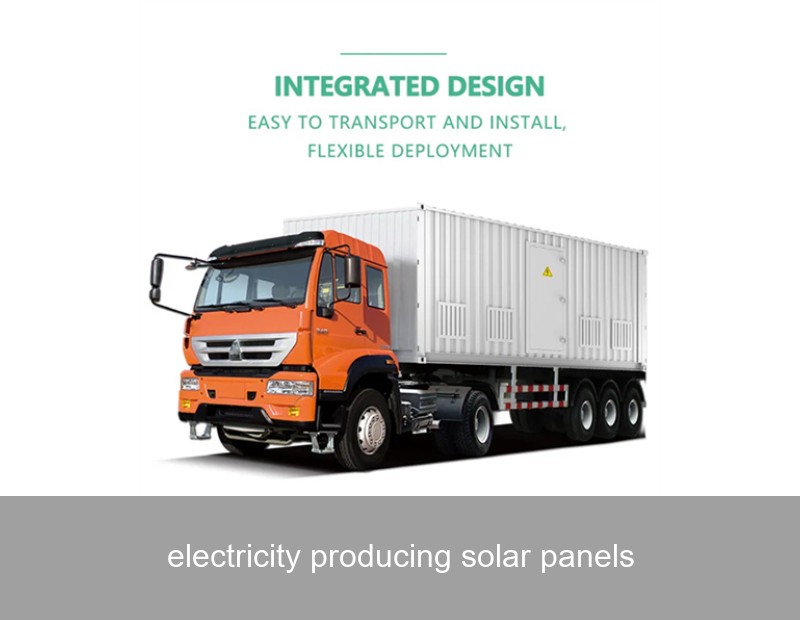
Table of Contents
- The Phenomenon: More Than Just Sunlight on Glass
- The Data: Quantifying the Modern Solar Revolution
- A Case Study: From Sunlight to Grid Stability in Bavaria
- The Crucial Insight: It's Not Just Panels, It's a System
- How Highjoule Powers the Next Generation of Solar
- The Future Horizon: What's Next for Your Rooftop?
Let's be honest, when you think of electricity producing solar panels, you probably picture sleek, dark rectangles sitting silently on a rooftop, magically turning sunshine into power for your home. And you're not wrong! But the real story—the one that transforms them from a simple eco-friendly gesture into a cornerstone of modern energy independence—is far more fascinating. It's a tale of physics, engineering, and intelligent integration. As a society increasingly powered by renewables, understanding this system is key to unlocking its full potential.
The Phenomenon: More Than Just Sunlight on Glass
So, how does it actually work? At the heart of every panel are photovoltaic (PV) cells, typically made of silicon. When photons from sunlight strike these cells, they energize electrons, knocking them loose. This creates a flow of direct current (DC) electricity. It's a clean, silent process with no moving parts. But here's the first catch: raw DC power isn't what powers your refrigerator, charges your laptop, or feeds back into the community grid. That requires conversion to alternating current (AC). This is where the often-overlooked hero, the inverter, comes in. But the journey doesn't end there. The sun isn't a constant provider; clouds pass, night falls. This inherent intermittency is the fundamental challenge and opportunity that defines modern solar energy systems.

Image Source: Unsplash - A detailed look at the technology inside electricity producing solar panels.
The Data: Quantifying the Modern Solar Revolution
The numbers behind solar adoption tell a compelling story of rapid growth and increasing viability. According to the International Energy Agency (IEA), solar PV is on track to become the largest source of installed electricity capacity globally by 2027. In the United States alone, the Solar Energy Industries Association (SEIA) reports that the residential solar market has seen consistent annual growth, with millions of homes now powered primarily by the sun. In Europe, driven by both policy goals and energy security concerns, countries like Germany, Spain, and the Netherlands are accelerating deployments at a remarkable pace.
But raw installation figures only show part of the picture. The true measure of success is self-consumption—the percentage of the solar energy you produce that you actually use in your own home or business. Without a way to store excess production, this rate often hovers around 30-50%, meaning a significant portion of your clean, self-generated electricity is exported to the grid, often for a minimal feed-in tariff. This is the economic and operational gap that the next piece of the puzzle fills.
| Scenario | Self-Consumption Rate | Grid Dependence at Night | Bill Savings Potential |
|---|---|---|---|
| Solar Panels Only | 30-50% | 100% | Moderate |
| Solar Panels + Battery Storage | 70-90%+ | 10-30% | High (with backup power) |
A Case Study: From Sunlight to Grid Stability in Bavaria
Let's move from theory to a real-world example. Consider a mid-sized dairy farm in Bavaria, Germany. The farm installed a 50 kW rooftop solar array in 2020. Initially, the system covered daytime operations, but excess noon-time power was sold to the grid at a low rate, while the farm still bought expensive power in the early morning and evening for milking and cooling.
In 2022, the farm integrated a Highjoule HI-ESS 30 battery storage system. The results, monitored over one year, were transformative:
- Self-Consumption Rate: Increased from 41% to 88%.
- Grid Energy Purchases: Reduced by 76%.
- Annual Energy Cost Savings: €8,400, improving the ROI of the entire solar investment.
- Resilience: The system now provides seamless backup power for critical refrigeration, a vital need for a dairy operation.
This case, mirrored by thousands of commercial and residential projects across Europe and North America, illustrates the paradigm shift. The goal is no longer just to produce solar electricity, but to manage, store, and optimize it intelligently.

Image Source: Unsplash - Example of a commercial solar installation on an agricultural building.
The Crucial Insight: It's Not Just Panels, It's a System
This leads us to the core insight: The value of electricity producing solar panels is maximized only when they are part of an integrated energy system. Think of the panels as the "generation muscle." To be truly effective, this muscle needs a "brain" and a "energy bank."
- The Brain (Energy Management System): This intelligent software predicts energy production (using weather data) and consumption patterns. It decides in real-time whether to power the home, charge the battery, or export to the grid, always aiming for maximum economic benefit and reliability.
- The Energy Bank (Battery Storage): This is the component that breaks free from the sun's schedule. It stores surplus daytime energy for use at peak evening hours, during outages, or on cloudy days.
Without this integration, you're leaving significant value—both financial and practical—on the table. For more on the importance of system integration, the U.S. Department of Energy's Solar Energy Technologies Office provides extensive resources.
How Highjoule Powers the Next Generation of Solar
This is precisely where Highjoule's expertise comes into play. Since 2005, we've moved beyond seeing components in isolation. We design and deliver complete, intelligent storage solutions that transform your solar panels into a resilient, independent power asset.
Our H-Series residential and commercial battery systems, like the model deployed in Bavaria, are engineered for high cycle life, safety, and seamless integration with leading inverter brands. Coupled with our EnergyOS™ platform, the system doesn't just store energy—it learns, optimizes, and gives you complete control. You can prioritize self-consumption, participate in grid services where available, or ensure critical backup power for essential loads, all from an intuitive app.
For larger-scale applications like microgrids or industrial sites, Highjoule's containerized megawatt-scale storage solutions provide the grid stability and energy shifting needed to support massive solar deployments, turning intermittent renewable sources into firm, dispatchable power.
The Future Horizon: What's Next for Your Rooftop?
The technology continues to evolve. Panel efficiencies are slowly creeping upward, but the most exciting innovations are in system intelligence and storage. We're moving towards hyper-local energy communities, where neighborhoods with solar and storage can trade energy peer-to-peer. Vehicles are becoming mobile batteries through smart vehicle-to-home (V2H) charging. The humble electricity producing solar panel is becoming the entry point to a dynamic, digital, and decentralized energy network.
So, the question is no longer just "How many panels do I need?" The more empowering questions to ask are: "How much energy independence do I want?" "How do I build resilience against rising costs and grid instability?" and "How can my investment work smarter for me every single day?"
Your solar panels are ready to produce. Is your home or business ready to fully harness that power? What would you do with a personal energy system that not only saves money but also provides unwavering peace of mind?
 Inquiry
 Online Chat