


Choosing the Right EMC Cabinets Supplier: A Critical Decision for Modern Energy Storage Systems
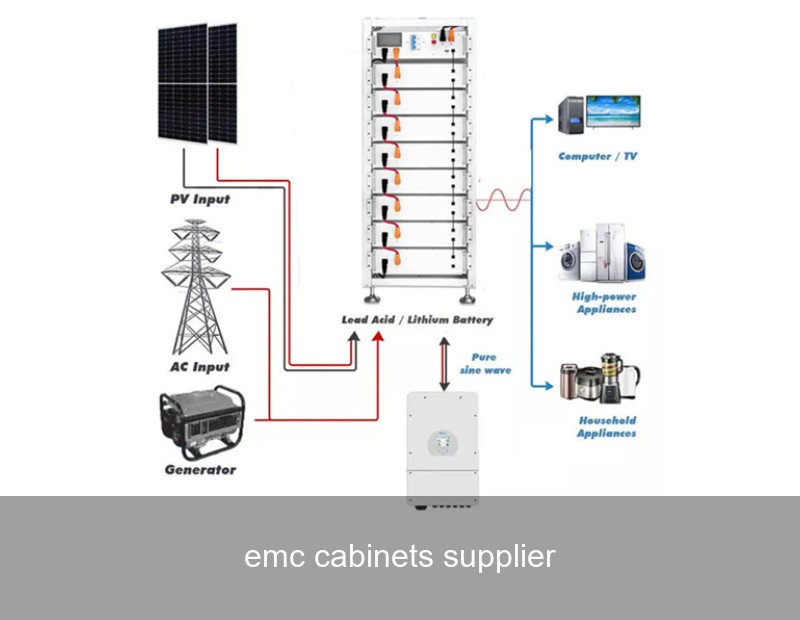
You’ve meticulously selected the latest battery cells, invested in cutting-edge inverter technology, and designed a sleek system layout. But there’s one component whose importance is often underestimated, yet it holds the key to your system’s reliability, safety, and regulatory compliance: the EMC cabinet. As renewable energy and battery storage systems become denser and more intelligent, the electromagnetic compatibility (EMC) of the enclosure housing these sensitive electronics isn't just an afterthought—it's a foundational requirement. This is where partnering with a knowledgeable and experienced EMC cabinets supplier transitions from a procurement task to a strategic partnership for long-term project success.
Table of Contents
- What is an EMC Cabinet and Why Does It Matter?
- The Hidden Costs of a Poor EMC Enclosure
- Key Criteria for Selecting Your EMC Cabinets Supplier
- Case Study: A Real-World Grid-Scale Storage Challenge
- The Highjoule Approach: Integrated EMC Solutions
- Future Trends in EMC for Energy Storage
- Your Next Step: Questions to Ask
What is an EMC Cabinet and Why Does It Matter?
An EMC (Electromagnetic Compatibility) cabinet is a specialized enclosure designed to achieve two primary goals: containing electromagnetic interference (EMI) generated by the equipment inside, and protecting that equipment from external EMI. Think of it as a sophisticated shield. In an energy storage system (ESS), power conversion systems (PCS), battery management systems (BMS), and communication modules all operate at high frequencies and currents, creating a significant amount of electrical "noise." Without proper containment, this noise can disrupt nearby devices, from radio communications to other sensitive industrial equipment. Conversely, external noise from the grid or industrial machinery can corrupt data signals within your ESS, leading to malfunctions or false readings.
For projects in Europe and the U.S., regulatory compliance is non-negotiable. An EMC cabinet that helps your system meet standards like the EU’s EMC Directive (2014/30/EU) or the FCC Part 15 rules in the U.S. is essential for market access. A reputable EMC cabinets supplier understands these regulations intimately and designs products that form a core part of your compliance strategy, not just a metal box.
The Anatomy of an Effective EMC Enclosure
Not all metal boxes are created equal. Key features differentiate a high-performance EMC cabinet:
- Conductive Gasketing: Special seals on doors and panels ensure a continuous conductive path, eliminating gaps where EMI can leak.
- EMI Filtered Penetrations: All cable entries—for power, data, and cooling—must use shielded connectors or waveguide vents that block EMI while allowing pass-through.
- Material and Finish: The base material (often zinc-plated steel or aluminum) and its surface conductivity are critical for shielding effectiveness (SE), often measured in decibels (dB).
- Thermal Management Integration: Effective cooling must be achieved without compromising the EMI seal, requiring specialized air conditioners or heat exchangers.

Image Source: A technical illustration showing EMC sealing and component layout in a cabinet. (Example from industry resource)
The Hidden Costs of a Poor EMC Enclosure
The phenomenon is clear: system integrators sometimes source enclosures based primarily on cost and lead time, viewing them as commoditized items. The data, however, tells a different story. Studies and field reports indicate that EMC-related issues account for up to 20% of unexplained system failures in complex electronic installations. The financial impact unfolds in stages:
- Pre-Commissioning Delays: Failure to pass mandatory EMC compliance tests leads to costly redesigns, retrofits, and rescheduled commissioning dates.
- Operational Instability: Intermittent communication losses between BMS and inverters can cause nuisance shutdowns, reducing system availability and revenue.
- Reputational Damage: For a utility or commercial site, an ESS that interferes with their own or a neighbor's operations creates significant trust issues.
This is why leading system providers don't just buy cabinets; they collaborate with their EMC cabinets supplier as a technical partner from the design phase onward.
Key Criteria for Selecting Your EMC Cabinets Supplier
Moving beyond price-per-unit requires a more nuanced evaluation. Use this framework to assess potential suppliers:
| Criteria | Basic Supplier | Advanced Partner (e.g., Highjoule) |
|---|---|---|
| Design Support | Provides standard catalog items. | Offers co-engineering, custom modifications for thermal, seismic, and EMC needs specific to ESS. |
| Testing & Certification | May offer generic test reports. | Provides project-specific shielding effectiveness (SE) data, supports full-system compliance testing, understands regional nuances (CE, FCC). |
| Thermal Integration | Sells cabinet and cooling as separate items. | Designs integrated thermal management that maintains EMC integrity, a critical need for battery and power electronics lifespan. |
| Global Logistics & Support | Limited regional footprint. | Has a supply chain and technical support structure aligned with your target markets (Europe, North America). |
Case Study: A Real-World Grid-Scale Storage Challenge
Let’s look at a concrete example from the UK. A developer was commissioning a 50 MW / 100 MWh battery storage facility to provide grid frequency response services. During preliminary EMC testing, the system exhibited elevated radiated emissions, threatening to delay the crucial grid connection agreement. The issue was traced to EMI leakage from the auxiliary power and control cabinets housing the site’s SCADA and communication hubs.
The Data-Driven Solution: Rather than applying makeshift fixes like copper tape, the developer engaged a specialist partner. The solution involved replacing the standard cabinets with custom EMC-rated cabinets featuring filtered power entries, shielded cooling vents, and redesigned internal cable routing. Post-retrofit testing showed a reduction of radiated emissions by over 15 dB, bringing the entire site well within the limits of the EN 55032 standard. The project achieved connection on schedule, avoiding an estimated €250,000 in potential delay penalties and lost revenue.
This case underscores that the right enclosure solution, applied to even the "support" systems, is vital for overall project integrity.
The Highjoule Approach: Integrated EMC Solutions
At Highjoule, our perspective is born from nearly two decades of building complete energy storage systems. We understand that the cabinet is not just a container; it's a core system component for reliability and performance. That’s why our engineering extends to the enclosure level.
For our commercial and industrial (C&I) and utility-scale storage solutions, we either partner with top-tier EMC cabinets suppliers under strict co-development agreements or manufacture our own specialized enclosures. This ensures seamless integration. Our IntelliRack platform, for instance, incorporates EMC shielding, fire suppression, and precision cooling into a single, pre-validated module. This modular approach drastically reduces on-site integration risk and accelerates commissioning—a key concern for our clients in the U.S. and Europe facing tight project timelines.
Our services include EMC design consultancy, where we help clients specify the correct shielding levels and cabinet configurations for their specific application, be it a hospital microgrid requiring ultra-low noise or an industrial plant with harsh EMI conditions. We bridge the gap between the battery stack and the grid connection, ensuring every component, down to the cabinet seal, works in harmony.

Image Source: Highjoule's technical team performing integration validation on a custom enclosure system.
Future Trends in EMC for Energy Storage
The evolution of ESS technology will place even greater demands on EMC cabinets. Two trends are particularly relevant:
- Higher Power Densities: As we pack more power into smaller footprints (like Highjoule's latest Hyperion C&I series), the concentration of EMI sources increases. Future cabinets will need even higher shielding effectiveness without sacrificing cooling capacity.
- V2G and Bidirectional Charging: Vehicle-to-Grid technology introduces new, variable EMI sources from electric vehicles. Storage systems and their cabinets must be resilient to this incoming noise while also preventing their own interference from affecting the vehicle's sensitive electronics. Proactive EMC cabinets suppliers are already testing for these scenarios.
Staying ahead requires continuous R&D. For deeper insights into global EMC standards, resources like the International Electrotechnical Commission (IEC) and the IEEE provide authoritative frameworks that guide our development.
Your Next Step: Questions to Ask
The choice of your EMC cabinets supplier is a de facto choice about your system's resilience and compliance. It's a technical decision with significant commercial implications. As you evaluate your options, consider posing these questions in your next supplier discussion:
- "Can you provide a project-specific shielding effectiveness test report for the exact configuration of my power and communication cables?"
- "How does your thermal management design (air conditioner, fans) maintain its EMC seal over 10+ years of operation and thousands of thermal cycles?"
- "Can you share a case study where your cabinet solution resolved a specific EMI failure mode in a battery storage application similar to mine?"
What is the most persistent EMC challenge you've encountered in your energy storage projects, and how did the enclosure design contribute to solving—or complicating—it?
 Inquiry
 Online Chat