


Choosing the Right Supplier of Type 4x IP66 Enclosures for Harsh Environment Energy Storage
If you're specifying battery energy storage systems (BESS) for commercial, industrial, or utility-scale projects, you've likely encountered the terms "Type 4x" and "IP66." But what do they really mean for your project's longevity and ROI? More importantly, how do you select a supplier of type 4x ip66 solutions that guarantees both robust protection and intelligent performance? As extreme weather events become more frequent and projects expand into diverse environments, this isn't just a technical checkbox—it's a critical business decision for asset resilience.
Table of Contents
- Beyond the Rating: What Type 4x & IP66 Truly Mean
- The Harsh Reality: Why This Protection is Non-Negotiable
- Case Study: A Nordic Microgrid's Challenge
- More Than a Box: The Hallmarks of a Leading Supplier
- Highjoule's Approach: Integrated Protection for Sustainable Power
- Key Questions for Your Next Supplier Evaluation
Beyond the Rating: What Type 4x & IP66 Truly Mean
Let's demystify the jargon. These ratings are international standards defining ingress protection against solids and liquids.
- Type 4x (NEMA Standard): This rating indicates the enclosure is constructed from corrosion-resistant materials (like stainless steel or robust polymers) and protects against corrosion, windblown dust, rain, splashing water, and hose-directed water. The "x" often signifies additional protection against ice formation.
- IP66 (IEC Standard): The "6" in both positions is key. The first digit (6) means "dust-tight" – no ingress of dust. The second digit (6) guarantees protection against powerful water jets from any direction. You can literally hose it down.
In practice, a supplier of type 4x ip66 certified enclosures is promising you a system built to withstand severe outdoor conditions without failure. But the rating is just the starting point. The real expertise lies in how this protection is integrated into a fully functional, thermally managed, and serviceable battery system.

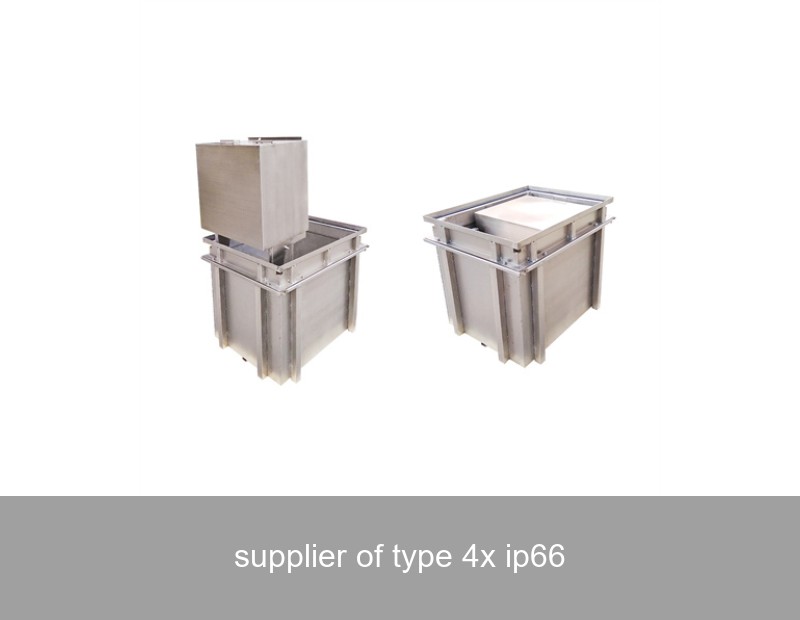
Image: A typical IP66/NEMA 4x rated enclosure must withstand direct water jets and dust ingress.
The Harsh Reality: Why This Protection is Non-Negotiable
Consider the operational phenomena facing modern energy storage assets:
- Phenomenon: Increased deployment in coastal areas (for renewable pairing) exposes systems to salt-laden air, a highly corrosive agent.
- Phenomenon: Industrial and agricultural settings bring conductive dust, chemical splashes, and high-pressure wash-downs.
- Phenomenon: Snow, ice, and driving rain in northern climates can infiltrate standard cabinets, leading to shorts, sensor failure, and thermal runaway risks.
The data is clear: environmental stress is a leading contributor to premature system degradation. A 2021 NREL report on BESS failures highlighted that environmental factors and improper commissioning account for a significant portion of safety and performance incidents. This isn't just about the battery cells; it's about the entire enclosure ecosystem protecting them.
Case Study: A Nordic Microgrid's Challenge
Let's look at a real-world scenario from a project in Northern Norway. A remote community microgrid needed a 500 kWh containerized BESS to stabilize wind and diesel power. The specification called for IP55 initially, deemed sufficient for "cold weather."
The Problem: During the first winter, blowing snow, driven by fierce winds, infiltrated cable conduits and service panels not rated for full water jet protection. Moisture led to ground fault alarms and forced the system into frequent shutdowns for maintenance, jeopardizing grid stability during peak demand.
The Data-Driven Solution: A retrofit was required. The project team sought a supplier of type 4x ip66 solutions that could provide not just replacement cabinets, but a holistic redesign. The new enclosures needed to:
- Maintain IP66 integrity at temperatures down to -30°C.
- Integrate seamless thermal management to prevent internal condensation.
- Allow for safe, easy service access without compromising the seal.
Post-retrofit data over two winters showed a 100% elimination of moisture-related faults and a 15% reduction in unscheduled maintenance hours, directly translating to higher availability and lower LCOE (Levelized Cost of Energy).
More Than a Box: The Hallmarks of a Leading Supplier
Choosing a supplier based solely on a certification label is a risk. You need a partner with deep system integration knowledge. Here’s what to look for:
| Feature | Basic Supplier | Expert System Integrator (like Highjoule) |
|---|---|---|
| Sealing Strategy | Standard gaskets on doors only. | Multi-layer sealing on all seams, cable glands, and conduit entries; validated with chamber testing. |
| Thermal Management | Separate, often unsealed, cooling unit. | IP66-rated, integrated liquid or air cooling system that maintains seal integrity while managing internal climate. |
| Material Science | Painted mild steel or standard aluminum. | Marine-grade aluminum alloys or stainless steel with corrosion-resistant treatments for coastal sites. |
| Serviceability | Full system shutdown required for access. | Modular, compartmentalized design allowing safe access to components without exposing the entire system. |
Highjoule's Approach: Integrated Protection for Sustainable Power
At Highjoule, our philosophy is that true resilience is engineered from the inside out. As a global supplier of type 4x ip66 ready energy storage systems, we don't just source enclosures; we design them as the foundational element of system intelligence.
Our H-Joule Fortis Series for commercial and industrial applications is a prime example. Born from nearly two decades of field experience since 2005, the Fortis cabinet is engineered as a unified protective ecosystem:
- Unified IP66 Integrity: Every component—from the main battery compartment to the dedicated power electronics bay—maintains the IP66 rating. Our proprietary cable management system ensures penetrations are hermetically sealed.
- Corrosion-Resistant Construction: We utilize powder-coated, galvanized steel or aluminum alloys specifically chosen for the project's environmental profile, whether it's a humid Florida solar farm or a windswept Scottish Highlands site.
- Smart Climate Control: The sealed enclosure features an IP66-rated, integrated liquid cooling loop. This not only manages cell temperature with precision but actively prevents condensation, a hidden threat that can compromise safety and longevity.
- Future-Proof Serviceability: Our modular design allows technicians to service individual battery modules or inverters without breaking the seal on adjacent compartments, ensuring safety and minimizing downtime.

Image: Highjoule's Fortis Series units providing robust, weatherproof energy storage for an industrial facility.
This integrated approach means our systems are deployed with confidence across U.S. hurricane zones, European coastal wind farms, and arid desert solar plants, delivering on the promise of sustainable, always-available power.
Key Questions for Your Next Supplier Evaluation
Ready to assess your options? Move beyond the datasheet. Ask any potential supplier of type 4x ip66 solutions these critical questions:
- "Can you provide a detailed breakdown of how the IP66 rating is maintained at all cable and conduit entry points?"
- "How does your thermal management system prevent internal condensation while maintaining the enclosure's seal?"
- "What specific material grades do you recommend for a project with high salinity (coastal) or high chemical exposure (industrial)?"
- "Can you share a case study with performance data from a system operating in conditions similar to my project for over 24 months?"
The answers will quickly separate component assemblers from true engineering partners. As you plan your next project in the European or North American market, what specific environmental challenge is your top concern, and how will your choice of enclosure partner address it?
 Inquiry
 Online Chat