


Beyond the Emergency Diesel Generator: The Smart, Sustainable Power Backup Solution
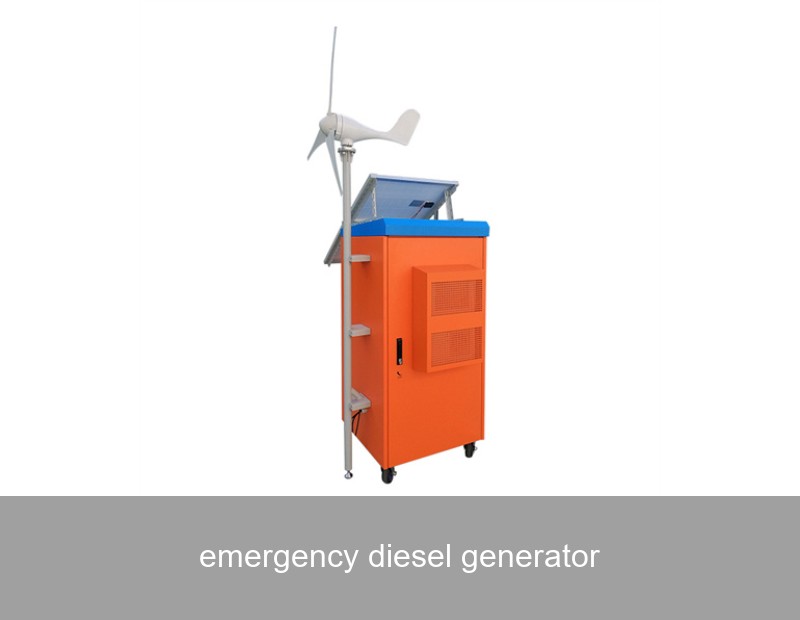
For decades, the deep-throated rumble of an emergency diesel generator has been the universal sound of backup power. From hospitals and data centers to remote industrial sites, these machines have been the undisputed safety net against grid outages. But as we accelerate towards a carbon-constrained future, the familiar diesel genset is facing a critical re-evaluation. Rising fuel costs, stringent emissions regulations, and the sheer noise of operation are pushing businesses and communities to ask: Is there a better, smarter way to ensure resilience? The answer lies not in abandoning backup power, but in evolving it. Modern energy storage systems, particularly advanced battery storage, are now stepping out of the shadows to offer a cleaner, quieter, and more intelligent alternative to the traditional emergency diesel generator.
Table of Contents
The Diesel Dilemma: More Than Just an Emergency Backup
Let's be clear: diesel generators are incredibly effective at one job—providing a large amount of power on demand, regardless of weather or time of day. This is why they've been the go-to for so long. However, their operational model comes with significant baggage that is becoming harder to ignore.
- Fuel Dependency & Cost Volatility: They are entirely dependent on diesel fuel supply chains, which can be disrupted during widespread emergencies. Fuel prices are also notoriously volatile, making long-term operational costs unpredictable.
- Emissions and Compliance: Burning diesel produces localized NOx, SOx, and particulate matter, contributing to air pollution. In many urban areas in Europe and the U.S., emissions regulations are tightening, potentially requiring costly after-treatment systems or limiting run hours.
- Maintenance and Testing: To be reliable in an emergency, they require rigorous and frequent testing (often under full load), which consumes fuel, creates emissions, and adds to maintenance wear and tear.
- Noise and Space: They are loud, requiring acoustic enclosures, and they need space for the unit itself plus fuel storage tanks.
In short, the traditional emergency diesel generator is a passive asset—it sits idle 99% of the time, yet incurs cost and compliance overhead continuously. The modern approach asks: can our backup power system be an asset that delivers value even when the grid is stable?
The Data Tells the Story: Cost and Carbon in Focus
The economic and environmental argument for supplementing or replacing diesel gensets is backed by compelling data. According to the National Renewable Energy Laboratory (NREL), the levelized cost of operating diesel generators for backup can range from $0.30 to over $1.00 per kWh, heavily influenced by fuel costs and utilization. In contrast, while battery storage has a higher upfront capital cost, its operational cost is significantly lower, and it can generate revenue or savings through grid services and energy arbitrage.
Consider this: a 1 MW diesel generator running for 100 hours a year consumes roughly 2,500 gallons of fuel, emitting about 25 metric tons of CO2. For a facility targeting net-zero operations or facing carbon taxes, these "emergency" emissions become a material liability. Battery systems, especially when paired with on-site solar, can provide silent, instantaneous backup with zero operational emissions.

Image Source: Unsplash - Representative image of a clean, modern battery storage installation.
Case Study: A European Logistics Hub's Silent Transition
Let's look at a real-world application. A major logistics and distribution center in Germany faced a dual challenge: ensuring 99.99% power availability for its automated sorting systems while reducing its overall carbon footprint to meet corporate sustainability goals. Its existing 800 kW diesel generator was reliable but costly to maintain and test.
The Solution: The facility partnered with Highjoule to implement a hybrid resilience solution. We installed a 500 kW / 1,000 kWh lithium-ion battery energy storage system (BESS) alongside their existing generator. The system is integrated with the site's main low-voltage switchboard and controlled by Highjoule's proprietary Energy Management System (EMS).
The Results:
- Primary Response: For most short-duration grid outages (under 2 hours), the BESS seamlessly takes the entire critical load. The generator does not start, saving fuel and eliminating emissions and noise.
- Extended Backup: For longer outages, the BESS bridges the gap for the 60-90 seconds required for the diesel generator to start and stabilize, after which the EMS orchestrates a smooth transfer. This eliminates any power dip.
- Daily Value: Crucially, when the grid is up, the BESS participates in the German primary control reserve market, generating significant annual revenue that offsets system costs. It also reduces peak demand charges by discharging during high-price periods.
This project demonstrates a fundamental shift: the backup system is no longer a cost center but a revenue-generating, carbon-reducing asset. The diesel generator remains, but its role is diminished to a rarely used "last line of defense," extending its life and slashing maintenance costs.
The Hybrid and Standalone Future: Where Highjoule Powers Change
At Highjoule, with nearly two decades of experience since 2005, we see three primary pathways for modernizing backup power:
- BESS-First for Critical Short-Term Backup: For facilities where outages are typically brief, a standalone Highjoule battery system, like our Commander C-I Series for commercial/industrial use, provides instantaneous, silent, and zero-emission backup. It's ideal for data centers, telecom hubs, or manufacturing processes sensitive to power quality.
- The Optimized Hybrid System: As in our case study, integrating a Highjoule BESS with an existing or new diesel generator creates the ultimate resilient system. Our EMS intelligently dispatches the most economical and cleanest resource first. This is a perfect solution for hospitals, water treatment plants, and remote microgrids.
- Solar + Storage for True Energy Independence: Adding on-site photovoltaic (PV) generation transforms the equation. The Highjoule Harmony H-Series for residential and community-scale projects can store solar energy during the day to provide backup power at night, dramatically reducing reliance on both the grid and fossil fuels.
Our systems are designed with intelligence at their core. The Highjoule EMS provides real-time monitoring, predictive analytics, and can be configured for numerous grid-service programs, turning your energy resilience strategy into a smart business investment.
Making the Switch: Key Considerations for Your Backup Power Strategy
Transitioning from a purely diesel-based backup plan requires careful planning. Here are the essential questions to guide your evaluation:
| Consideration | Traditional Diesel Generator | Highjoule Battery Storage System (BESS) |
|---|---|---|
| Response Time | 10-60 seconds (start-up and stabilization) | Milliseconds (instantaneous) |
| Operational Emissions | High (NOx, PM, CO2) | Zero at point of use |
| Primary Operational Cost | Diesel fuel, maintenance | Grid electricity for charging, minimal maintenance |
| Revenue Potential | None (passive asset) | Yes (demand charge reduction, grid services) |
| Noise | High (requires mitigation) | Nearly silent |
| Optimal Use Case | Long-duration, high-power backup in any location | Short-to-medium duration backup, frequent cycling, emission-sensitive areas, hybrid setups |
For many, the most pragmatic and future-proof solution is a hybrid one. It combines the proven, long-duration power of a diesel generator with the speed, intelligence, and sustainability of a battery system. This approach de-risks your energy resilience while aligning with sustainability mandates. The U.S. Department of Energy has recognized this potential, highlighting hybrid systems for improving microgrid reliability and efficiency.

Image Source: Unsplash - Conceptual image of renewable energy integration.
What's the True Cost of Your Current Emergency Diesel Generator?
Beyond the capital expense, have you fully accounted for the next decade of fuel, compliance, testing, and maintenance—not to mention the carbon liability? Imagine if that same budget could instead fund a system that not only protects your operations but also pays you back. The technology to make this shift is here, proven, and operational today from companies like Highjoule, powering a more resilient and sustainable future for businesses and communities across Europe and North America.
Is your organization ready to audit your backup power strategy and explore how intelligent energy storage can transform a cost center into a strategic asset? What would be the first critical load you would want to secure with silent, instant, and clean power?
 Inquiry
 Online Chat