


Three Phase Off Grid ESS: Your Ultimate Guide to Reliable, Independent Power
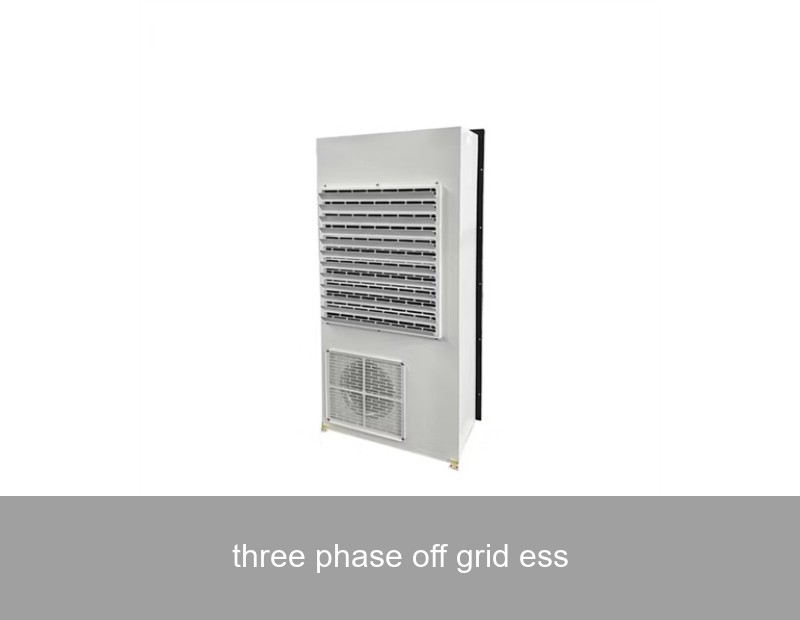
Imagine a remote farm, a bustling construction site, or a critical research station, all operating seamlessly without a connection to the public utility grid. This isn't just a dream; it's the reality enabled by a three phase off grid ESS (Energy Storage System). For businesses and communities in Europe and the US seeking true energy independence, understanding this technology is the first step toward resilience and sustainability. This guide will demystify the three phase off grid ESS, explaining why it's a superior choice for demanding applications and how it's powering a new era of self-sufficient operations.
Table of Contents
- What is a Three Phase Off Grid ESS?
- Why Choose a Three-Phase System Over Single-Phase?
- Key Components of a Robust Off-Grid System
- Real-World Case Study: Powering a Swedish Eco-Lodge
- The Highjoule Solution: Engineered for Off-Grid Excellence
- Future Trends in Off-Grid Energy Storage
What is a Three Phase Off Grid ESS?
Let's break it down. An off-grid ESS is a standalone power system that generates, stores, and manages electricity independently of the main electrical grid. The "three phase" part refers to the type of alternating current (AC) power it delivers. Unlike the single-phase power common in homes, three-phase power consists of three alternating currents, each offset in time. This creates a more consistent and powerful flow of energy, ideal for starting and running heavy-duty equipment. A three phase off grid ESS integrates high-capacity battery storage, a three-phase inverter/charger, and often renewable sources like solar PV, to create a mini, self-sustaining power plant.
Why Choose a Three-Phase System Over Single-Phase?
The choice between single-phase and three-phase is crucial. Here’s why three-phase is often the only viable option for commercial and industrial off-grid applications:
- Power & Performance: Three-phase systems can deliver more power with smaller, less expensive wiring. They provide the necessary torque and smooth operation for industrial motors, pumps, compressors, and agricultural machinery without voltage drops or stuttering.
- Efficiency & Balance: The power flow in a three-phase system is constant, leading to higher efficiency and reduced wear on components. It naturally balances loads across the three phases, which is critical for system stability.
- System Scalability: For growing operations—like a winery adding processing facilities or a campsite expanding its cabins—a three-phase architecture is inherently easier and more cost-effective to scale up.
Think of it like this: a single-phase system is a strong, steady river. A three-phase system is three synchronized rivers, capable of turning a much larger, more demanding waterwheel smoothly and reliably.
Key Components of a Robust Off-Grid System
Building a reliable three-phase off-grid ESS is like assembling a championship team. Each player has a critical role:
| Component | Role in the System | Key Consideration |
|---|---|---|
| Three-Phase Inverter/Charger | The brain and the muscle. Converts DC from batteries/solar to clean three-phase AC for loads, and AC from a backup generator to DC for charging batteries. | Look for high surge capacity for motor starts, seamless generator integration, and robust grid-forming capabilities. |
| Battery Bank (ESS Core) | The fuel tank. Stores energy from renewables or a generator for use when needed. | Lithium-ion (especially LFP) is now standard for off-grid due to longer lifespan, faster charging, and higher depth of discharge compared to lead-acid. |
| Energy Source (e.g., Solar PV) | The primary fuel supplier. Harnesses free energy from the sun to charge the batteries. | Proper sizing is critical to meet annual load, especially in winter months with lower solar irradiation. |
| Backup Generator | The insurance policy. Provides backup charging during prolonged periods of low renewable generation. | A smart, auto-start generator managed by the ESS controller minimizes runtime, saving fuel and maintenance. |
| Energy Management System (EMS) | The coach. Intelligently dispatches energy, prioritizes loads, and optimizes the entire system for efficiency and longevity. | Advanced EMS can learn consumption patterns and weather forecasts to make predictive decisions. |
Real-World Case Study: Powering a Swedish Eco-Lodge
Let's look at a concrete example from northern Sweden. A remote, high-end eco-lodge sought to eliminate its reliance on diesel generators, which were noisy, polluting, and logistically challenging to refuel in winter. Their load included a commercial kitchen, water heating and pumping, saunas, and guest cabin electricity—a mix of sensitive electronics and high-power appliances.
The Challenge: Provide 24/7 reliable, silent, and clean power in an Arctic climate with extreme seasonal variation in sunlight.
The Solution: A customized three phase off grid ESS was installed, featuring:
- A 120 kWh lithium iron phosphate (LFP) battery bank.
- A 30 kW three-phase inverter/charger with a 200% surge capacity.
- A 50 kWp solar PV array mounted on lodge rooftops and a ground-mounted structure.
- A smart diesel generator as a secondary, automated backup.
The Results:
- Diesel Use Reduction: Generator runtime decreased by over 90%, from nearly continuous operation to just a few hours per month during the darkest weeks. (NREL studies confirm similar savings in hybrid systems).
- Operational Savings: Annual fuel and maintenance costs dropped by an estimated €28,000.
- Guest Experience & Brand Value: The lodge achieved its goal of "silent luxury," enhanced its sustainability marketing, and saw a marked increase in bookings from eco-conscious travelers.

Image Source: Unsplash (Representative image of a remote lodge with solar panels)
The Highjoule Solution: Engineered for Off-Grid Excellence
At Highjoule, with nearly two decades of experience since 2005, we understand that an off-grid system is not a collection of parts, but a mission-critical asset. Our AtlasGrid Three-Phase Off-Grid Series is engineered from the ground up for the harshest conditions and most demanding applications.
What sets the Highjoule AtlasGrid apart?
- True 3-Phase Architecture: Our system uses three dedicated, synchronized inverter modules (one per phase), ensuring perfect load balancing and eliminating single points of failure. If one module needs service, the others can continue to operate.
- Intelligent Hybrid Control: Our proprietary EMS doesn't just react; it anticipates. It seamlessly blends solar input, battery storage, and generator backup, prioritizing renewable energy and ensuring the generator only runs at its most efficient rated power when absolutely necessary.
- Built for Resilience: From the industrial-grade LFP battery cabinets with integrated heating for cold climates to the IP65-rated outdoor enclosures, every component is selected and tested for durability. We provide comprehensive remote monitoring and predictive maintenance services, giving our clients peace of mind no matter how remote their location.
Whether it's for an agricultural processing plant in California, a telecom tower in the Scottish Highlands, or a resilient community microgrid, Highjoule designs, deploys, and supports three phase off grid ESS solutions that are as smart as they are robust.

Image Source: Unsplash (Representative image of a containerized battery storage system)
Future Trends in Off-Grid Energy Storage
The technology is advancing rapidly. We're moving towards even more intelligent, software-defined systems. The IEA highlights the critical role of advanced storage in the energy transition. Future three phase off grid ESS will feature greater integration of AI for load forecasting, more sophisticated grid-forming capabilities that can mimic traditional utility power, and the use of second-life EV batteries for cost-effective, sustainable storage. The goal is a system that is not just off-grid, but is a self-optimizing, highly efficient energy ecosystem.
Ready to Explore Your Energy Independence?
Designing the right off-grid system requires a deep understanding of your specific load profile, site conditions, and growth plans. It's more than just a product—it's a partnership. What would true energy independence mean for your operational costs, your environmental goals, and the resilience of your business?
 Inquiry
 Online Chat