


Emergency Solar Power Generators in the USA: Your Guide to Reliable Resilience
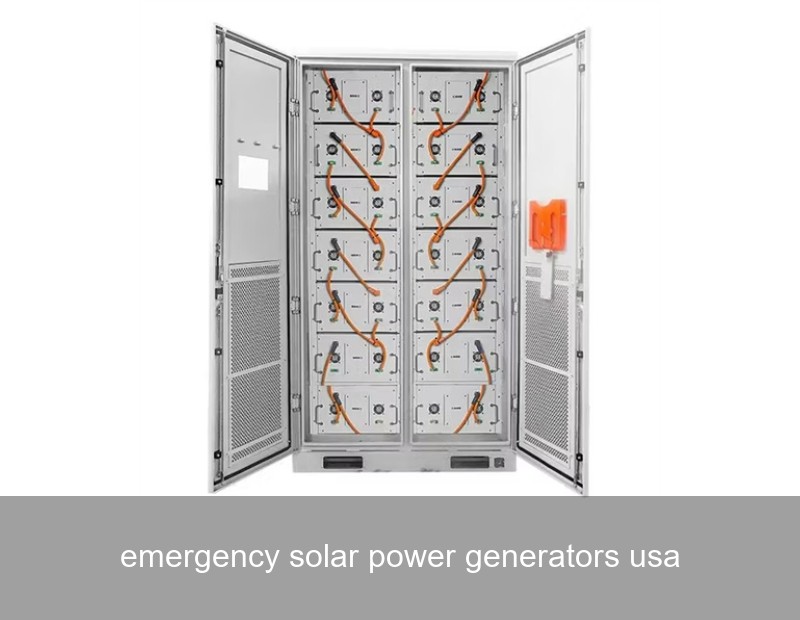
Have you ever experienced that sudden, unsettling silence when the power goes out? For millions of Americans, power outages are more than an inconvenience; they are a risk to safety, health, and financial stability. In the face of increasingly severe weather events and an aging grid, a new champion for reliability is rising: the emergency solar power generator. Unlike traditional gas-guzzling generators, these systems harness the sun's abundant energy, providing clean, quiet, and sustainable backup power. This article will guide you through why solar-powered backup is becoming the essential choice for American homes and businesses, and how modern solutions from leaders like Highjoule are redefining energy resilience.
Table of Contents
- The Rising Storm: Why the US Grid is Under Pressure
- Solar vs. Gas: The New Face of Emergency Power
- How a Modern Solar Backup System Works
- Real-World Resilience: A Case Study from Texas
- Choosing the Right System for Your Needs
- Highjoule's Intelligent Approach to Solar Backup
- Your Path to a More Resilient Future
The Rising Storm: Why the US Grid is Under Pressure
The phenomenon is undeniable. From winter storms in Texas to hurricane seasons on the coasts and wildfire-related shutoffs in California, the frequency and duration of power outages are climbing. The U.S. Energy Information Administration (EIA) notes that the average American customer experienced just over eight hours of outages in 2021, with major events being the primary driver. This isn't just about comfort; it's about preserving medication, maintaining sump pumps, running home-based businesses, and ensuring communication. The traditional response—a portable gasoline generator—comes with fumes, noise, maintenance, and the perilous task of searching for fuel during a crisis. This clear problem has created a massive demand for a better solution.
Solar vs. Gas: The New Face of Emergency Power
Let's compare the two paradigms for emergency power:
| Feature | Traditional Gas Generator | Solar + Battery Emergency System |
|---|---|---|
| Power Source | Gasoline, Propane, Diesel | Sunlight (free and renewable) |
| Operation | Loud, emits fumes (must be used outdoors) | Silent, zero emissions (safe indoors) |
| Maintenance | Regular engine upkeep, fuel stabilization | Minimal, mostly digital monitoring |
| Startup | Manual pull-start or switch | Automatic, seamless transition (under 20ms) |
| Long-Term Value | Pure expense (fuel costs) | Reduces electric bills daily, qualifies for incentives |
The agitate stage is clear: relying on last-century technology in a climate-conscious, convenience-driven world is fraught with drawbacks. The solution is an integrated system that works for you 365 days a year, not just during emergencies.

Image Source: Unsplash - A modern home equipped with solar panels and a battery storage unit, key components of an emergency solar power system.
How a Modern Solar Backup System Works
Think of it as your personal, automated microgrid. Here's the logical progression:
- Solar Panels: Capture sunlight and convert it to direct current (DC) electricity.
- Inverter/Charger: The brain of the operation. It converts DC to usable AC power for your home, manages the flow of energy, and charges the battery storage system.
- Battery Energy Storage System (BESS): This is the heart of your emergency solar power generator. It stores excess solar energy produced during the day for use at night or during an outage. High-performance lithium-ion batteries, like those in Highjoule systems, offer high depth of discharge and long cycle life.
- Automatic Transfer Switch (ATS): The silent sentinel. The moment a grid failure is detected, it automatically and seamlessly isolates your home from the grid and activates backup power from your batteries—often in less time than a single light flicker.
This system isn't passive; it's intelligent. Advanced energy management software allows you to prioritize which circuits are backed up (e.g., refrigerator, lights, medical equipment) to maximize your available backup duration.
Real-World Resilience: A Case Study from Texas
Let's move from theory to tangible results. During Winter Storm Elliott in December 2022, a community recreation center in Austin, Texas, faced a critical situation. As a designated warming center, losing power was not an option. Their recently installed 50 kW solar array coupled with a 120 kWh Highjoule IntelliBESS commercial battery system was put to the ultimate test.
- Outage Duration: Grid power was lost for over 14 hours during the coldest period.
- System Performance: The Highjoule system automatically took over, powering the center's essential heating, lighting, and kitchen loads without interruption.
- Energy Supplied: The system delivered approximately 98 kWh of backup energy, primarily drawn from the batteries which had been charged by solar prior to the storm.
- Impact: The center remained open and operational, providing a safe, warm haven for over 80 residents throughout the grid failure.
This case, documented in part by the Smart Grid.gov project database, illustrates the transformative role of solar-plus-storage. It's not just backup; it's mission-critical infrastructure that strengthens community resilience.
Choosing the Right System for Your Needs
Selecting an emergency solar power generator isn't one-size-fits-all. Consider this ladder of needs:
- Essential Circuits Backup: Covers basics like refrigeration, some lights, and phone charging for 8-12 hours. Typically a smaller battery (10-15 kWh).
- Whole-Home Partial Backup: Powers most household circuits, excluding heavy loads like central AC, for a day or more. May involve a mid-sized battery (15-25 kWh) and smart load management.
- Whole-Home Full Backup: Aims to maintain normal electricity usage for extended periods. Requires a large battery bank (25 kWh+), often paired with a generator for multi-day resilience in low-sun conditions.
A key insight is to partner with a provider that offers scalable solutions. Your needs may evolve, and your system should be able to adapt.

Image Source: Unsplash - A monitoring dashboard for a home energy battery system, showing energy production, consumption, and storage levels.
Highjoule's Intelligent Approach to Solar Backup
At Highjoule, with nearly two decades of expertise in global energy storage, we've engineered our residential and commercial systems specifically for the demands of the American market. Our solutions go beyond mere hardware.
Our Residential IntelliBESS Series is designed as the core of a robust emergency solar power generator. Its key features include:
- Ultra-Fast Transition: Our integrated ATS ensures backup power activates in milliseconds, keeping your digital life and appliances running smoothly.
- Scalable Capacity: Start with a base unit and easily add more battery modules as your needs or budget grow.
- All-Weather Resilience: Our batteries feature a wide operating temperature range and robust enclosures, crucial for both snowy northern winters and hot southern summers.
- Highjoule Energy OS: Our proprietary software platform gives you complete control. Via a simple app, you can monitor energy flows, set backup priorities, and even participate in utility demand-response programs to earn credits, turning your backup system into a daily asset.
For businesses and microgrids, our Commercial IntelliBESS provides the same intelligence at a larger scale, ensuring operational continuity, demand charge reduction, and a lower carbon footprint. We don't just sell a product; we provide a comprehensive solution including design, permitting support, and long-term performance monitoring.
Beyond Backup: The Daily Value of a Highjoule System
It's crucial to understand that a Highjoule system works for you every single day. By storing excess solar energy and using it during peak evening hours when grid rates are highest, you significantly reduce your electricity bills. This daily financial return helps offset the system's cost, making true energy resilience more accessible than ever before.
Your Path to a More Resilient Future
The conversation around emergency power has fundamentally shifted. It's no longer a question of if you need a backup plan, but what kind of plan aligns with a sustainable, intelligent, and reliable future. The technology is proven, the economic case strengthens daily, and the peace of mind is invaluable.
What is the first circuit you would power to feel secure during the next unexpected outage, and how could that choice shape the size and scope of your own personal energy resilience plan?
 Inquiry
 Online Chat