


Why Your Solar ESS Needs an EMI Filter: A Silent Guardian for Clean Power
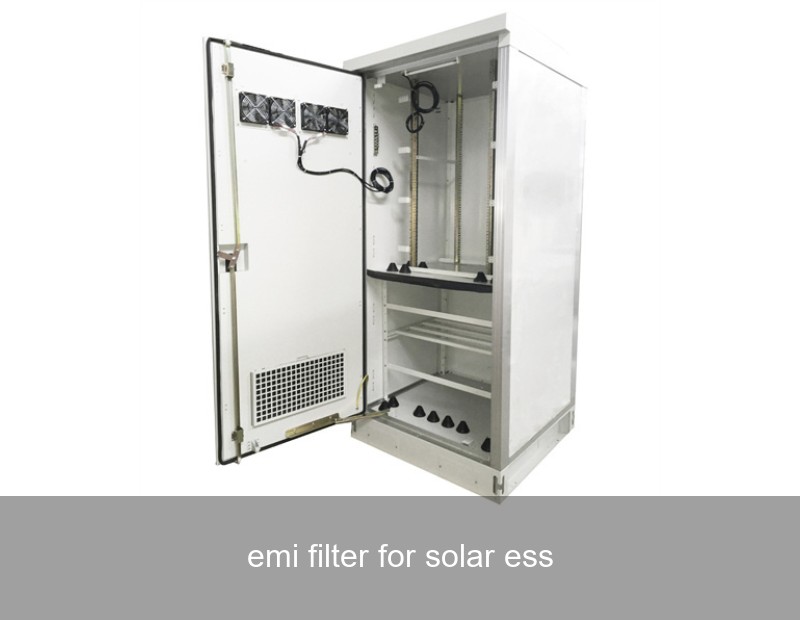
You've invested in a solar energy storage system (ESS) to achieve energy independence and sustainability. The panels are gleaming, the battery is installed, and you're ready to harness the sun's power. But there's an invisible threat that could be undermining your system's performance, reliability, and even safety: Electromagnetic Interference (EMI). An EMI filter for solar ESS is the unsung hero that safeguards your investment. This article will demystify EMI, explain why it's a critical concern for modern solar-plus-storage systems, and show you how to ensure your clean energy remains truly clean and stable.
Table of Contents
- What is EMI and Where Does It Come From in a Solar ESS?
- The Hidden Risks: What Happens Without Proper EMI Filtering?
- The Solution: How an EMI Filter for Solar ESS Works
- Real-World Impact: A European Agri-Solar Case Study
- Choosing the Right EMI Protection for Your System
- Highjoule's Integrated Approach to Power Quality
What is EMI and Where Does It Come From in a Solar ESS?
Electromagnetic Interference (EMI) is essentially electronic "noise" – unwanted, spurious signals that can disrupt the operation of electrical equipment. Think of it as static on a radio broadcast, but for your sensitive power electronics. In a solar ESS, this noise is often generated internally by high-speed switching components.
Modern solar inverters and battery chargers are marvels of efficiency. They use power electronic devices called IGBTs or MOSFETs that switch on and off thousands of times per second to convert DC power from your panels or batteries to AC power for your home. This rapid switching, however, creates sharp voltage and current spikes—a primary source of conducted EMI. This noise can travel along the power cables, potentially affecting anything connected to your electrical system.
- Internal Sources: Inverter/charger switching, DC-DC converters, battery management system (BMS) communications.
- External Sources: Nearby radio transmitters, grid disturbances, or even other industrial equipment.

Image Source: Illustration of EMI coupling paths, common in power electronic systems like solar ESS. (Conceptual representation)
The Hidden Risks: What Happens Without Proper EMI Filtering?
Ignoring EMI is like ignoring a strange engine noise in your car; the problem won't fix itself and will likely lead to bigger issues. The consequences for a solar ESS can be technical, financial, and even regulatory.
| Risk Category | Potential Consequences | Impact on User |
|---|---|---|
| System Performance | Data corruption in metering/BMS, reduced inverter efficiency, false tripping, accelerated component wear. | Lower energy yield, unexpected shutdowns, increased cost per kWh. |
| Home & Grid Compatibility | Interference with Wi-Fi, radios, smart home devices; potential to inject noise back into the utility grid. | Annoying disruptions, possible non-compliance with grid codes (IEC standards), utility penalties. |
| Safety & Reliability | Overheating of components, increased risk of arc faults, compromised safety system signals. | Potential fire hazard, system failure, voided warranties. |
Regulatory bodies in Europe (like the EU's EMC Directive) and the US (FCC Part 15) set strict limits on the amount of EMI a device can emit. A non-compliant system can face barriers to certification and market access. This is where a dedicated EMI filter for solar ESS transitions from an optional extra to a fundamental component of a robust, compliant, and neighbor-friendly installation.
The Solution: How an EMI Filter for Solar ESS Works
An EMI filter acts as a sophisticated gatekeeper for your power lines. Its job is twofold: to prevent internal noise from escaping your system (emissions) and to block external noise from entering (immunity). It achieves this through a combination of passive components—inductors (chokes) and capacitors—arranged in a specific network.
- Common-Mode Chokes: Suppress noise that flows in the same direction on both power lines (like a shared unwanted signal). X and Y Capacitors: Divert high-frequency noise away from the power lines, safely shunting it to ground or neutralizing it between lines.
Think of it this way: the power flow (50/60 Hz) is a steady, powerful river. EMI is like chaotic, high-frequency ripples on top of that river. The filter's inductors resist sudden changes in current (smoothing the ripples), while the capacitors provide a short, easy path for those high-frequency ripples to dissipate harmlessly, leaving the main current clean and stable.

Image Source: Example circuit topology of a standard EMI filter used in power supplies and inverters.
Real-World Impact: A European Agri-Solar Case Study
Let's make this concrete. A vineyard in Southern France installed a 150kW solar ESS to power irrigation pumps and on-site processing facilities. Shortly after commissioning, they reported intermittent faults in the pump variable frequency drives (VFDs) and erratic data from wireless soil moisture sensors. The system was producing power, but the operational headaches were mounting.
Diagnosis: A power quality audit revealed high levels of conducted EMI (in the 150kHz – 30MHz range) emanating from the solar inverters, especially during rapid changes in solar irradiance (e.g., passing clouds). This noise was coupling onto the AC wiring and disrupting the sensitive electronics of the nearby agricultural equipment.
Solution: The installer retrofitted high-current, three-phase EMI filters at the output of each solar inverter. These filters were specifically selected for their attenuation performance in the problematic frequency band and their robust design for industrial environments.
Result:
- EMI emissions reduced by over 85% (measured according to EN 55011).
- Pump VFD fault alarms dropped to zero within the first month of operation.
- Wireless sensor network reliability improved from 78% to 99.5%.
This case highlights that the value of an EMI filter isn't just about protecting the ESS itself, but about ensuring the entire ecosystem of connected equipment functions harmoniously. It's a critical component for system-level resilience.
Choosing the Right EMI Protection for Your System
Not all filters are created equal. Selecting the appropriate EMI filter for your solar ESS depends on several key factors:
- System Voltage and Current: Must match or exceed your inverter's rated AC output.
- Attenuation Profile: Needs to target the specific frequency noise your inverter topology generates.
- Standards Compliance: Should be certified to relevant standards for your region (e.g., IEC/EN 60939, UL 1283).
- Environmental Rating: For outdoor or harsh environments (like the agri-solar case), a filter with a high IP rating and corrosion-resistant housing is essential.
This is where partnering with an experienced ESS provider makes all the difference. A system designed with EMI mitigation as a core principle from the outset is far more effective and cost-efficient than a retrofitted solution.
Highjoule's Integrated Approach to Power Quality
At Highjoule, we believe a superior energy storage system is defined not just by its battery capacity or peak output, but by the quality and reliability of the power it delivers. Since 2005, we've engineered our commercial and residential ESS solutions with a "clean-by-design" philosophy. This means EMI mitigation is not an afterthought.
Our H-Series Industrial ESS and NeoHome Residential Platform incorporate multi-stage, integrated EMI filtering as a standard feature. Our filters are co-engineered with our proprietary inverter technology, ensuring optimal attenuation from the start. This integrated design:
- Guarantees Compliance: Our systems are pre-certified to meet stringent EMC directives in Europe and North America, simplifying permitting and installation.
- Enhances Longevity: By protecting our own internal circuitry from internal and external noise, we reduce component stress, extending the system's operational life.
- Ensures Grid and Neighbor Friendliness: Our systems play nicely with the utility grid and won't interfere with your home Wi-Fi or your neighbor's ham radio. We provide peace of mind beyond the meter.
For complex microgrid or mission-critical industrial applications, our technical team conducts pre-installation power quality assessments. We model potential EMI issues and can specify custom filter solutions if needed, ensuring seamless integration with your site's unique electrical environment. This proactive expertise, backed by nearly two decades of field experience, is what sets Highjoule apart as a provider of intelligent and sustainable power solutions.
Looking Forward: The Quieter Grid of the Future
As our grids become denser with inverters—from solar, storage, and electric vehicles—the collective "noise floor" will rise. Proactive EMI management will become even more critical for grid stability and device interoperability. The question for system owners and installers is no longer "Can we afford to add an EMI filter?" but rather "Can we afford the hidden costs and risks of not having one?"
Has your solar or storage project ever encountered unexplained glitches in other equipment? What steps do you take to ensure power quality in your energy systems?
 Inquiry
 Online Chat