


Energie Solaire: How Much Does Solar Power Really Cost and Save?
Thinking about switching to solar energy? You're not alone. Across Europe and the US, homeowners and businesses are asking the same pivotal question: "Energie solaire: how much?" It's a deceptively simple query with a multi-layered answer. The cost isn't just about the panels on your roof; it's about long-term savings, energy independence, and environmental impact. In this guide, we'll break down the real costs and savings of solar power, moving beyond the initial price tag to reveal its true value.
Table of Contents
The Price Puzzle: Upfront Costs vs. Lifetime Value
The initial quote for a solar photovoltaic (PV) system can cause sticker shock. In 2024, average installed costs range from $15,000 to $25,000 USD (or €14,000 to €23,000 EUR) for a typical residential system before incentives. But here's the critical shift in perspective: solar is not an expense; it's an investment in infrastructure. Think of it like buying 25+ years of electricity upfront at a locked-in, predictable rate. This shields you from volatile utility price hikes, which have been significant on both continents in recent years. The true metric isn't just installation cost—it's the Levelized Cost of Energy (LCOE), which factors in total system life, maintenance, and energy produced. For solar, the LCOE has plummeted, making it competitive with, and often cheaper than, grid power in many regions.
Key Factors Influencing Your Solar Investment
So, what determines your specific answer to "energie solaire, how much?"? Let's examine the variables.
- System Size & Energy Consumption: Your historical electricity bills are the starting point. A larger system for a high-consumption home costs more but delivers greater long-term savings.
- Geographic Location & Sun Exposure: Solar insolation—the amount of sunlight your roof receives—is key. A sun-drenched home in Southern California or Spain will generate more power than one in Seattle or Northern Germany, potentially needing fewer panels for the same output.
- Equipment Quality & Type: Premium monocrystalline panels are more efficient (converting more sunlight to power in limited space) than polycrystalline ones. Inverter quality is equally crucial for system longevity.
- Local Incentives & Regulations: This is a major differentiator. The US federal Investment Tax Credit (ITC) currently offers a 30% tax credit. In Europe, schemes vary from feed-in tariffs (FITs) to tax deductions and grants. Always check local and national programs.
- Installation Complexity: Roof type, angle, and any necessary electrical upgrades can affect labor costs.
Image: The efficiency and placement of solar panels are key cost factors. (Source: Unsplash)
The Savings Equation: From Bills to Payback
Savings manifest in several ways. The most direct is slashing your monthly utility bill. With a properly sized system, you can cover 70-100% of your annual consumption. Any excess energy produced can often be sold back to the grid via net metering, creating a credit. The culmination of these savings leads to the payback period—the time it takes for your cumulative savings to equal the net system cost. In favorable markets, this can now be as short as 6-10 years. Given panels often have 25+ year performance warranties, you're looking at 15+ years of virtually free electricity post-payback.
| Cost/Saving Component | Typical Range/Impact |
|---|---|
| Average Installed Cost (6 kW System) | $18,000 - $24,000 USD |
| After 30% US ITC Incentive | $12,600 - $16,800 USD |
| Annual Electricity Bill Savings | $1,200 - $2,500 USD |
| Estimated Payback Period | 7 - 12 years |
| 20-Year Estimated Net Savings | $20,000 - $40,000+ USD |
Case Study: A Real-World Look at Solar Savings in Hamburg
Let's move from theory to practice. Consider the Müller family in Hamburg, Germany—a city not known for endless sunshine. In 2022, they installed a 9 kW rooftop PV system. The total gross cost was approximately €21,000. After claiming available local grants, the net investment was around €16,000.
Their system produces about 8,200 kWh annually, covering ~85% of their household consumption. They use a Highjoule HomePower battery storage system to store excess daytime production for use in the evening, maximizing self-consumption. Combined with Germany's EEG scheme for surplus feed-in, their annual electricity bill dropped from over €2,300 to just under €400—a reduction of more than €1,900 per year. This puts their simple payback period on track for roughly 8.5 years. For the system's remaining lifespan, they'll enjoy drastically lower energy costs and resilience against blackouts, thanks to their storage solution.
Beyond the Panels: The Critical Role of Energy Storage
This case study highlights a vital modern truth: to truly answer "energie solaire, how much can I save?", you must consider storage. Solar panels only produce when the sun shines, but energy demand peaks in mornings and evenings. Without a battery, you export surplus power to the grid (often at a lower rate) and import it back later (at a higher retail rate).
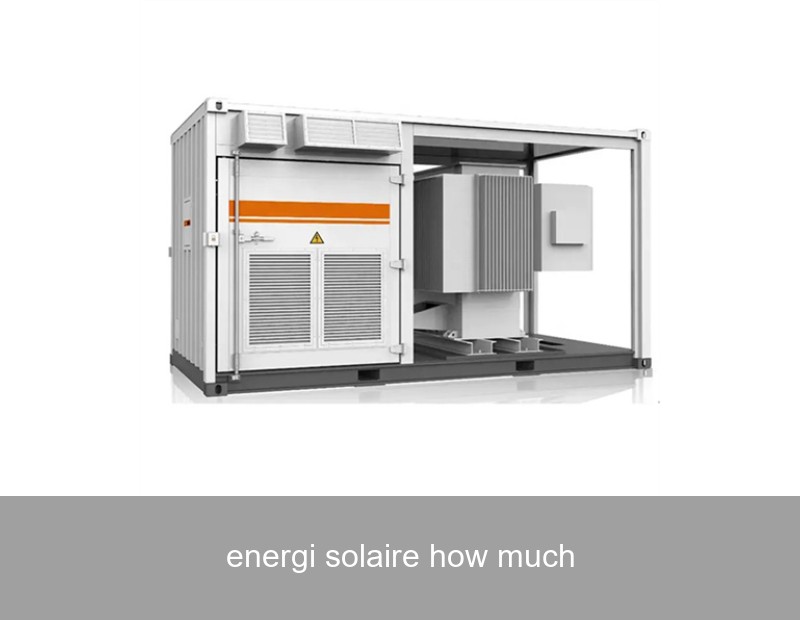
An integrated battery storage system, like those offered by Highjoule, changes the game. It allows you to store your solar energy for use on-demand, increasing self-consumption from 30-40% to 70% or more. This dramatically enhances your independence from the grid and protects you from peak-time pricing. For businesses, this capability is even more critical, allowing for load shifting and participation in demand response programs.
As a global leader, Highjoule provides intelligent storage solutions for every scale. Our HomePower series offers sleek, scalable batteries for residential users, while our GridShield commercial and industrial systems ensure operational continuity and cost management for businesses. Our systems are designed with advanced safety features, long cycle life, and smart energy management software to ensure every kilowatt-hour of your solar energy is used optimally.

Image: Battery storage, like Highjoule's HomePower, maximizes the value of solar energy. (Source: Unsplash)
Maximizing Your Solar Energy Value
To ensure you get the most from your investment, follow this strategic approach:
- Get a Professional Energy Audit: Understand your consumption patterns first.
- Choose Quality Over Cheap Upfront Cost: High-efficiency panels and reliable inverters from reputable brands, paired with a robust storage system like Highjoule's, yield better long-term returns.
- Secure Multiple Detailed Quotes: Ensure quotes include all hardware, labor, permitting, and a detailed production estimate.
- Plan for Storage from the Start: Design your system with battery integration in mind, even if you install it later.
- Explore Financing: Many providers offer solar loans, leases, or Power Purchase Agreements (PPAs) that can reduce or eliminate upfront costs.
For deeper insights into solar technology and economics, you can refer to authoritative sources like the U.S. Department of Energy or the International Energy Agency's reports.
So, as you ponder the question, "energie solaire, how much?", remember you are really asking about the price of energy independence and a sustainable future. What specific energy challenge in your home or business could a tailored solar-plus-storage solution solve for you today?
 Inquiry
 Online Chat