


Finding the Lowest Price Solar Panel? Why the True Cost of Solar is Measured in Kilowatt-Hours, Not Dollars
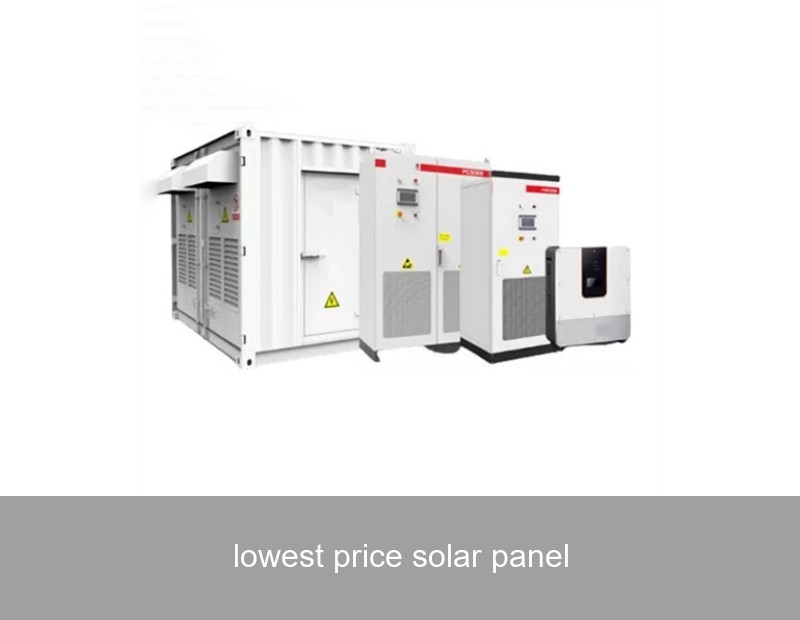
If you're researching solar energy for your home or business, the search for the "lowest price solar panel" is a natural starting point. In a market flooded with options, that upfront cost per panel is incredibly tempting. But here's a fundamental truth we've learned at Highjoule since 2005: the most economical solar investment is rarely the one with the cheapest sticker price. The real metric that defines value is the Levelized Cost of Energy (LCOE)—the actual price you pay for every kilowatt-hour (kWh) generated over the system's entire lifespan. Let's explore why chasing the lowest upfront cost can sometimes lead to the highest long-term expense, and how to make a truly intelligent investment in your energy independence.
Beyond the Price Tag: The Three Pillars of Solar Value
Choosing a solar solution based solely on panel price is like buying a car based only on the showroom price, ignoring fuel efficiency, reliability, and resale value. Your solar array is a 25+ year power plant on your roof. Its real worth is determined by three critical pillars.
Pillar 1: Efficiency & Energy Yield Over Time
A panel with a lower price tag often comes with lower conversion efficiency. This means it needs more roof space to produce the same amount of power as a higher-efficiency panel. For properties with limited space, this directly limits your energy potential and savings. More importantly, not all panels perform the same in real-world conditions. Factors like temperature coefficient (how much output drops on hot days) and low-light performance significantly impact annual energy yield. A premium panel might cost 15% more but produce 20% more energy over its life, delivering a lower cost per kWh.
Pillar 2: Degradation Rate & Product Warranty
Every solar panel degrades slightly each year. The industry standard warranty typically guarantees 80-82% output after 25 years. However, the degradation rate is key. A "lowest price" panel might degrade at 0.7% per year, while a tier-one panel guarantees only 0.3-0.5%. Over 25 years, that difference can equate to losing an entire extra year's worth of energy production from the cheaper panel. The robustness of the manufacturer's warranty and their financial longevity to honor it decades from now are part of the product's true cost.
Pillar 3: System Symbiosis - The Inverter & Storage Factor
Panels don't operate in isolation. Their performance is orchestrated by inverters and, increasingly, by battery storage. A cheap panel paired with a basic inverter can lead to significant energy losses, especially if there's shading or multiple roof planes. Modern systems using power optimizers or microinverters (like those integrated into Highjoule's residential solutions) maximize harvest from every panel individually. Furthermore, the DC output of your panels must be perfectly compatible with your chosen battery storage system for optimal charging efficiency and system health. A disjointed system built around a cheap panel component can undermine the value of your entire investment.

Image Source: Unsplash. A high-quality installation considers panel-inverter synergy, not just panel cost.
A Cautionary Tale from California: When Low Initial Cost Led to High Long-Term Expense
Let's examine a real-world scenario from a 2021 installation in Sacramento, California, based on aggregated industry data. Two homeowners on the same street installed 7kW systems.
- Home A chose the "lowest price" option: commodity panels (17% efficiency, 0.7% annual degradation) with a string inverter. Total cost: $18,900.
- Home B invested in a premium system: higher-efficiency panels (21.5%, 0.25% degradation) with module-level power electronics and a more reputable brand. Total cost: $22,400.
Using NREL's PVWatts Calculator and factoring in degradation, the estimated energy output over 25 years diverges dramatically:
| Metric | Home A (Low-Cost System) | Home B (Premium System) |
|---|---|---|
| Year 1 Production | 10,500 kWh | 12,200 kWh |
| Year 25 Production | ~8,650 kWh | ~11,450 kWh |
| Total 25-Year Production | ~237,000 kWh | ~295,000 kWh |
| Levelized Cost of Energy (LCOE)* | $0.080/kWh | $0.076/kWh |
*Simplified LCOE calculation: Net System Cost / Total kWh produced, excluding financing & maintenance for illustration.
Despite a nearly $3,500 higher initial investment, Home B's system generates an additional 58,000 kWh over 25 years, effectively lowering the cost per unit of energy. When paired with a battery like the Highjoule H-Cube for time-of-use bill management, the value gap widens further, as the premium system's higher and more consistent output maximizes the battery's cycling utility.
The Highjoule Approach: Intelligent Systems, Not Just Commodity Panels
At Highjoule, we don't just sell solar panels; we engineer integrated energy ecosystems. For over 18 years, our focus has been on delivering the lowest lifetime cost of energy for commercial, industrial, and residential clients. This is achieved through:
- Optimized Component Selection: We partner with leading-tier panel manufacturers who guarantee performance, longevity, and sustainable supply chains. We select panels based on your specific site conditions—not a one-size-fits-all "lowest price" model.
- Advanced Power Electronics: Our systems leverage smart inverters and optimizers to ensure every panel, regardless of its position or momentary shading, contributes its maximum potential. This can recover up to 25% of energy otherwise lost in a basic string system.
- Seamless Storage Integration: The true power of solar is unlocked with storage. Our Highjoule H-Cube residential battery and Grid-Scale Iron Flow batteries are designed from the ground up for perfect synergy with our solar arrays. Our AI-driven energy management platform, HeliosOS, constantly learns and optimizes when to store solar energy and when to dispatch it, slashing demand charges for businesses and maximizing self-consumption for homes.
Think of it this way: would you fit a high-performance engine with a cheap fuel pump and a fragile battery? Of course not. The same holistic engineering principle applies to your energy system.

Image Source: Unsplash. Modern energy management involves monitoring and optimizing a complete system, not just panels.
Making the Right Choice for Your Energy Future
The journey to solar is a significant step towards sustainability and financial predictability. The right question evolves from "What is the lowest price solar panel?" to "What system delivers the most reliable and lowest cost energy for my unique needs over the next three decades?"
This requires evaluating not just the hardware, but the provider's expertise in system design, their track record, and their ability to offer a cohesive solution that includes future-ready storage. As grid dynamics shift and electricity tariffs evolve (a trend well-documented by sources like the International Energy Agency), the ability to store and manage your solar energy becomes a critical component of its value.
So, we leave you with this: When you receive your next solar quote, what will you prioritize—the number on the bottom line today, or the projected energy yield and resilience of your system for the next 25 years?
 Inquiry
 Online Chat