


Energy Solutions at Africa: Powering a Continent's Sustainable Growth
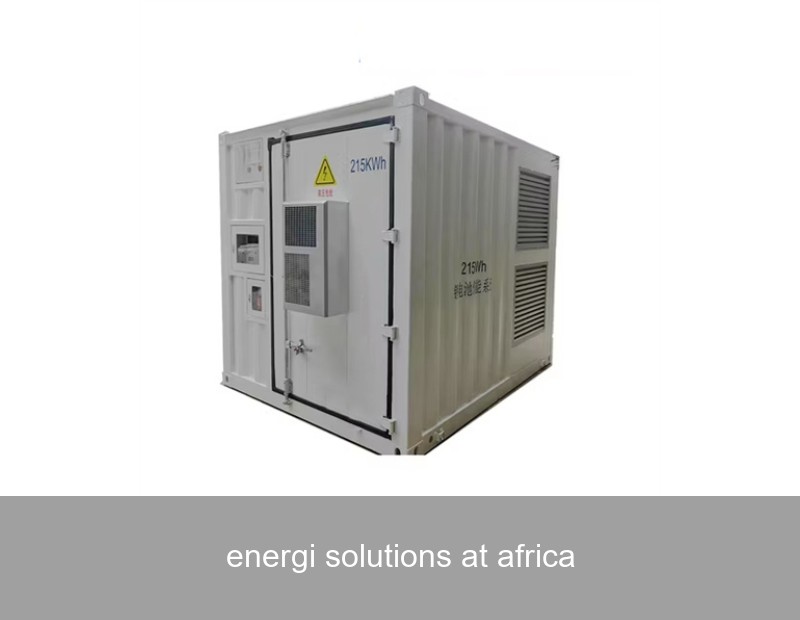
When we discuss energy solutions at Africa, we're not just talking about technology. We're addressing a fundamental paradox: a continent bathed in sunlight, rich in renewable resources, yet where over 600 million people still lack reliable access to electricity. This gap isn't just about lighting homes; it's about powering clinics, irrigating farms, and running businesses. It's the single greatest bottleneck to sustainable development. The conversation is shifting from simply extending the grid to innovating with decentralized, resilient power systems. At the heart of this transformation lies a powerful combination: advanced solar generation and intelligent battery energy storage systems (BESS).
The African Energy Paradox: Abundant Resources, Uneven Access
Africa's energy landscape is a tale of two realities. On one hand, it possesses immense renewable potential. According to the International Renewable Energy Agency (IRENA), Africa has some of the world's best solar resources, with many regions receiving over 2,000 kWh/m² of solar irradiation annually. That's enough to theoretically power the continent many times over.
On the other hand, the existing grid infrastructure is often fragmented, unreliable, and unable to meet growing demand. This forces communities, hospitals, and industries to rely on expensive, polluting diesel generators. The cost isn't just financial; it's environmental and social. The challenge, therefore, is to harness the abundant sun and wind in a way that is stable, dispatchable, and cost-effective. This is where modern energy storage becomes the critical linchpin, turning intermittent renewables into a firm, 24/7 power source.

Image Source: Unsplash - Solar panels in a rural setting
Why Solar-Plus-Storage is the Non-Negotiable Game-Changer
Think of it this way: solar panels are excellent at generating power when the sun shines. But what happens at night, or during cloudy periods? Without storage, you're left in the dark or back to diesel. A Battery Energy Storage System (BESS) acts as a bank for electricity. It stores excess solar energy produced during the day and releases it precisely when needed.
For African communities and industries, this combination delivers:
- Energy Independence: Reduced or eliminated dependence on erratic grids and costly diesel fuel.
- Enhanced Reliability: Seamless power during outages and stable voltage for sensitive equipment.
- Cost Predictability: Locking in energy costs from the sun, shielding from volatile fuel prices.
- Scalability: Systems can be designed from small commercial setups to large, grid-supporting microgrids.
The Technical Backbone: What Makes a Storage System "Intelligent"?
Not all storage is created equal. In demanding environments, hardware robustness and software intelligence are paramount. A superior BESS goes beyond just a battery box. It integrates advanced battery management systems (BMS) for safety and longevity, sophisticated power conversion systems (PCS), and, most importantly, an energy management system (EMS) that acts as the brain. This software optimizes every kilowatt-hour—deciding when to store, when to discharge, and how to balance loads—maximizing return on investment and system lifespan.
A Blueprint for Success: A Tanzanian Agricultural Processing Case Study
Let's move from theory to a tangible example. Consider a cashew processing cooperative in Tanzania's Mtwara region. Their challenge was stark: a weak grid that failed daily during peak processing hours, forcing them to use diesel generators that consumed over 15,000 liters of fuel annually. This was eroding profits and creating a noisy, smoky work environment.
The Solution Deployed: A turnkey solar-plus-storage microgrid was installed.
| Component | Specification | Role |
|---|---|---|
| Solar PV Array | 150 kWp | Primary power generation |
| Battery Storage | 300 kWh / 150 kW | Stores excess solar, provides evening/night power |
| Backup Diesel Generator | 100 kVA | Automatic backup for extended cloudy periods |
| Intelligent Controller | Advanced EMS | Optimizes energy flow, prioritizes solar, minimizes diesel use |
The Results (18 Months Post-Installation):
- Diesel Fuel Use Reduction: 92% (from 15,000+ to ~1,200 liters/year).
- Operational Cost Saving: ~$25,000 USD annually.
- Productivity Increase: Uninterrupted processing extended work hours, boosting output by 30%.
- Payback Period: Achieved in under 4 years.
- Environmental Benefit: Carbon emissions reduced by approximately 40 tons CO2e per year.
This case, documented in part by insights from the World Bank's energy access reports, exemplifies how the right energy solutions at Africa can directly drive economic and environmental resilience.
Beyond the kWh: The Holistic Impact of Resilient Power
The ripple effects of reliable energy are profound. For healthcare, it means refrigerated vaccines and functioning operating theatres. For education, it means lighted classrooms and digital learning tools. For commerce, it enables cold storage for produce and powers machinery for value-added manufacturing. By providing clean, reliable power, these solutions don't just meet a basic need; they create a platform for entrepreneurship, education, and improved healthcare outcomes. It's a catalyst for achieving multiple Sustainable Development Goals (SDGs) simultaneously.

Image Source: Unsplash - Containerized energy storage unit
Highjoule: Engineering Intelligent Energy Solutions for Africa's Unique Landscape
At Highjoule, with nearly two decades of experience since 2005 in designing advanced energy storage systems, we understand that deploying energy solutions at Africa requires more than an off-the-shelf product. It demands adaptation, durability, and intelligent control.
Our approach for the African market is built on three pillars:
- Robust & Climate-Adapted Hardware: Our containerized and modular BESS solutions, like the HJ Cube series, are engineered for harsh conditions. They feature integrated climate control for extreme heat and dust filtration, ensuring performance and longevity in remote environments.
- AI-Driven Energy Management: The true magic lies in our Neuron OS platform. This proprietary energy management system doesn't just react; it predicts. Using weather forecasts and load patterns, it pre-optimizes charging and discharging cycles, ensuring maximum use of solar and minimal use of backup generators, just like in the Tanzanian case.
- End-to-End Partnership: We move beyond supply to partnership. Highjoule provides comprehensive support—from initial feasibility studies and system design to commissioning, remote monitoring, and local technician training. We ensure our solutions are not just installed but are sustainably operated for their entire lifecycle.
Our systems are deployed in microgrids for mining operations, commercial & industrial facilities, and utility-scale projects, providing the stability needed to integrate more renewables into local grids. Learn more about grid modernization challenges from the IRENA Energy Transition Hub.
Navigating the Path Forward: Collaboration is Key
The journey to universal, clean energy access in Africa is complex. Success hinges on collaboration between technology providers like Highjoule, forward-thinking governments creating enabling policies, development finance institutions de-risking investments, and local communities driving demand. Innovative financing models—like pay-as-you-go (PAYG) for smaller systems or energy-as-a-service (EaaS) for commercial projects—are also breaking down upfront cost barriers.
The potential is undeniable. With the right mix of technology, policy, and investment, Africa can leapfrog directly to a decentralized, renewable-powered future. The question is no longer "if" but "how fast."
What specific energy resilience challenge is your community or business facing, and how could a tailored solar-plus-storage system transform your operational landscape?
 Inquiry
 Online Chat