


2MW Solar Energy Storage Cabinet: The On-Grid Power Hub for Modern Energy Demands
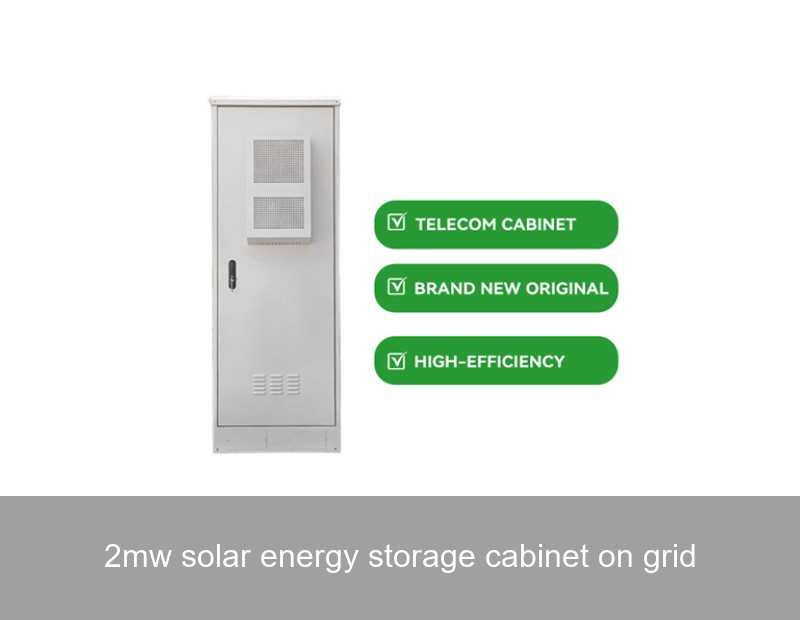
Imagine a bright, sunny day at a bustling industrial facility. The solar panels are working at peak capacity, but the grid is unstable, and energy costs are fluctuating wildly. This is a common scene across Europe and the U.S., where the push for renewables meets the hard reality of grid management. Enter the 2MW solar energy storage cabinet on-grid system—a robust, containerized solution designed not just to store excess solar power, but to actively stabilize the grid, optimize energy economics, and provide critical backup. This isn't just a battery; it's an intelligent power hub for commercial and industrial energy independence.
Table of Contents
- The Modern Grid Challenge: More Solar, More Complexity
- What is a 2MW On-Grid Solar Energy Storage Cabinet?
- By the Numbers: The Tangible Advantages of a 2MW System
- Case Study: A European Manufacturing Plant's Success Story
- The Highjoule Advantage: Engineered for Reliability & Intelligence
- The Future of On-Grid Storage: What's Next?
The Modern Grid Challenge: More Solar, More Complexity
The rapid adoption of solar photovoltaic (PV) systems is a triumph for clean energy. However, it introduces a two-fold challenge for businesses and grid operators. First, solar generation is intermittent—peaking at midday and dropping to zero at night. Second, feeding large amounts of variable power into the grid can cause instability, leading to frequency fluctuations and voltage sags. According to the International Energy Agency (IEA), grid-scale storage is critical for integrating high shares of solar and wind, with global capacity needs set to expand dramatically by 2030.
For a factory, data center, or large commercial building with a multi-megawatt solar array, this volatility isn't just a technical nuisance; it's a financial drain. You might be forced to curtail (waste) excess solar energy or purchase expensive peak power from the grid when the sun isn't shining.
What is a 2MW On-Grid Solar Energy Storage Cabinet?
Think of a 2MW solar energy storage cabinet as a massive, smart energy bank directly connected to your facility's electrical infrastructure and the public grid. Typically housed in a standardized, weatherproof container, it integrates:
- Battery Racks: Using high-cycling Lithium Iron Phosphate (LFP) cells for safety and longevity.
- Power Conversion System (PCS): The brain that converts DC battery power to AC grid power and manages bidirectional flow.
- Energy Management System (EMS): Advanced software that controls when to charge, discharge, or hold based on electricity prices, grid signals, and consumption patterns.
- Thermal Management & Safety Systems: Ensures optimal operating temperature and includes comprehensive fire suppression and isolation.
Unlike off-grid systems, an on-grid setup like this works in concert with the utility. It doesn't island the facility but provides services to both the owner and the grid.
Core Functions of an On-Grid Storage Cabinet
| Function | Description | Primary Benefit |
|---|---|---|
| Peak Shaving | Discharges during high-cost peak demand periods. | Reduces demand charges & energy bills. |
| Solar Self-Consumption Optimization | Stores midday solar excess for use in the evening. | Maximizes ROI on solar assets. |
| Frequency Regulation | Responds to grid frequency drops in milliseconds. | Provides a new revenue stream (in some markets). |
| Backup Power | Provides seamless transition to backup during grid outages. | Ensures business continuity. |
By the Numbers: The Tangible Advantages of a 2MW System
Let's move beyond theory. The value proposition of a 2MW unit is rooted in concrete financial and operational metrics. For a typical industrial user in Germany or California with significant time-of-use (TOU) rate differentials:
- Demand Charge Reduction: Can cut peak demand by 80-95%, translating to tens of thousands of euros/dollars in annual savings.
- Solar Utilization: Can increase the self-consumption of a co-located solar farm from ~30-40% to over 70%.
- Payback Period: With current incentives (like the U.S. Investment Tax Credit or European innovation funds), sophisticated systems can achieve payback in 4-7 years.
- Scalability: The 2MW/4MWh cabinet is often a building block. Systems can be paralleled to reach 10MW, 20MW, or more, as seen in large microgrid projects.

Image: Containerized energy storage systems are becoming a common sight alongside large-scale solar installations. (Photo by American Public Power Association on Unsplash)
Case Study: A European Manufacturing Plant's Success Story
Let's look at a real-world application. A major automotive parts manufacturer in Bavaria, Germany, faced steep ‘Netzentgelte’ (grid fees) based on its highest 15-minute power draw each month. With a 5MW rooftop solar array, they still pulled significant power from the grid during morning and evening peaks.
The Solution: In 2023, they deployed a 2MW/4.3MWh on-grid energy storage cabinet from Highjoule. The system's EMS was programmed with two primary goals: 1) aggressively shave peak demand, and 2) store midday solar surplus.
The Data-Driven Results (First 12 Months):
- Peak Demand Reduction: Reduced peak grid draw by 1.8MW on average, cutting grid fee costs by 68%.
- Solar Curtailment Eliminated: 100% of previously wasted solar energy was captured and utilized.
- Overall Energy Cost Savings: €320,000 saved annually, contributing to a projected payback period of under 5 years.
- Grid Support: The system is also enrolled in a pilot program for primary frequency control, generating additional revenue.
This case exemplifies the multi-faceted ROI of a well-integrated 2MW storage cabinet.
The Highjoule Advantage: Engineered for Reliability & Intelligence
At Highjoule, with nearly two decades of experience since 2005, we understand that a 2MW storage system is a major capital investment. Our H-Ion Cube Grid Series is engineered to deliver unwavering performance and intelligence.
Our cabinets are built around our proprietary LFP battery modules, known for their >8,000 cycle life at 80% depth of discharge. What truly sets us apart is the Highjoule Neuron™ EMS Platform. This AI-driven system doesn't just react—it forecasts. By integrating weather data, production schedules, and real-time grid pricing (like day-ahead and intraday markets in Europe), it optimizes every charge/discharge cycle for maximum economic return.
Furthermore, our systems are designed for seamless grid interaction, complying with strict regulations like UL 9540 in the U.S. and grid codes in Germany (VDE-AR-N 4105) and the UK (G99). We provide a full turnkey service—from initial feasibility and financial modeling to installation, grid connection approval, and 24/7 remote monitoring.

Image: Advanced energy management systems are crucial for optimizing large-scale storage performance. (Photo by ThisisEngineering on Unsplash)
Key Considerations for Deploying Your 2MW System
Before investing, a thorough analysis is key. Here are critical questions to address:
- Site & Logistics: Do you have the space (approx. 30 sqm) for the cabinet, with proper foundation, accessibility, and safety clearances?
- Electrical Infrastructure: Can your current switchgear and transformers handle the bidirectional power flow, or is an upgrade needed?
- Financial Model: Have you modeled your load profile against local utility tariffs to accurately project savings and ROI? The National Renewable Energy Laboratory (NREL) offers excellent tools for this.
- Regulations & Incentives: What are the local interconnection rules, and what tax incentives or grants are available? In the U.S., the ITC now applies directly to standalone storage.
The Future of On-Grid Storage: What's Next?
The evolution of the 2MW storage cabinet is towards greater grid interactivity. We're moving into an era of Virtual Power Plants (VPPs), where thousands of distributed systems, like yours, are aggregated to act as a single, dispatchable power plant. This creates even greater value for asset owners. Furthermore, advancements in battery chemistry, like semi-solid state, promise even higher energy density and safety in the coming years.
The question for forward-thinking business leaders is no longer "if" large-scale storage makes sense, but "how and when" to integrate it into their energy strategy. As grid dynamics grow more complex and the price of volatility rises, your 2MW solar energy storage cabinet becomes more than equipment—it becomes a strategic asset for financial and operational resilience.
Is your organization ready to model the specific savings and grid support potential a 2MW on-grid storage system could bring to your next facility upgrade or solar expansion? What's the single biggest energy cost challenge you'd want such a system to solve?
 Inquiry
 Online Chat