


Understanding Solar Energy Materials: The Foundation of Modern Photovoltaics
Welcome! If you're curious about how those sleek panels on rooftops or in solar farms actually convert sunlight into electricity, you've come to the right place. The secret lies in the solar energy materials at their heart. This isn't just about silicon anymore; it's a dynamic field where material science directly dictates efficiency, cost, and the very future of renewable energy. In this article, we'll demystify these crucial materials, explore the latest innovations, and show how they integrate into the high-performance systems powering homes and businesses across Europe and the US.
Table of Contents
- The Core Material: Crystalline Silicon Dominance
- The Challengers: Thin-Film and Emerging Materials
- Beyond the Cell: Critical System Materials
- Case Study: Material Choice in a German Industrial Project
- Future Horizons: Perovskites and Tandem Cells
- Choosing the Right Materials for Your Energy System
The Core Material: Crystalline Silicon Dominance
Let's start with the workhorse. Over 95% of the global solar market today relies on crystalline silicon (c-Si). It's abundant, stable, and decades of refinement have made it highly efficient. Think of it as the "tried and true" champion. But not all silicon is created equal. You'll primarily encounter two types:
- Monocrystalline Silicon: Made from a single, pure crystal structure. These panels are darker in color (often black) and offer the highest efficiency rates, typically between 20-23%. They perform better in low-light conditions and have a longer lifespan, making them a premium choice.
- Polycrystalline Silicon: Composed of multiple crystal fragments. They have a distinctive blue, speckled appearance. Slightly less efficient (15-18%) but historically more cost-effective to produce.
The trend, especially in residential and commercial installations where space can be at a premium, is strongly toward monocrystalline for its superior power density. You simply get more kilowatt-hours per square meter of your roof.

Image source: Unsplash. High-efficiency monocrystalline panels are a common sight on modern installations.
The Challengers: Thin-Film and Emerging Materials
While silicon dominates, alternative solar energy materials offer unique advantages for specific applications. These are known as thin-film technologies because they're deposited in layers microns thick onto surfaces like glass, metal, or plastic.
| Material | Key Characteristics | Best Use Cases |
|---|---|---|
| Cadmium Telluride (CdTe) | Lowest cost per watt, good temperature coefficient, simple manufacturing. | Large-scale utility solar farms. |
| Copper Indium Gallium Selenide (CIGS) | Flexible, lightweight, relatively high efficiency for thin-film. | Building-integrated photovoltaics (BIPV), curved surfaces, portable power. |
| Amorphous Silicon (a-Si) | Low-light performance, non-toxic, but lower efficiency. | Consumer electronics (calculators, garden lights). |
These materials shine where flexibility, lightweight design, or specific manufacturing economies are critical. For instance, CdTe holds a significant market share in the US utility-scale sector due to its cost advantage.
Beyond the Cell: Critical System Materials
A solar panel is more than just the photovoltaic cells. The materials surrounding them are vital for longevity and performance. The encapsulation material (typically EVA - ethylene-vinyl acetate) must be perfectly transparent and durable to protect cells from moisture and physical damage for 25+ years. The backsheet is a multi-layer polymer barrier. The anti-reflective coating on the glass is crucial for capturing maximum light. Compromises here can lead to premature degradation like potential-induced degradation (PID) or backsheet cracking.
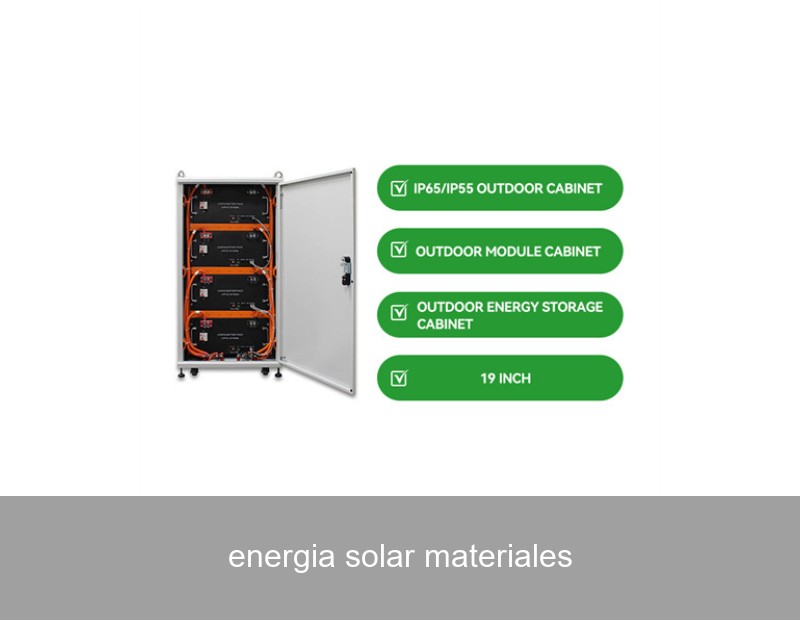
This is where system design and component quality become non-negotiable. At Highjoule, we understand this holistically. Our integrated solar-plus-storage solutions use only tier-one, certified panels where the quality of these ancillary materials is rigorously proven. We then pair them with our intelligent Highjoule HPS Series power conversion systems and H-Cube modular battery storage, which are engineered with high-grade, safety-focused materials like lithium iron phosphate (LFP) chemistry for unmatched cycle life and thermal stability.
Case Study: Material Choice in a German Industrial Project
Let's look at a real-world example. In 2022, a medium-sized automotive parts manufacturer in Bavaria aimed to achieve 70% self-consumption of solar energy and ensure production line stability amidst grid fluctuations. The initial proposal used standard polycrystalline panels.
Our analysis, however, considered the factory's limited roof space and high, consistent energy demand during daylight hours. We recommended a switch to high-efficiency monocrystalline bifacial panels. These panels, with their transparent backsheet, capture reflected light from the white factory roof, boosting yield by an estimated 5-8%. Paired with a Highjoule HPS 100kW inverter and a 500 kWh H-Cube battery system, the solution was optimized for material performance.
The Result? The system achieved 22.5% panel efficiency in real-world conditions, exceeding projections. The robust LFP battery chemistry handles two full charge/discharge cycles daily seamlessly. In its first year, the installation generated 1.2 GWh of electricity, covering 68% of the site's demand and reducing energy costs by over €145,000, with a grid backup guarantee that protects sensitive manufacturing equipment.
Future Horizons: Perovskites and Tandem Cells
The most exciting frontier in solar energy materials is the perovskite solar cell. These are solution-processable materials with a unique crystal structure that can achieve stunning efficiency jumps in the lab, from under 4% to over 25% in just a decade. Their potential lies in flexibility, tunability, and the possibility of being layered on top of silicon in "tandem cells."
Imagine a cell that uses perovskite to capture the blue light spectrum and silicon for the red and infrared. This tandem approach could push commercial efficiencies beyond 30%, a once-unthinkable milestone. The main hurdle is long-term stability—ensuring these materials can endure decades of outdoor exposure. Research is progressing rapidly, and we at Highjoule actively monitor these advancements through our R&D partnerships, preparing to integrate the next generation of stable, high-performance materials into future product lines.

Image source: Unsplash. Research into perovskite materials is key to next-gen solar efficiency.
Choosing the Right Materials for Your Energy System
So, what does this mean for you, a homeowner or business leader considering solar? The choice of materials directly impacts your return on investment and energy security.
- For Residential Roofs (US/Europe): High-efficiency monocrystalline panels are often ideal to maximize limited space. Pair them with a reliable storage system like the Highjoule Home+ battery, which uses safe LFP chemistry, to store excess daytime production for use at night.
- For Commercial & Industrial Sites: The calculus involves energy profiles, roof load-bearing capacity, and demand charges. A mix of high-efficiency panels and a scalable, industrial-grade battery like the H-Cube can provide both savings and critical backup power.
- For Microgrids & Off-Grid: Durability and performance under varied conditions are key. Robust panel construction and battery chemistry with a wide operating temperature range are selected to ensure 24/7 resilience.
Highjoule's role is to navigate these choices for you. We don't just sell components; we provide integrated, intelligent systems. Our energy management software, Highjoule Neuron, optimizes the flow of power between your solar panels (regardless of their core material), battery storage, and the grid, ensuring every watt generated by those advanced materials is used in the most intelligent and economical way possible.
As you contemplate your own energy transition, which factor weighs more heavily in your decision: maximizing immediate efficiency with today's proven materials, or future-proofing your system for the next wave of material breakthroughs?
 Inquiry
 Online Chat