


Energiespeicher Windkraft: Unlocking the Full Potential of Your Wind Energy
a fierce storm is sweeping across the North Sea, wind turbines are spinning at full capacity, generating a massive amount of clean, renewable power. Yet, paradoxically, the grid operator is paying wind farms to switch off. Meanwhile, a week later during a calm, high-pressure period, energy prices spike as gas-fired plants are ramped up to meet demand. This, in a nutshell, is the core challenge of wind energy—its magnificent intermittency. The solution? Energiespeicher Windkraft, or wind energy storage. It's not just an add-on; it's the critical partner that transforms wind from a variable weather-dependent source into a reliable, dispatchable pillar of our modern grid.
The Wind Dilemma: Power When You Don't Need It?
Wind energy has been a phenomenal success story, especially in regions like Northern Europe and the Great Plains of the US. However, its very nature creates a fundamental mismatch. Wind generation is often highest at night or during seasonal storms when electricity demand is relatively low. Conversely, during peak demand periods on calm days, output can be minimal. This imbalance forces grid operators into a constant, expensive balancing act, often relying on fossil-fuel-powered "peaker" plants that can start quickly but are costly and polluting. It's like having a prolific well that only flows at random times—you need a reservoir to store the water for when you're truly thirsty.
The Data Reality: Curtailment and Lost Potential
Let's talk numbers, because they tell a compelling story. In 2023, Germany curtailed over 10 TWh of renewable energy, a significant portion of which was wind power—enough electricity to power millions of homes for a year, essentially wasted. In the UK, constraint payments to wind farms to reduce output have cost consumers hundreds of millions of pounds annually. In Texas (ERCOT), wind curtailment is a growing concern as installed capacity outpaces transmission development. This isn't just an economic loss; it's a lost opportunity in the race for decarbonization. Every megawatt-hour of clean wind power that is curtailed is often replaced by fossil fuels later.

Image Source: Unsplash - Wind energy is abundant, but without storage, its potential is limited.
Energiespeicher Windkraft: The Perfect Partner for Unpredictable Generation
So, what is Energiespeicher Windkraft? It's the integrated system of capturing excess electrical energy produced by wind turbines during high-wind, low-demand periods, storing it, and releasing it precisely when needed. Think of it as a "time-shifting" technology. The most prevalent and technologically mature form of this is battery energy storage systems (BESS), particularly using lithium-ion chemistry. These systems are fast, efficient, and scalable, making them the ideal dance partner for the variable rhythms of wind power.
How It Works: From Turbine to Tap
The process is elegantly intelligent:
- Capture: When wind generation exceeds grid demand, instead of curtailing the turbines, the excess DC or AC power is diverted to the battery storage system.
- Convert & Store: Power conversion systems (PCS) manage the flow, converting AC to DC for battery charging. The energy is stored chemically within the battery cells.
- Manage: An advanced energy management system (EMS) continuously analyzes grid frequency, electricity prices, weather forecasts, and demand patterns.
- Dispatch: When demand rises, prices peak, or wind output drops, the EMS instructs the BESS to convert the stored DC energy back to AC and inject it into the grid—within milliseconds.
Case Study: Taming the North Sea Winds - A German Example
Let's look at a real-world application. A community-owned wind farm consortium in Schleswig-Holstein, Germany, faced a common problem. Their several 4-5 MW turbines frequently hit grid capacity limits, leading to painful curtailment and revenue loss. Their solution was to co-locate a 12 MWh Highjoule HiveStack BESS at their substation.
Here’s the impact after one year of operation:
| Metric | Before Storage | After Storage Deployment |
|---|---|---|
| Curtailed Wind Energy | ~18% of potential generation | Reduced to under 5% |
| Revenue from Market Arbitrage | None | +€280,000 annually |
| Grid Service Income (Frequency Regulation) | None | +€95,000 annually |
| Effective Capacity Factor | 31% | Increased to 41% |
The Highjoule HiveStack system, with its proprietary adaptive control software, didn't just store energy. It autonomously decided the most valuable action for each kilowatt-hour: hold it for the evening peak, sell it for intraday price differences, or provide a fast-frequency response service to stabilize the regional grid. This multi-revenue stream approach turned a grid constraint into a profitable asset, proving the tangible value of Energiespeicher Windkraft.

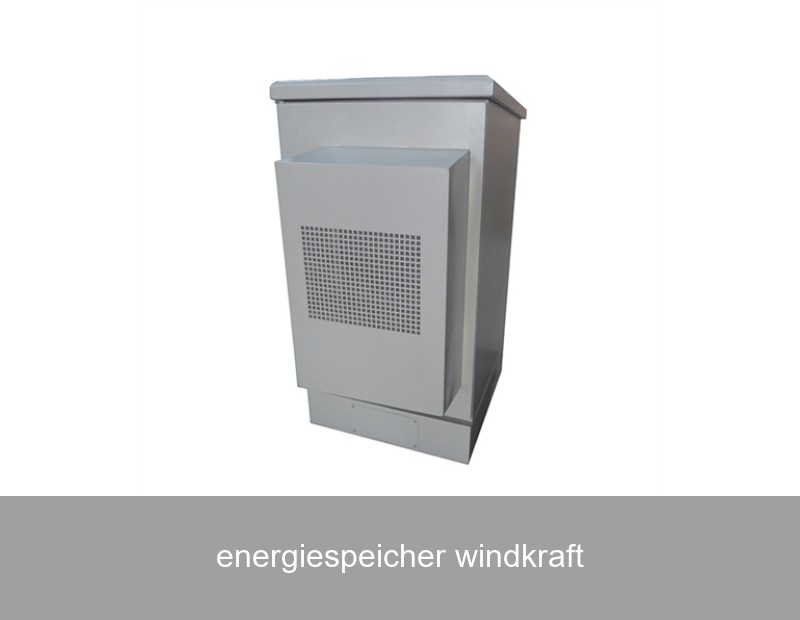
Image Source: Unsplash - Modern BESS units, like Highjoule's HiveStack, are the workhorses of energy storage.
Beyond Stabilization: The Multi-Layered Value of Storage
The benefits of pairing wind with storage extend far beyond just capturing excess power. It creates a more resilient and economical energy ecosystem:
- Grid Stability: BESS can provide inertial response and frequency regulation faster than any conventional power plant, crucial as wind and solar replace spinning turbines of thermal plants. The National Renewable Energy Lab (NREL) highlights this as key for high-renewable grids.
- Capacity Deferral: Stored wind energy can reliably meet peak demand, delaying or eliminating the need for costly new transmission lines or peaker plant construction.
- Energy Security: For industrial or microgrid applications, a wind+storage combo provides a hedge against price volatility and physical grid outages.
Highjoule's Role: Intelligent Storage for a Wind-Powered Future
At Highjoule, we've been at the forefront of this integration since 2005. We understand that Energiespeicher Windkraft isn't a one-size-fits-all solution. Our approach is to provide intelligent, scalable systems tailored to the specific wind profile and market rules of your location—be it a single wind turbine supporting a remote farm in the US Midwest or a gigawatt-scale offshore wind farm in the North Sea.
Our flagship product, the HiveStack Commercial & Industrial BESS, is particularly suited for wind farm co-location and offtaker applications. Its modular design allows for seamless expansion from hundreds of kWh to tens of MWh. Coupled with our GridSynergy AI Platform, the system doesn't just store—it optimizes, predicting wind patterns and market prices to maximize financial return and grid support. For larger, utility-scale wind farms, our custom-engineered Megapack solutions offer the durability and performance needed for the most demanding grid applications.
The Future Horizon: What's Next for Wind and Storage?
The synergy between wind and storage is only getting stronger. We're seeing the rise of "hybrid renewable power plants," where wind, solar, and storage are developed together from the outset, sharing grid connections and maximizing infrastructure use. Furthermore, innovations like green hydrogen production using curtailed wind power present a long-duration storage pathway. The question is no longer if storage is needed, but how much and what kind is optimal for each specific project.
Is your wind energy project facing curtailment, or are you looking to enhance the value and predictability of your renewable asset? What specific grid challenge in your region could be solved by integrating intelligent Energiespeicher Windkraft solutions?
 Inquiry
 Online Chat