


Energy Efficient Battery Systems: The Unsung Hero of a Sustainable Grid
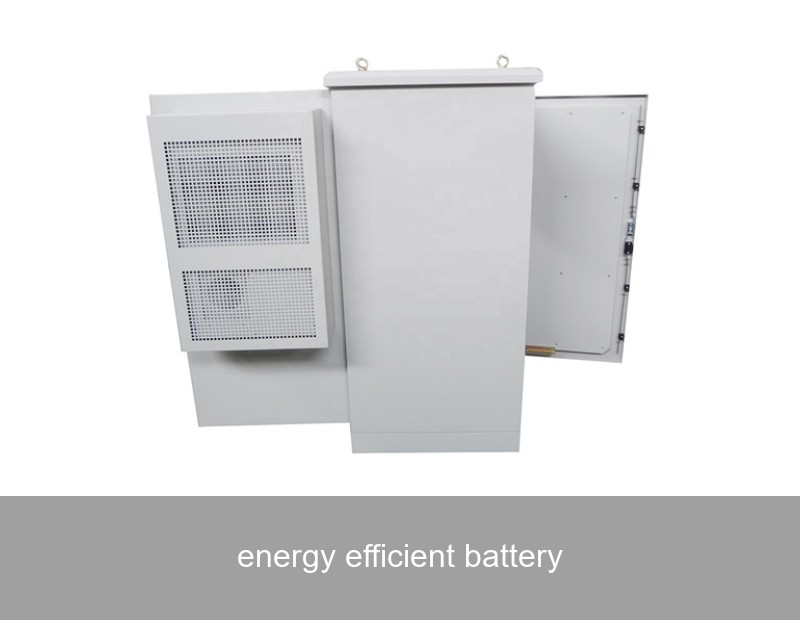
When we talk about renewable energy, solar panels and wind turbines often steal the spotlight. But there's a silent, powerful force working behind the scenes to make that green energy reliable: the energy efficient battery. Think of it this way—what good is a brilliant, cost-saving idea if you forget it the moment you need it? Similarly, the true value of solar and wind power is unlocked only when we can store it efficiently and use it on demand. An energy efficient battery isn't just about holding a charge; it's about minimizing waste at every step—from charging and storing to discharging. For homeowners and businesses across Europe and the US, this efficiency is the key to slashing energy bills, maximizing self-consumption, and building genuine energy resilience.
What Makes a Battery Truly Energy Efficient?
At its core, an energy efficient battery system maximizes the amount of electricity you can *use* from the amount you *put in*. It's the difference between buying a gallon of fuel and having most of it evaporate versus having it all available to power your engine. The primary villain here is "energy loss," which typically manifests as heat. Every time energy is converted (AC to DC for storage, DC back to AC for use) or simply sits in the battery, some of it is lost.
This is where advanced lithium-ion chemistry, particularly Lithium Iron Phosphate (LFP), has been a game-changer. Compared to older technologies, LFP batteries offer superior round-trip efficiency, meaning a higher percentage of the solar energy you capture makes it to your appliances. But chemistry is just the starting point. True system-wide efficiency is engineered through sophisticated Battery Management Systems (BMS), high-quality power electronics, and intelligent thermal management.

Image Source: Unsplash - A modern home battery system, where design and thermal management contribute to overall efficiency.
The Metrics That Matter: Beyond the Label
To understand what you're really getting, you need to look at a few key specifications:
- Round-Trip Efficiency (RTE): This is the star metric. It tells you the percentage of energy retained after a full charge-discharge cycle. Top-tier systems today offer RTEs of 95-98%.
- Depth of Discharge (DoD): Can you safely use 100% of the battery's capacity, or only 80%? A higher usable DoD means you're getting more of what you paid for.
- Degradation Rate: An efficient battery is also a long-lasting one. A low annual degradation rate (e.g., less than 2% per year) ensures high performance over a 10+ year lifespan.
- Standby Losses: How much energy does the system itself consume when idle? Minimal standby power is crucial for daily efficiency.
| Factor | Low-Efficiency System Impact | High-Efficiency System Impact |
|---|---|---|
| Round-Trip Efficiency | 85% RTE: Loses 15kWh of every 100kWh stored. | 97% RTE: Loses only 3kWh of every 100kWh stored. |
| Depth of Discharge | 80% DoD: 20% of capacity is unusable "buffer." | 100% DoD: Full nominal capacity is available for use. |
| Thermal Management | Passive cooling: Performance drops in heat/cold, higher losses. | Active liquid cooling: Maintains optimal temp, stable efficiency. |
From Theory to Practice: A Real-World Case Study
Let's move beyond specs and see how this plays out in reality. Consider a medium-sized dairy processing plant in Bavaria, Germany. Their challenge was twofold: high, volatile energy costs and a corporate mandate to reduce carbon footprint. They installed a 500 kWh solar array paired with a 1 MWh energy efficient battery storage system.
The results, monitored over one year, were telling:
- Self-Consumption of Solar: Increased from 35% to over 90%. Previously, excess solar was fed to the grid at low rates. Now, it's stored for evening cooling and packaging lines.
- Grid Demand Charges: Reduced by 40%. The battery seamlessly provided power during short, high-demand spikes (like starting large chillers), flattening the plant's power draw from the grid.
- Overall Energy Cost Savings: Achieved 28% reduction. The high round-trip efficiency of the battery meant nearly all captured solar was utilized effectively.
This case, documented in a International Renewable Energy Agency (IRENA) report on industrial decarbonization, highlights that the financial and environmental returns are directly tied to the system's underlying efficiency. An inferior battery with higher losses would have significantly eroded these savings.
The Highjoule Approach: Engineering for Real-World Efficiency
At Highjoule, with nearly two decades of experience since 2005, we believe efficiency isn't a single feature—it's the foundational design principle. Our HPS (Highjoule PowerStack) series for commercial and industrial applications is built from the cell up for maximum usable energy and longevity.
How do we achieve this? Our systems integrate LFP cells with an industry-leading active liquid cooling and heating system. Unlike simple air cooling, this maintains the battery at its ideal temperature window year-round, whether it's a scorching Texas summer or a frigry Scandinavian winter. This prevents efficiency loss due to thermal stress and is a key reason our systems maintain over 95% round-trip efficiency in real-world conditions.
Furthermore, our AI-powered energy management platform adds a layer of operational intelligence. It doesn't just store energy; it learns your facility's load patterns, weather forecasts, and utility rate schedules to make millisecond decisions on when to charge, hold, or discharge. This software-driven optimization ensures every unit of stored energy delivers the maximum possible financial and operational value. For residential customers, our HomeVault solution brings this same philosophy of holistic efficiency to compact, scalable home energy storage.

Image Source: Unsplash - An engineer overseeing a large-scale battery installation, critical for system health and efficiency.
Future Trends in Energy Efficient Battery Technology
The quest for higher efficiency never stops. We're actively monitoring and developing around several promising frontiers:
- Solid-State Batteries: Promising even higher energy density and potentially eliminating flammable liquid electrolytes, which could simplify thermal management and boost safety.
- Silicon-Anode Technology: Incremental improvements in anode materials can increase capacity and improve charge rates, contributing to system-level efficiency.
- Grid-Interactive Efficiency: The future isn't just about the battery itself. It's about how seamlessly it communicates with other assets—EV chargers, heat pumps, the grid. Standards like OCPP for charging and smart grid protocols will enable "virtual power plants" where thousands of efficient batteries act as one, stabilizing the grid with minimal energy loss in aggregation and dispatch.
So, as you evaluate your path to energy independence, ask yourself this: Is your storage solution simply a "bucket" for energy, or is it an intelligent, finely-tuned system designed to deliver every possible kilowatt-hour back to your home or business? The difference defines your return on investment and your contribution to a less wasteful energy ecosystem.
 Inquiry
 Online Chat