


Understanding Energy Management System Price: A Smart Investment for Your Energy Future
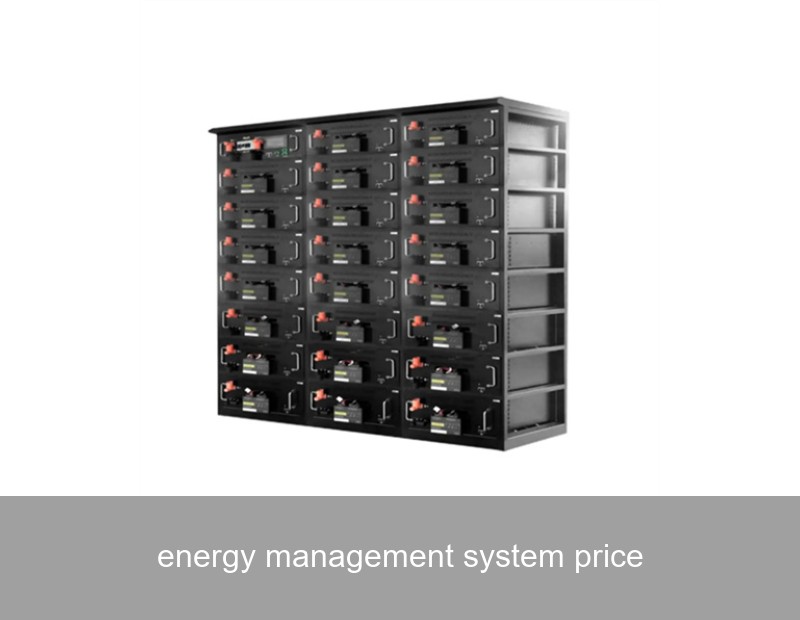
If you're looking into solar panels or a battery for your home or business, you've likely come across the term "Energy Management System" or EMS. And your immediate next question is probably, "What's the energy management system price, and is it worth it?" It's a fantastic question. Think of an EMS not as an extra cost, but as the brain of your entire energy setup. It's what transforms a collection of hardware into an intelligent, money-saving, and grid-supporting power plant. In this guide, we'll demystify the factors behind EMS pricing, showcase its undeniable value, and help you understand why it's the cornerstone of a modern, resilient energy strategy.
Table of Contents
What is an Energy Management System (EMS)?
At its core, an Energy Management System is a sophisticated software platform, often paired with a hardware controller, that monitors, controls, and optimizes the flow of energy in your building or microgrid. Imagine you have solar panels, a battery, an electric vehicle charger, and your regular household appliances. An EMS intelligently decides:
- When to store excess solar energy in the battery versus exporting it to the grid.
- When to draw from the battery during expensive peak-rate hours.
- How to prioritize charging your EV with the cheapest, cleanest power available.
- Even when to briefly adjust your thermostat or water heater to capitalize on savings without compromising comfort.
It's the difference between having tools and having a master craftsman who uses those tools with perfect efficiency. This intelligence is what you're investing in when you consider the energy management system price.
Key Factors Influencing Energy Management System Price
The cost of an EMS isn't a single number. It varies based on complexity, scale, and capability. Here’s a breakdown of what shapes the investment:
| Factor | Description | Impact on Price |
|---|---|---|
| System Scale & Application | Is it for a single-family home, a large commercial facility, or an industrial microgrid? | Price increases significantly with complexity and number of assets managed. |
| Hardware vs. Software | Some EMS are software-only (cloud-based), while others include a dedicated hardware gateway for reliability and speed. | Integrated hardware-software solutions typically have a higher upfront cost but offer superior reliability and response. |
| Integration Capabilities | Can it communicate with your specific brand of inverter, battery, EV charger, and smart appliances? | Broader, manufacturer-agnostic compatibility often denotes a more advanced (and potentially higher-priced) system. |
| Advanced Features | AI-driven forecasting, participation in grid services (like virtual power plants), and detailed carbon footprint tracking. | These premium features add value and cost, but also unlock new revenue streams. |
| Installation & Professional Services | System design, configuration, commissioning, and ongoing support. | Expert installation is crucial for performance and is a key component of the total cost. |
As a ballpark, for a residential installation, a robust EMS might add 10-20% to the total system cost. For commercial and industrial projects, it's a more customized quote but is essential for achieving the project's financial and sustainability goals.
The Real Value: Why EMS Pays for Itself
Focusing solely on the upfront energy management system price misses the bigger picture. A high-quality EMS is an investment with a rapid and ongoing return. Let's quantify its value:
- Maximized Self-Consumption: By storing excess solar energy instead of selling it at low rates, you avoid buying expensive grid power later. This can increase your solar energy usage by 50% or more.
- Peak Shaving: Commercial users with demand charges can see massive savings. An EMS prevents short, high-power draws that trigger these charges. Savings here alone can justify the system cost within a year or two.
- Grid Service Revenue: In many regions, you can earn money by allowing your aggregated battery system to support the grid during stress periods. An EMS is mandatory to participate in these demand response programs.
- Extended Equipment Life: Intelligent battery management (optimizing charge/discharge cycles, temperature) can prolong your battery's lifespan, protecting a major asset.
- Future-Proofing: A good EMS can be updated to integrate new technologies and tariffs, protecting your investment against a changing energy landscape.

Image Source: Unsplash (Representative image of energy monitoring)
Case Study: A German Bakery's Recipe for Savings
Let's look at a real-world example from Bavaria, Germany. Bäckerei Schmidt (a mid-sized bakery) faced high electricity costs, especially during early morning baking hours that coincided with peak grid rates. They installed a 100 kWp solar array and a 120 kWh battery storage system.
The Challenge: Without intelligence, the system would simply charge the battery with solar and discharge in the evening. It didn't address the morning peak.
The EMS Solution: They implemented an advanced EMS configured for industrial load management. The system learned the bakery's schedule and electricity price forecasts from the European Power Exchange (EPEX SPOT).
The Result: The EMS pre-charged the battery with cheap overnight grid power and solar, then strategically discharged it during the 6 AM - 10 AM peak. It also curtailed non-essential loads briefly during the highest price spikes.
- Annual Electricity Bill Reduction: 68%
- Peak Demand Charge Reduction: 40%
- Payback Period for the entire system (including EMS): Under 5 years.
- CO2 Footprint Reduction: 55 tonnes annually.
The energy management system price was a critical component, but it was the EMS that orchestrated these dramatic savings, turning a sustainability project into a powerful financial asset.
The Highjoule Approach: Intelligent EMS for Every Need
At Highjoule, we've been designing integrated energy storage and management solutions since 2005. We understand that the hardware is only as good as the intelligence that controls it. That's why our EMS is not an afterthought—it's the core of every system we deliver.
Our Highjoule Neuron EMS Platform is a scalable solution that adapts from residential to utility-scale projects:
- For Homes (Neuron Home): User-friendly app with AI learning, seamless integration with major solar and battery brands, and optional VPP enrollment to earn extra income.
- For Business & Industry (Neuron Pro): Focuses on peak shaving, tariff optimization, and mission-critical backup. It features open-protocol integration for complex building management systems.
- For Microgrids (Neuron Grid): Manages multiple generation sources (solar, wind, gensets) and storage systems to create stable, independent grids for communities or industrial campuses.
We believe in transparency. When you get a quote from Highjoule, the energy management system price is presented as the essential, value-creating engine of your project. Our experts work with you to design a system where the EMS payback is clear and compelling from day one.

Image Source: Unsplash (Representative image of industrial energy management)
Making the Right Investment Decision
So, how should you evaluate the energy management system price for your project? Don't just ask for the cost. Ask these questions instead:
- What is the projected increase in my self-consumption or savings on my demand charges with this EMS?
- Does this system allow me to participate in local grid incentive programs?
- Is the EMS vendor-agnostic, or will it lock me into a single hardware brand?
- What is the roadmap for software updates and new feature integration?
- Can you show me a simulation of my projected savings based on my historical consumption data?
The most expensive system is the one that doesn't deliver on its promised savings. The right EMS, like those engineered by Highjoule, is a partner in your energy independence for decades to come.
Ready to move beyond just looking at price tags and start calculating your potential for savings and resilience? What would a 40% reduction in your peak power costs do for your business's bottom line this year?
 Inquiry
 Online Chat