


Energy Saving for Industry: Turning Power Costs into Competitive Advantage
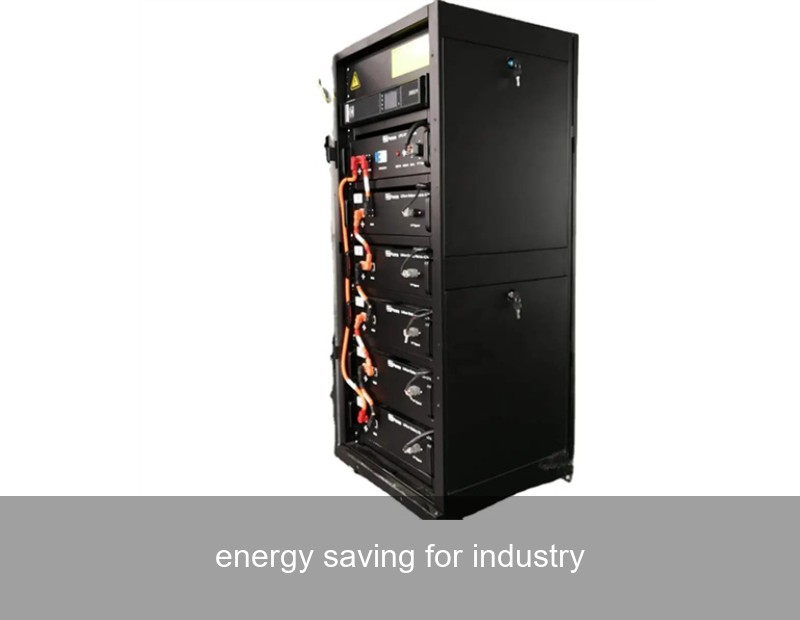
Let's be frank. When you hear "energy saving for industry," you might think of turning off lights or tweaking the thermostat. Important, sure, but it barely scratches the surface. For today's industrial leaders, particularly in energy-intensive regions of Europe and the US, true energy saving has evolved into a sophisticated operational discipline. It's no longer just about reducing consumption; it's about intelligently managing when and how you use power to unlock massive financial, operational, and even environmental benefits. This is where modern technology transforms a cost center into a strategic asset.

Image Source: Unsplash - Representative image of industrial energy use
The Hidden Costs of Unmanaged Industrial Energy
The phenomenon is clear: industrial facilities are power-hungry. But the real pain point isn't just the total kilowatt-hours consumed; it's the structure of the bill. Utilities charge commercial and industrial customers not only for energy (kWh) but also for peak power demand (kW). This "demand charge" can constitute 30-50% of your total electricity bill. It's like being charged for the highest speed you drove all month, not just the total distance.
Consider the data: A 2023 report by the U.S. Department of Energy's Advanced Manufacturing Office highlights that demand charges are a significant and growing burden, often spiking during short periods of concurrent machinery operation. In Europe, volatile wholesale electricity prices, exacerbated by recent market shifts, make predictable budgeting a challenge. The financial impact is direct and substantial.
The Ripple Effects of Inefficiency
- Financial Drain: Uncontrolled peak demand leads to punitive charges, eroding profit margins.
- Grid Vulnerability: Reliance on the grid during peak times increases exposure to outages and price surges.
- Carbon Footprint: Grid power at peak times is often the dirtiest, sourced from fossil-fuel peaker plants.
- Operational Inflexibility: Fear of demand spikes can lead to throttling production, a hidden opportunity cost.
Beyond Basic Efficiency: The Modern Energy Saving Stack
The solution moves beyond efficient motors and LED lighting. The cutting edge of energy saving for industry is a layered approach:
| Layer | Technology/Action | Primary Benefit |
|---|---|---|
| 1. Foundational | Energy Audits, Efficient Equipment | Reduces base consumption |
| 2. Strategic | Load Shifting & Peak Shaving | Slash demand charges |
| 3. Advanced | On-site Generation (Solar PV) + Energy Storage | Energy independence & arbitrage |
| 4. Intelligent | AI-Driven Energy Management Systems (EMS) | Optimizes all layers autonomously |
Layer 2 and 3 are where the game changes. Peak shaving uses stored energy to prevent your facility's draw from the grid from exceeding a set threshold during short, high-power events. Load shifting involves drawing power from the grid during low-cost, off-peak hours to charge a battery, then using that stored energy during expensive peak hours. This is the core of modern industrial energy economics.
Case Study: From Peak Penalties to Power Profits
Let's look at a real-world application. A mid-sized automotive parts manufacturer in Bavaria, Germany, faced steep demand charges and sought stability against volatile prices. Their goal was clear: achieve tangible energy saving for industry through control.
The Solution & Data: The facility was equipped with a 500 kW solar PV canopy over its parking lot, paired with a Highjoule HI-Cube 500 containerized battery energy storage system (BESS) with a capacity of 1 MWh. The system was integrated with Highjoule's proprietary Smart EMS platform.
- Demand Charge Reduction: The BESS was dispatched automatically to cap grid draw during production peaks. Result: A 28% reduction in monthly demand charges.
- Solar Self-Consumption: Excess solar generation, previously fed to the grid at low rates, was stored for evening use. Result: Solar self-consumption rate increased from 35% to over 80%.
- Price Arbitrage: The system bought grid power during low-price nighttime hours (often with excess renewable energy) to charge, offsetting daytime use. Result: An additional 15% savings on energy supply costs.

Image Source: Unsplash - Representative image of industrial battery storage monitoring
The project, supported by insights from the Fraunhofer ISE on levelized cost of storage, achieved a payback period of under 5 years. More importantly, it transformed their energy profile from a passive expense to an actively managed asset.
Highjoule's Role: Intelligent Energy Storage as a Core Strategy
This is where Highjoule's expertise becomes critical. Since 2005, we've understood that effective energy saving for industry requires robust, intelligent hardware paired with sophisticated software. Our solutions are designed for the scale and rigor of industrial applications.
Highjoule's Industrial Product Suite
- HI-Cube Containerized BESS: Pre-assembled, plug-and-play units from 100 kWh to multi-MWh scales. They feature industry-leading lithium iron phosphate (LFP) batteries for safety and longevity, and are built to withstand harsh environments.
- Smart EMS Platform: The brain of the operation. This AI-powered platform analyzes real-time energy data, weather forecasts, and electricity tariffs to make autonomous, millisecond decisions on when to charge, discharge, or hold. It seamlessly integrates with existing solar inverters and facility SCADA systems.
- Highjoule Professional Services: Our team doesn't just sell hardware. We provide end-to-end support: from initial energy analysis and financial modeling to system design, grid interconnection support, and long-term performance monitoring.
For a manufacturer in Ohio or a chemical plant in the Netherlands, the principle is the same: Highjoule's systems provide a buffer against uncertainty. They turn unpredictable energy flows into a scheduled, optimized resource. As noted by the International Energy Agency, innovation in BESS is a key enabler for industrial decarbonization and cost resilience.
Implementing Your Energy Saving Strategy
So, where do you start? The journey to meaningful industrial energy savings is a structured process.
Step 1: The Discovery Audit
You can't manage what you don't measure. A detailed analysis of your facility's load profile is essential. When are your peaks? What equipment causes them? Highjoule's experts often begin here, identifying the "low-hanging fruit" and modeling potential savings.
Step 2: Financial Modeling & Solution Design
Based on your load profile and local utility rates, a tailored financial model is built. This isn't just about equipment cost, but about projecting demand charge savings, energy arbitrage revenue, and potential incentive eligibility (like the U.S. Investment Tax Credit or European Union grants).
Step 3: Seamless Integration & Ongoing Optimization
Implementation is handled with minimal disruption. Once operational, the system's performance is continuously tracked. The Smart EMS software learns and adapts, ensuring savings are not just achieved but sustained and improved over the system's 15+ year lifespan.

Image Source: Unsplash - Representative image of energy management software dashboard
The question for today's industrial leader is no longer "Can we afford to invest in advanced energy saving?" The data-driven question has become: "Can we afford not to, given the control, savings, and resilience it delivers to our core operations?" What is the single biggest energy cost uncertainty currently keeping your operations team up at night?
 Inquiry
 Online Chat