


Home Standby Generator Cost: A Comprehensive Guide to Investment and Alternatives
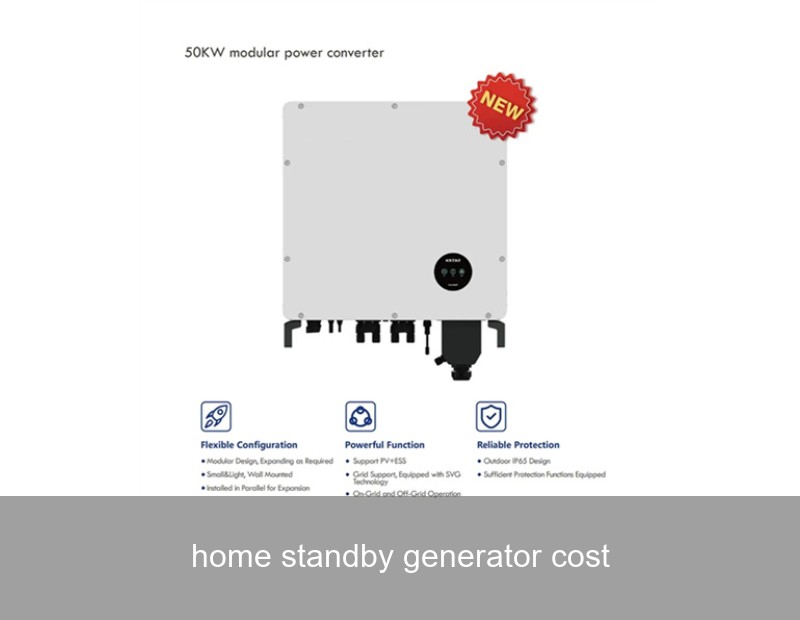
When the power grid fails during a storm or heatwave, the immediate thought for many homeowners is, "I need a backup generator." The home standby generator cost is often the first hurdle. You might see a price tag of $10,000 and think that's the whole story. But is it? The true cost of peace of mind involves installation, long-term fuel, maintenance, and the evolving landscape of home energy technology. As a leader in advanced energy storage, Highjoule understands that this decision isn't just about backup power; it's about investing in your home's overall energy resilience, efficiency, and sustainability.
Understanding Home Standby Generator Costs: More Than Just the Price Tag
Let's be clear: a traditional fossil-fuel home standby generator is a significant mechanical system. It's an engine, much like in your car, that sits outside your home and automatically kicks on when utility power fails. The initial home standby generator cost you're quoted typically bundles the unit and professional installation. But why is that number so high? It's not just the generator itself. The process involves a licensed electrician installing a sophisticated transfer switch, connecting to your home's natural gas line or a large propane tank, pouring a concrete pad, and ensuring everything is up to strict local building and electrical codes. This is a permanent fixture to your property.
The True Cost Breakdown of a Home Standby Generator
To make an informed decision, you must look beyond the sticker price. Here’s a detailed breakdown of the typical costs involved.
| Cost Component | Typical Range | Details & Notes |
|---|---|---|
| Generator Unit | $5,000 - $12,000+ | Varies by power output (kW), brand, and features (like Wi-Fi monitoring). |
| Professional Installation | $3,000 - $8,000+ | Includes transfer switch, electrical wiring, fuel line connection, and concrete pad. |
| Fuel Source Setup | $500 - $4,000 | Cost for connecting to natural gas or installing a large buried/above-ground propane tank. |
| Annual Maintenance | $200 - $600 | Essential for reliability. Includes oil/filter changes, spark plug replacement, and system testing. |
| Fuel Cost During Use | Variable | Natural gas or propane consumption can be substantial during a multi-day outage. |
| Total Initial Investment | $8,500 - $20,000+ | The upfront capital required to purchase and install the system. |

Image Source: Unsplash - Professional installation is a significant portion of the upfront home standby generator cost.
The Long-Term View: Fuel, Maintenance, and Hidden Expenses
This is where the conversation gets interesting. A generator is a long-term commitment with ongoing operational expenses. Think about it: if a major storm knocks out power for five days, your 20kW generator running at half load could consume over 250 gallons of propane, costing hundreds of dollars. Furthermore, skipped maintenance can lead to a failure exactly when you need it most. There's also the noise pollution and local emissions to consider. So, while the unit itself may last 15-20 years, you are continuously paying to keep it ready and running.
The Modern Alternative: Solar + Battery Storage
Now, let's talk about the 21st-century solution that is changing how homeowners think about backup power: integrated solar and battery storage systems. This is where Highjoule's expertise shines. Instead of a single-purpose engine that burns fuel, imagine your entire home having its own intelligent, silent, and renewable microgrid.
Highjoule's Residential Energy Storage Systems, like our H-Joule HomePower series, are designed to work seamlessly with solar panels. Here’s how it redefines the home standby generator cost equation:
- Dual-Purpose Investment: The system isn't just for outages. It stores cheap solar energy or off-peak grid power for daily use, slashing your electricity bills 365 days a year. This creates an ongoing return on investment that a traditional generator cannot offer.
- Zero Fuel Cost: The "fuel" is sunlight. Once installed, your backup power is essentially free, protecting you from volatile propane or natural gas prices during crises.
- Silent & Clean Operation: No fumes, no noise, and no need for permits related to fossil fuel storage. It's a system you can install in your garage or on a wall.
- Smart Energy Management: Our intelligent Highjoule EnergyOS software optimizes your home's energy flow, prioritizing critical loads during an outage and maximizing self-consumption of solar energy every day.
The initial investment for a solar-plus-storage system can be comparable to a high-end whole-house generator installation. However, when you factor in federal tax credits (like the 30% Residential Clean Energy Credit in the U.S.), local incentives, and ongoing bill savings, the net cost over time can be dramatically lower, all while increasing your energy independence.

Image Source: Unsplash - A solar and battery storage system provides clean, silent backup and daily bill savings.
A Real-World Case: The Johnson Family in Texas
Let's look at real data from a climate where backup power is critical. During the winter storm of 2023, a neighborhood in Austin, Texas, experienced a 72-hour outage.
- Neighbor A (Traditional Generator): Had a 22kW natural gas standby generator installed in 2020 for $13,500. It performed reliably but consumed approximately 2,100 cubic feet of natural gas per day. Their fuel cost for the outage was over $150, on top of their annual $400 service contract. The system was loud, limiting use of their backyard.
- The Johnson Family (Highjoule Customer): In 2022, they installed a 10kW solar array with a Highjoule HomePower 15 battery system. Total installed cost before incentives: $28,000. After the 30% federal tax credit, their net investment was $19,600. During the outage, the system automatically disconnected from the grid and powered their essential loads (refrigeration, lighting, communications, heating system fans) for the entire 72 hours silently. Crucially, their system had also been reducing their average monthly electric bill by 85% for the preceding year, saving them roughly $2,200 annually.
For the Johnsons, the home standby generator cost was transformed into a comprehensive energy upgrade. Their net system cost is being offset daily, and they had free, clean backup power when it mattered most. Within a few years, their energy savings will have effectively paid for their backup capability.
Making Your Decision: Key Questions to Ask
So, how do you choose? Start by asking these questions:
- What is my primary goal? Is it purely emergency backup, or do I also want to reduce my carbon footprint and electricity bills?
- What is my total budget, including long-term operating costs? Look at a 10-year timeline, not just the upfront price.
- Is my roof suitable for solar? A site assessment can answer this quickly.
- How important are quiet operation and zero local emissions to my household?
At Highjoule, we believe your home's energy system should be intelligent, efficient, and sustainable. While a traditional generator solves one problem, a Highjoule solar-plus-storage system transforms your home's entire energy ecosystem. It turns the singular home standby generator cost into a multi-faceted investment in resilience, savings, and environmental stewardship.
Ready to Explore Your Home's Energy Future?
What would it mean for your family to have backup power that not only protects you during outages but also actively lowers your energy bills and carbon footprint every single day?
 Inquiry
 Online Chat