


Unlocking Grid Stability: The Power of a 300MW Energy Storage Cabinet
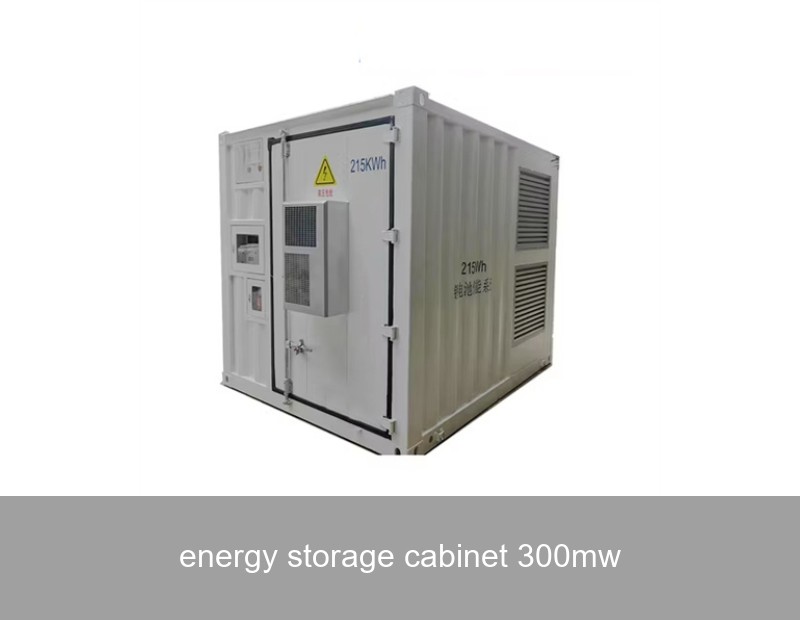
Imagine a single, massive battery system capable of powering a small city for several hours. That's the scale we're talking about when we mention a 300MW energy storage cabinet or, more accurately, a system comprised of many such cabinets. This isn't science fiction; it's the cutting-edge reality of modern grid management. As a product technology expert at Highjoule, I see firsthand how these large-scale systems are transforming our energy infrastructure from a reactive network to a proactive, resilient, and sustainable power ecosystem. Let's demystify what a 300MW energy storage system truly means for our energy future.
The Modern Grid Challenge: Why We Need Massive Storage
The energy landscape is undergoing a seismic shift. The rapid integration of renewable sources like solar and wind is a fantastic development, but it introduces a fundamental challenge: intermittency. The sun doesn't always shine, and the wind doesn't always blow. This creates volatility—sudden surges and drops in power generation that the traditional grid, designed for steady fossil-fuel output, struggles to handle.
This is where utility-scale battery energy storage systems (BESS) enter the picture. Think of them as the "shock absorbers" and "buffers" for the national grid. A 300MW energy storage cabinet system represents a critical infrastructure asset. To put 300 Megawatts (MW) in perspective, it can provide enough instantaneous power for approximately 225,000 homes (based on average U.S. household consumption). Its capacity, measured in Megawatt-hours (MWh), determines how long it can discharge that power. A 300MW/1200MWh system, for instance, could deliver that full power for 4 hours.
Technology Breakdown: Inside a 300MW Energy Storage System
It's crucial to understand that a 300MW installation isn't one giant "cabinet." It's a sophisticated aggregation of thousands of individual battery cells, organized into modules, packs, and finally, into numerous containerized energy storage cabinets. These cabinets are the building blocks of grid-scale projects.

Credit: Image via Unsplash - A visual representation of containerized energy storage units at a power facility.
Here’s a simplified breakdown of the key components:
- Battery Cells: Typically lithium-ion (LFP chemistry is now dominant for safety and longevity), these are the fundamental units storing DC electricity.
- Battery Management System (BMS): The "brain" of each cabinet, constantly monitoring cell voltage, temperature, and health to ensure safety and performance.
- Power Conversion System (PCS): The heart of the operation. This bi-directional inverter converts DC from the batteries to AC for the grid, and vice-versa for charging.
- Thermal Management: A critical, often overlooked system. Maintaining an optimal temperature (usually liquid cooling for this scale) is essential for efficiency, safety, and battery lifespan.
- Energy Management System (EMS): The master controller that decides when to charge (often when renewable generation is high and electricity cheap) and when to discharge (during peak demand or grid stress), maximizing economic and grid-support value.
| Function | Description | Grid Benefit |
|---|---|---|
| Frequency Regulation | Responding in milliseconds to tiny fluctuations in grid frequency to maintain stability. | Prevents blackouts and equipment damage. |
| Renewables Firming | Smoothing the output of a solar or wind farm, turning intermittent power into a predictable, dispatchable source. | Enables higher penetration of clean energy. |
| Peak Shaving / Arbitrage | Storing energy when prices are low and discharging during high-demand, high-price periods. | Lowers costs for consumers and defers costly grid upgrades. |
| Black Start Capability | Providing power to restart generators after a complete grid outage. | Enhances grid resilience and recovery. |
Real-World Impact: A 300MW Project in Action
Let's move from theory to practice. One of the most cited examples in the U.S. is the Moss Landing Energy Storage Facility in California (Phase III). While the total project is larger, its development in phases, including 300MW+ blocks, offers a perfect case study. According to public data from the California Independent System Operator (CAISO) and project reports, this facility provides critical grid services to a region aggressively transitioning to renewables.
The Phenomenon: California's "duck curve" – where net power demand plummets during midday solar peaks and then ramps up extremely steeply as the sun sets – is a major grid management challenge.
The Data & Case: Large-scale storage like the Moss Landing project acts as a solution. It soaks up excess solar generation during the day and discharges it during the evening ramp. Public performance data shows these systems regularly dispatching hundreds of megawatts for multiple hours, directly flattening the duck curve and preventing the need to fire up less efficient, polluting "peaker" plants. A California Energy Commission report highlights how storage is integral to the state's reliability planning.
The Insight: This case proves that a 300MW energy storage cabinet system is not a backup power source; it's an active, daily grid asset. It turns the intermittency of renewables from a liability into a dispatchable, market-ready commodity, ensuring the lights stay on while accelerating decarbonization.
Highjoule's Role in Delivering Grid-Scale Solutions
At Highjoule, our expertise lies in engineering the intelligent building blocks that make projects of this magnitude possible, reliable, and profitable. For a 300MW system, we don't just provide hardware; we deliver an integrated, software-defined power solution.
Our GridMax Pro Series of containerized energy storage cabinets is engineered specifically for utility-scale applications. Each cabinet is a pre-assembled, tested, and thermally optimized unit featuring our proprietary liquid cooling technology and advanced BMS. This design ensures unparalleled energy density, safety (with multi-level protection), and a lifespan exceeding 6,000 cycles. For a 300MW project, hundreds of these cabinets would be seamlessly integrated and controlled by our NeuralGrid EMS platform. This AI-driven software optimizes every charge-discharge cycle across multiple value streams—from frequency response markets to energy arbitrage—maximizing the project's return on investment.
Our approach reduces on-site installation complexity and time by up to 40%, a critical factor for developers facing tight deadlines. We partner with project developers, EPCs, and utilities to provide not just equipment, but full lifecycle support, from initial feasibility studies to long-term performance monitoring.

Credit: Image via Unsplash - An engineer monitoring a sophisticated energy management system for grid-scale storage.
The Future Outlook for Utility-Scale Storage
The trajectory is clear. According to the International Energy Agency (IEA), global grid-scale battery storage capacity is set to multiply exponentially this decade, driven by policy support and plummeting costs. The next frontier is moving beyond 4-hour systems to 6, 8, and even 10-hour duration storage, enabling true multi-day renewable shifting. Innovations in battery chemistry, like sodium-ion, and the integration of hybrid systems with other storage forms, are on the horizon.
The 300MW energy storage cabinet system is a cornerstone of this transition. It represents a maturity point where technology meets urgent grid needs at an economically viable scale.
 Inquiry
 Online Chat