


Micro Energy Storage Cabinet System: The Compact Powerhouse for Modern Energy Independence
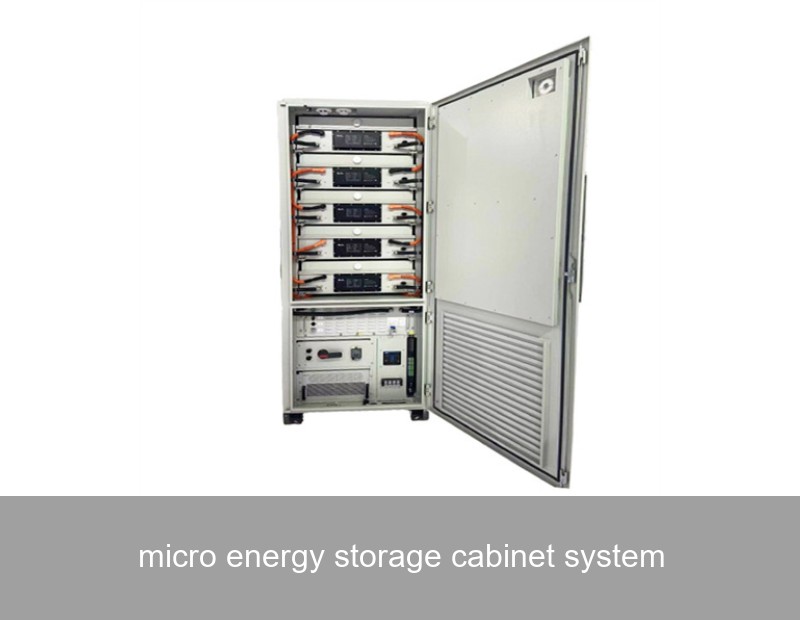
a sleek, refrigerator-sized unit quietly humming in your basement, garage, or commercial utility room. It's not a new appliance, but a silent guardian of your energy security and a key player in your financial and environmental strategy. This is the reality of the modern micro energy storage cabinet system. As electricity prices remain volatile and the push for renewable integration intensifies, these compact, all-in-one energy storage solutions are moving from niche to necessity. They represent a fundamental shift—from passive consumption to active, intelligent energy management at a local level. For businesses, communities, and homeowners, understanding this technology is the first step toward true energy resilience.
Table of Contents
- What is a Micro Energy Storage Cabinet System?
- The Urgency: Why We Need Smarter Energy Storage Now
- Key Components and How It Works
- A Real-World Case: The German Bakery's Recipe for Resilience
- The Highjoule Approach: Intelligence in a Cabinet
- Looking Ahead: What Does Your Energy Future Hold?
What Exactly is a Micro Energy Storage Cabinet System?
Let's demystify the term. A micro energy storage cabinet system is an integrated, containerized unit that stores electrical energy for later use. Think of it as a giant, sophisticated battery with a built-in brain. Unlike sprawling utility-scale storage farms, these systems are designed for on-site, behind-the-meter deployment. The "cabinet" or "container" aspect is crucial—it means the battery cells, battery management system (BMS), power conversion system (PCS), thermal management, and safety controls are all pre-engineered into a single, plug-and-play enclosure. This modularity makes them incredibly versatile for a wide range of settings.

Image: A modern, clean energy storage cabinet installation. Credit: Unsplash (Representative image)
The Urgency: Why We Need Smarter Energy Storage Now
The energy landscape is undergoing a seismic shift, driven by two parallel phenomena: the explosive growth of intermittent renewables and increasing grid instability.
The Data Tells the Story: In the U.S., the Energy Information Administration (EIA) projects that solar and wind will account for 94% of new utility-scale generating capacity in 2024. In Europe, according to Ember's European Electricity Review 2024, wind and solar generated a record 27% of the EU's electricity in 2023. This is fantastic news for decarbonization. However, this surge creates a mismatch—the sun doesn't always shine, and the wind doesn't always blow when energy demand is highest. This intermittency can strain traditional grids, leading to frequency fluctuations and even blackouts.
This is where the micro energy storage cabinet system becomes the critical linchpin. It doesn't just store energy; it provides grid services like frequency regulation and peak shaving, acting as a shock absorber for the local network. For the end-user, it translates directly to avoiding peak demand charges (which can constitute up to 70% of a commercial electricity bill) and ensuring operations continue during an outage.
Key Components: What's Inside the Cabinet?
To appreciate its sophistication, let's peek inside. A top-tier system is more than just batteries in a box.
- Battery Cells: Typically lithium-ion (LiFePO4 chemistry is increasingly popular for its safety and longevity), these are the core energy storage medium.
- Battery Management System (BMS): The "central nervous system" that monitors cell voltage, temperature, and state of charge to ensure safety, performance, and lifespan.
- Power Conversion System (PCS): The "translator" that converts stored DC power to usable AC power for your building, and vice-versa for charging.
- Energy Management System (EMS): The "brain." This intelligent software controls when to charge, discharge, or hold based on tariffs, weather forecasts, and consumption patterns.
- Thermal Management: A critical safety and performance feature, often liquid cooling, that keeps batteries at their optimal operating temperature.
- Safety Enclosure & Systems: Robust, often IP54-rated cabinets with integrated fire suppression and ventilation.
It's the seamless integration of these components that defines a reliable system. This is a core design philosophy at Highjoule. Our CubeSeries Micro Storage Cabinet is engineered with these synergies in mind, featuring our proprietary Adaptive Cycle Management software that learns usage patterns to maximize ROI and battery life from day one.
A Real-World Case: The German Bakery's Recipe for Resilience
Let's move from theory to practice. Consider Bäckerei Schmidt, a mid-sized artisan bakery in Bavaria, Germany. Their challenge was twofold: high energy costs from running refrigeration and ovens, and vulnerability to even brief grid interruptions that could spoil ingredients and halt production.
The Solution: In early 2023, they installed a 120 kWh micro energy storage cabinet system, coupled with an existing 80 kW rooftop solar array.
| Metric | Before Installation | After Installation (12 Months) |
|---|---|---|
| Grid Energy Consumption (Peak Hours) | ~65% | ~15% |
| Solar Self-Consumption Rate | 35% | 92% |
| Peak Demand Charges | €1,850/month (avg.) | €320/month (avg.) |
| Estimated CO2 Reduction | Baseline | 28.5 tonnes/year |
The Insight: The system is programmed to charge from excess solar during the day and discharge during the early morning baking peak and evening grid peak periods. During a 3-hour grid outage last winter, the bakery continued full operations, saving an estimated €15,000 in potential lost product and sales. This case exemplifies the triple win: financial savings, operational resilience, and sustainability.
The Highjoule Approach: Intelligence Packed into a Cabinet
At Highjoule, with nearly two decades of experience, we view a micro energy storage cabinet system not just as hardware, but as an intelligent energy asset. Our systems are designed for the specific demands of the European and North American markets, adhering to the strictest safety standards like UL 9540 and IEC 62619.
Our EcoGrid Cabinet Series, for instance, is built with a modular design. You can start with a 100 kWh unit and scale up as your needs grow. Its integrated Highjoule SynergyOS platform allows for:
- Predictive Energy Arbitrage: Automatically buying and storing grid energy when rates are low, and using it when rates are high.
- Virtual Power Plant (VPP) Readiness: Enabling aggregators to pool distributed storage resources to support the wider grid, creating a potential revenue stream for the owner.
- Seamless Solar & EV Integration: Acting as the central hub for a fully integrated renewable energy ecosystem at your site.
Image: Intelligent control systems are key to maximizing storage value. Credit: Unsplash (Representative image)
Benefits and Diverse Applications
The versatility of cabinet systems unlocks value across sectors.
Commercial & Industrial (C&I)
For factories, data centers, and retail stores, the primary driver is often demand charge reduction and backup power. A system can be programmed to discharge precisely during the 15-minute window when a facility's power draw is measured for peak billing, leading to immediate, significant savings.
Residential & Multi-Dwelling Units
For communities or large homes, these systems maximize self-consumption of rooftop solar, moving households closer to energy independence. In areas prone to wildfires or storms (like California or the Gulf Coast), they provide critical backup for essential loads.
Microgrids & Remote Sites
For islands, remote research stations, or agricultural operations, a micro energy storage cabinet system is often the cornerstone of a hybrid microgrid, working with diesel generators and renewables to reduce fuel costs and ensure 24/7 reliable power.
Looking Ahead: What Does Your Energy Future Hold?
The transition to a decentralized, digitalized, and decarbonized energy system is not a distant future—it's happening now. The micro energy storage cabinet system is a tangible, scalable piece of that future you can implement today. It transforms energy from a mere utility cost into a manageable, strategic asset.
The question is no longer if such storage will become standard, but when and how you will integrate it. Is your business or community simply waiting for the next grid price spike or outage, or are you ready to take control of your energy destiny? What would the ability to lock in your energy costs and secure your operations mean for your long-term planning and peace of mind?
 Inquiry
 Online Chat