


Unlocking Grid Resilience: The Strategic Role of the 5kV Energy Storage Cabinet
Imagine a world where a passing cloud doesn't cause a solar farm's output to plummet, where a factory's sensitive machinery is immune to grid flickers, and where renewable energy flows as reliably as traditional power. This isn't a distant future; it's being built today, and a critical component in this architecture is the energy storage cabinet 5kV. This high-voltage, containerized solution is rapidly becoming the backbone for commercial, industrial, and utility-scale energy management. For facility managers, energy directors, and project developers across Europe and the US, understanding this technology is key to achieving energy independence, cost savings, and sustainability goals. Let's delve into why the 5kV cabinet is more than just a battery box—it's a strategic asset.
Table of Contents
What Exactly is a 5kV Energy Storage Cabinet?
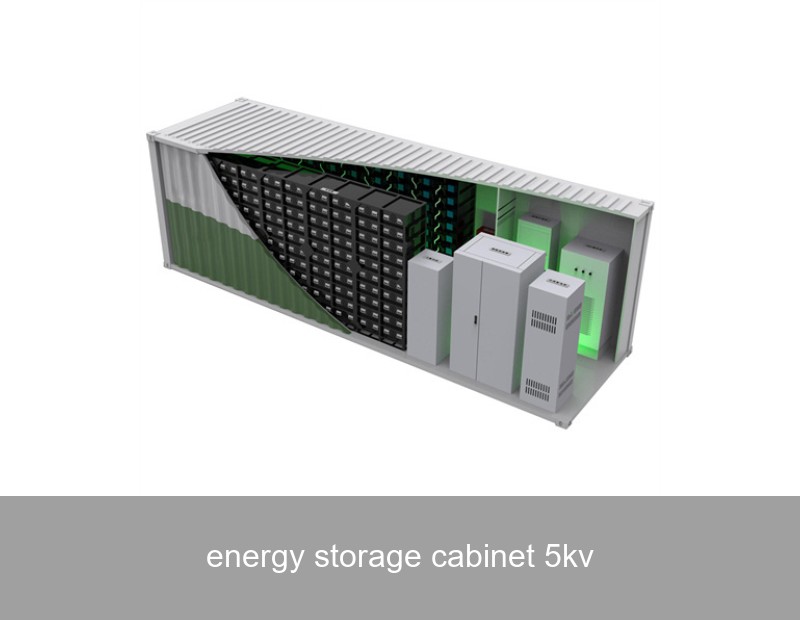
At its core, an energy storage cabinet 5kV is a pre-engineered, integrated system that stores electrical energy at a 5000-volt direct current (DC) level. Unlike lower-voltage systems, operating at 5kV significantly reduces electrical losses during conversion and transmission, making it exceptionally efficient for large-scale deployments. Think of it as a high-capacity reservoir for electrons. These cabinets typically house lithium-ion battery modules (like LFP for superior safety and longevity), a sophisticated Battery Management System (BMS), power conversion systems (PCS), thermal management, and safety controls—all in a single, often containerized, enclosure.

Image: A modern, containerized energy storage system. Credit: Unsplash (Representational)
The Challenge: Intermittency, Costs, and an Aging Grid
Here's the reality we face: The energy transition is in full swing, but it brings new complexities. Solar and wind power are inherently variable. In California's CAISO grid, for example, the famous "duck curve" illustrates the sharp ramp-up required from other sources as solar generation drops in the evening. Simultaneously, industries in Europe grapple with volatile energy prices and the need for uninterrupted power to protect million-dollar production lines. The traditional grid, built for one-way power flow, is straining under this new bidirectional, decentralized model. The result? Potential instability, lost revenue, and operational risk.
The Data: Quantifying the Storage Imperative
The numbers speak volumes. According to the U.S. Energy Information Administration (EIA), battery storage capacity in the U.S. is expected to surge significantly, driven by utility-scale projects. In Europe, ambitious REPowerEU targets are accelerating deployment. But why the specific push towards higher voltage like 5kV? The efficiency gains are substantial. A study by the National Renewable Energy Laboratory (NREL) highlights that higher system voltages can reduce balance-of-system costs and improve overall lifecycle performance. For a 2 MWh system, moving from 1.5kV to 5kV architecture can lead to measurable reductions in cable sizes, conversion losses, and footprint—directly impacting the levelized cost of storage (LCOS).
The Highjoule Solution: Engineered Intelligence in Every 5kV Cabinet
This is where Highjoule's expertise, honed since 2005, becomes critical. We don't just supply batteries; we deliver integrated, intelligent power resilience platforms. Our HVC Series 5kV Energy Storage Cabinet is designed to meet the rigorous demands of modern grid-edge applications.
What sets our system apart?
- Advanced Safety Architecture: Utilizing Lithium Iron Phosphate (LFP) chemistry as a foundation, our cabinet features a multi-layer protection system—from cell-level fusing and active thermal runaway prevention to comprehensive gas detection and fire suppression.
- Intelligent Energy Management (EMS): The true brain of the operation. Our AI-driven EMS can autonomously optimize charge/discharge cycles based on real-time electricity prices, weather forecasts, and load patterns, maximizing ROI.
- Modular & Scalable Design: Need to start with 500 kWh and expand to 5 MWh? Our modular cabinet design allows for seamless capacity addition, protecting your initial investment.
- Grid Services Ready: Our systems are engineered to provide critical grid services like frequency regulation, voltage support, and peak shaving, opening up additional revenue streams for our clients.
For a commercial facility, this means turning a cost center (the energy bill) into a managed asset. For a utility, it means deploying a flexible resource that stabilizes the entire network.
| Application | Challenge | How a Highjoule 5kV Cabinet Addresses It |
|---|---|---|
| Industrial Peak Shaving | High demand charges from short-term peak usage. | Discharges during peak hours, flattening the load curve and slashing utility bills. |
| Solar PV Integration | Solar overproduction is curtailed, energy is wasted. | Stores excess solar generation for use at night, increasing self-consumption >80%. |
| Microgrid & Backup Power | Grid outages halt production and operations. | Provides seamless transition to backup power, ensuring critical load continuity. |
| Utility Frequency Regulation | Grid frequency fluctuates with supply/demand imbalance. | Responds in milliseconds to inject or absorb power, stabilizing grid frequency. |
Case Study: Boosting Competitiveness for a German Automotive Supplier
Let's look at a real-world example. A mid-sized automotive parts manufacturer in Bavaria, Germany, faced a dual challenge: skyrocketing energy costs and a corporate mandate to reduce carbon footprint. Their 5 MW rooftop solar array often produced more power than they could use during midday, while they drew expensive power from the grid during morning and evening peaks.
The Solution: Highjoule deployed a turnkey system featuring two of our HVC Series 5kV cabinets, creating a 1.2 MWh / 1.5 MW storage system integrated with their existing solar and manufacturing load.
The Results (18-month period):
- Energy Cost Reduction: Achieved a 28% reduction in overall electricity costs through strategic peak shaving and arbitrage.
- Solar Self-Consumption: Increased the utilization of their own solar generation from 55% to 92%, drastically reducing grid dependence.
- ROI: Projected payback period of just under 5 years, factoring in German subsidy programs for commercial storage.
- Resilience: Gained the ability to island critical production lines during brief grid disturbances, preventing costly stoppages.

Image: Industrial solar installation, similar to the case study site. Credit: Unsplash (Representational)
Future Applications and Key Selection Considerations
The journey of the energy storage cabinet 5kV is just beginning. We're seeing its role evolve into electric vehicle (EV) fleet charging depots, where it manages the immense demand load, and into hybrid systems paired with hydrogen electrolyzers for long-duration seasonal storage.
If you're considering such a system, ask these crucial questions:
- Total Cost of Ownership (TCO): Look beyond the upfront price. Evaluate efficiency (round-trip), cycle life, and degradation rates. A cheaper system with lower efficiency may cost more over 10 years.
- Software & Intelligence: The hardware stores energy, but the software extracts value. Ensure the EMS is robust, customizable, and can adapt to changing market signals.
- Service & Support: Storage is a long-term partnership. Does the provider offer remote monitoring, performance guarantees, and local technical support? At Highjoule, our global service network provides proactive support to ensure your system performs for its entire design life.
Ready to Explore Your Energy Resilience Strategy?
The transition to a resilient, cost-effective, and sustainable energy setup is not a question of "if" but "when." The technology, exemplified by the advanced 5kV energy storage cabinet, is proven and ready. Whether your primary driver is financial savings, sustainability targets, or operational uptime, a tailored storage solution can be the cornerstone of your strategy.
What specific energy challenge—be it demand charges, renewable integration, or backup power—is most critical for your operation to solve in the next 18 months?
 Inquiry
 Online Chat