


Smart Load Energy Storage Cabinet: The Intelligent Heart of Modern Power Management
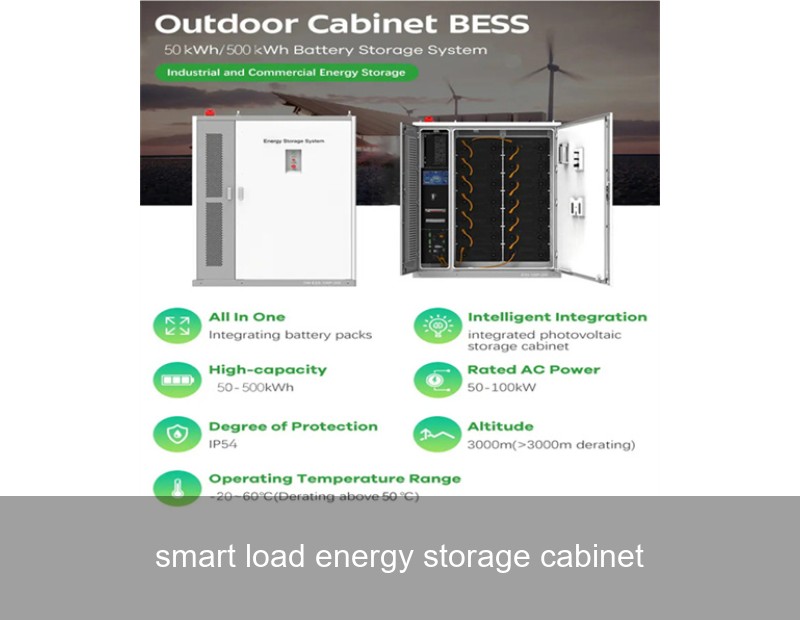
Have you ever wondered how businesses and communities can truly take control of their energy costs and reliability? The answer increasingly lies in a sophisticated, box-like unit often tucked away in a utility room or basement: the smart load energy storage cabinet. More than just a battery in a case, this system represents a fundamental shift from passive consumption to active, intelligent energy management. For facility managers, homeowners, and grid operators across Europe and the U.S., understanding this technology is key to unlocking resilience, sustainability, and significant savings. Let's delve into how this intelligent cabinet works and why it's becoming indispensable.
Table of Contents
What is a Smart Load Energy Storage Cabinet?
At its core, a smart load energy storage cabinet is an integrated system that stores electrical energy—typically from the grid or renewable sources like solar—and dispatches it based on intelligent algorithms. Think of it as a highly sophisticated energy bank with a built-in financial advisor. Unlike simple backup generators, it doesn't just turn on during an outage. It continuously monitors energy prices, grid frequency, consumption patterns, and weather forecasts to make real-time decisions on when to charge, when to discharge, and which loads to prioritize.
The "smart load" component is crucial. It means the system can actively manage connected appliances and equipment (the "loads"), shedding non-essential ones during peak times or seamlessly switching to battery power to avoid high tariff periods. This dual capability of storage and intelligent load management is what sets it apart.

For a foundational understanding of energy storage technologies, the U.S. Department of Energy provides excellent resources.
Why the Smart Load Energy Storage Revolution is Happening Now
The convergence of several powerful trends is driving rapid adoption:
- Volatile Energy Prices: In Europe and the U.S., electricity prices, especially during peak hours, have become notoriously unpredictable. A smart cabinet acts as a financial shock absorber.
- Renewable Energy Integration: Solar and wind are intermittent. Smart storage captures excess renewable generation for use when the sun isn't shining or the wind isn't blowing, maximizing self-consumption.
- Grid Modernization & Incentives: Governments and utilities are actively encouraging distributed storage to stabilize the grid. Programs like demand response pay users to reduce grid draw during stress periods—a perfect task for a smart cabinet.
- Advancing Technology: Lithium-ion battery costs have fallen dramatically, while energy management software has become incredibly sophisticated, making these systems more accessible and effective than ever.
How It Works: The PAS Framework in Action
Let's break down the operation using the PAS (Problem-Agitate-Solution) framework, which mirrors the system's own logic.
Problem: The Traditional, Reactive Energy Bill
Most commercial and industrial facilities simply draw power from the grid as needed, paying the rate of the moment. Peak demand charges—fees based on the highest 15-30 minute power draw in a billing cycle—can constitute up to 50% of a total electricity bill. This is a passive, costly approach.
Agitate: The Cost of Inaction
Without intervention, these costs will only escalate. Grid infrastructure is aging, and the transition to renewables, while essential, introduces new stability challenges. For a business, a sudden outage or a month of extreme price spikes can directly impact the bottom line and operational continuity.
Solution: The Intelligent, Proactive Cabinet
This is where the smart load energy storage cabinet shines. Its operation is a logical staircase:
- Phenomenon (Data Acquisition): The system's sensors continuously collect data: real-time electricity pricing from the utility, internal power consumption from every circuit, battery state of charge, and even solar PV output.
- Data Analysis & Prediction: Advanced algorithms analyze this data stream, forecasting short-term load patterns and predicting price peaks.
- Case-Based Decision Making: The software evaluates thousands of scenarios. For example: "Based on history and weather, a price spike is likely at 2 PM tomorrow. The battery is currently at 80%. We will delay charging the EV fleet until after 8 PM when rates are low and use stored energy to power the HVAC core during the peak, saving an estimated €120."
- Insight & Execution: The system automatically executes the optimal plan. It might partially discharge the battery, temporarily reduce the setpoint on a non-critical chiller, and keep all essential processes running seamlessly—all without human intervention.
| Grid Condition | Energy Price | Battery Charge | Primary Action |
|---|---|---|---|
| Stable | Very Low (Night) | Low | Charge battery from grid |
| Stable | High (Evening Peak) | High | Discharge battery, power critical loads |
| Unstable / Outage | N/A | Any | Island mode: Power predefined essential loads only |
| High Solar Production | Low | High | Charge battery with excess solar, sell surplus to grid if permitted |
Real-World Impact: A Case Study from Bavaria
Consider the experience of a mid-sized dairy processing plant in Bavaria, Germany. Their challenges were twofold: high energy intensity from cooling processes and stringent food safety standards requiring uninterrupted power.
The Solution: They installed a smart load energy storage cabinet system integrated with their existing solar array. The cabinet was specifically configured to manage their large refrigeration compressors and packaging line.
The Data-Driven Results (12-month period):
- Peak Demand Charge Reduction: 32% decrease, saving over €18,000 annually.
- Solar Self-Consumption: Increased from 35% to 68%, drastically reducing grid purchases.
- Backup Resilience: The system provided seamless backup power during two grid disturbances, preventing over €40,000 in potential spoilage.
- ROI: Achieved in under 5 years, factoring in German federal incentive programs (KfW).
This case exemplifies the triple win: cost savings, sustainability, and resilience. The European Union's research on PVGIS highlights the solar potential that systems like these can maximize.

Highjoule's Intelligent Solutions: Engineering for Real-World Demands
At Highjoule, with nearly two decades of experience since 2005, we've moved beyond providing mere hardware. We engineer integrated smart load energy storage solutions that are the culmination of deep grid expertise and real-world application knowledge. Our cabinets are designed for the specific demands of commercial, industrial, and microgrid applications.
Our flagship product line, the Highjoule H-Series Intelligent Cabinet, embodies this philosophy:
- Adaptive Power Management (APM) Software: The true "brain" of the system. It doesn't just follow pre-set rules; it learns your facility's unique energy fingerprint and adapts its strategy for ever-greater efficiency.
- Modular & Scalable Design: Starting from 50 kWh, systems can be scaled modularly to multiple MWhs. This future-proofs your investment as your needs grow.
- Grid-Interactive Capabilities: Our systems are designed to be good grid citizens. They can provide frequency regulation services or participate in utility demand response programs, creating an additional revenue stream for our clients.
- Uncompromising Safety: Featuring multi-layer protection (cell, module, system level), active thermal management, and UL 9540 / IEC 62619 certifications, safety is engineered into every component.
For Highjoule, the cabinet is the delivery vehicle for ongoing energy intelligence and partnership. Our services include detailed feasibility analysis, seamless integration with existing renewables, and remote performance monitoring to ensure our clients' systems deliver promised returns year after year.
The Future of Energy Independence
The trajectory is clear. As electric vehicle fleets expand and climate-driven weather events test grid reliability, the need for localized, intelligent energy control will only intensify. The smart load energy storage cabinet is evolving from a premium option to a core component of resilient infrastructure. It empowers businesses and communities to become active participants in the energy market, not just passive ratepayers.
The question is no longer if such intelligent management is needed, but how to implement it most effectively for your specific operational and financial goals. What is the single biggest energy cost driver in your facility that you wish you could predict and control with the precision of an intelligent system?
 Inquiry
 Online Chat