


Unlocking Power and Flexibility: The Rise of the 300 Ah Energy Storage Cabinet Battery
Have you ever wondered how businesses and communities are achieving true energy independence, even when the sun isn’t shining or the wind isn’t blowing? The answer increasingly lies in a powerful, modular, and scalable solution: the energy storage cabinet battery. And within this category, systems built with high-capacity 300 Ah battery cells are becoming the gold standard for balancing substantial power needs with space efficiency. This isn't just about having a backup; it's about intelligently managing energy flows, reducing costs, and building a resilient power infrastructure. Let's delve into why this specific configuration is a game-changer.
Table of Contents
- What is a 300 Ah Energy Storage Cabinet?
- Why 300 Ah? The Data Behind the Capacity
- Key Benefits for Commercial & Industrial Users
- A Real-World Case Study: Peak Shaving in Action
- Choosing the Right System: Beyond the Battery Cell
- The Highjoule Approach: Integrated Intelligence
- The Future of Energy Management
What is a 300 Ah Energy Storage Cabinet?
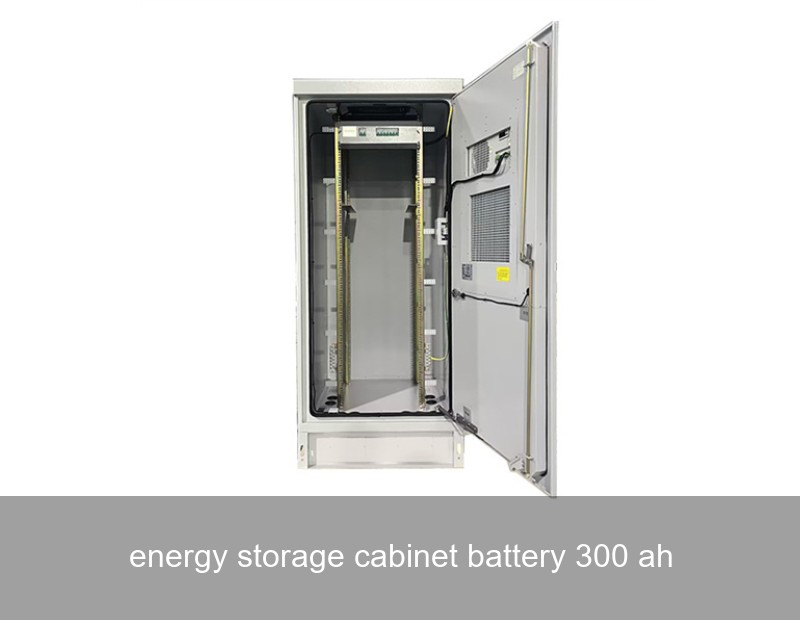
An energy storage cabinet battery is a pre-engineered, all-in-one unit that houses battery modules, a battery management system (BMS), thermal management, and safety systems within a secure, often rack-mounted enclosure. The "300 Ah" refers to the capacity of the individual lithium-ion (typically LiFePO4) cells inside. Ampere-hours (Ah) measure the battery's energy storage capacity—think of it as the size of the fuel tank. A 300 Ah cell can, in theory, deliver 300 amps of current for one hour, or 30 amps for 10 hours.
When multiple 300 Ah cells are combined into modules and then integrated into a cabinet, the result is a high-energy-density system. For instance, a cabinet with a 20-module configuration can offer substantial energy reserves, often in the range of 30-40 kWh per cabinet, making it ideal for demanding applications. Companies like Highjoule specialize in designing these sophisticated systems, ensuring that the raw power of 300 Ah cells is harnessed safely, efficiently, and intelligently for commercial, industrial, and microgrid applications.
Why 300 Ah? The Data Behind the Capacity
The shift towards higher-capacity cells like the 300 Ah format is driven by clear engineering and economic advantages. Let's break it down with a simple comparison.
| Cell Capacity | Number of Cells for a 40 kWh System* | Approx. System Footprint | Key Advantage |
|---|---|---|---|
| 100 Ah | ~128 cells | Larger | Lower per-cell cost, finer granularity |
| 300 Ah | ~43 cells | More Compact | Fewer connections, higher energy density, simplified maintenance |
*Example based on 3.2V LiFePO4 cells. Actual numbers vary by design.
The data shows a compelling story: 300 Ah cells require significantly fewer individual units to achieve the same total energy capacity. This translates into:
- Reduced System Complexity: Fewer cells mean fewer interconnections, reducing potential points of failure.
- Enhanced Space Efficiency: More energy stored in a smaller footprint is critical where real estate is expensive.
- Optimized Lifecycle: High-quality 300 Ah cells, like those specified in Highjoule's H-Cube Commercial Series cabinets, are designed for long cycle life (often over 6,000 cycles), ensuring a lower total cost of ownership.

Credit: A modern energy storage cabinet installation. Systems using 300 Ah cells maximize capacity in a compact footprint.
Key Benefits for Commercial & Industrial Users
For a factory, data center, or retail complex, an energy storage cabinet with 300 Ah cells isn't just a battery; it's a strategic asset. Here’s how:
- Peak Shaving (Demand Charge Reduction): This is often the primary financial driver. Utilities charge commercial users not only for total energy consumed (kWh) but also for their highest power draw (kW) in a billing period. An intelligent storage system, like Highjoule's platform, discharges during these short peak periods, flattening the demand curve and slashing these charges, often by 20-40%.
- Backup Power & Resilience: Provides seamless transition during grid outages, protecting critical operations and sensitive equipment.
- Renewable Energy Integration: Stores excess solar PV generation for use at night, maximizing self-consumption and ROI on solar investments.
- Energy Arbitrage: In regions with time-of-use rates, the system charges when electricity is cheap (e.g., at night) and discharges when it's expensive.
A Real-World Case Study: Peak Shaving in Action
Let's look at a concrete example from the European market. A mid-sized dairy processing plant in Germany faced consistently high demand charges due to the simultaneous operation of refrigeration compressors, pasteurizers, and packaging lines. Their peak demand often reached 850 kW, incurring substantial costs.
The Solution: The plant installed a Highjoule H-Cube Commercial Series energy storage system, comprising four cabinets built with high-cycle-life 300 Ah LiFePO4 cells, with a total usable capacity of 160 kWh and a 250 kW power output.
- Peak Demand Reduction: Average peak load reduced from 850 kW to 680 kW (a 20% reduction).
- Annual Savings: Demand charge savings exceeded €28,000 annually.
- Additional Value: The system also provided backup power for critical control systems and stored excess energy from the plant's rooftop solar array, increasing solar self-consumption by 35%.
- ROI: The project achieved a simple payback period of under 5 years, with a system warranty extending well beyond that.
This case demonstrates the tangible economic impact of a well-sized energy storage cabinet battery system. For more on how demand charges work, see this explanation from the U.S. Department of Energy.
Choosing the Right System: Beyond the Battery Cell
While the 300 Ah cell is a crucial component, the overall system's intelligence and safety define its success. When evaluating a solution, ask:
- Battery Management System (BMS): Does it offer cell-level monitoring for voltage, temperature, and state of charge? Highjoule's proprietary BMS ensures every 300 Ah cell operates within its ideal window, maximizing safety and longevity.
- Thermal Management: Is it air or liquid-cooled? For high-power C&I applications, liquid cooling, as used in many Highjoule cabinets, provides superior temperature uniformity, which is critical for cell life and performance.
- Grid Integration & Software: Can the system's software intelligently respond to utility signals, weather forecasts, and on-site load patterns? The true value is unlocked by software.
The Highjoule Approach: Integrated Intelligence
At Highjoule, we view an energy storage cabinet battery 300 Ah system as more than a product; it's the physical core of a smart energy ecosystem. Our H-Cube Series cabinets are engineered around the robust 300 Ah LiFePO4 chemistry, chosen for its safety and long life. But we go further by integrating our EnergyOS platform—an AI-driven software that continuously analyzes energy data, utility rates, and consumption patterns to autonomously optimize the system's operation for maximum financial return and grid support.
Whether for a warehouse in Texas aiming to cut peak demand, a microgrid for a remote community in Scandinavia integrating wind power, or a residential complex in Spain maximizing solar use, Highjoule delivers tailored solutions. Our global service network provides ongoing support, ensuring your investment delivers for decades. Learn about battery safety standards from a source like UL Solutions.
Credit: Intelligent control software is key to unlocking the full value of an energy storage system.
The Future of Energy Management
The trend is clear: distributed, intelligent energy storage is becoming a cornerstone of modern electricity systems. As grid dynamics evolve and renewable penetration grows, the ability to store and dispatch energy locally will be paramount. Systems built with high-capacity, reliable components like 300 Ah energy storage cabinet batteries will lead this charge, providing the necessary scale and reliability for the energy transition.
Is your business or community simply watching energy costs fluctuate, or are you ready to take control and transform your energy consumption into a strategic advantage? What would a 20% reduction in your peak demand charges mean for your bottom line this year?
 Inquiry
 Online Chat