


Energy Storage Cabinet: Your Key to a Secure and Independent Grid-Off Future
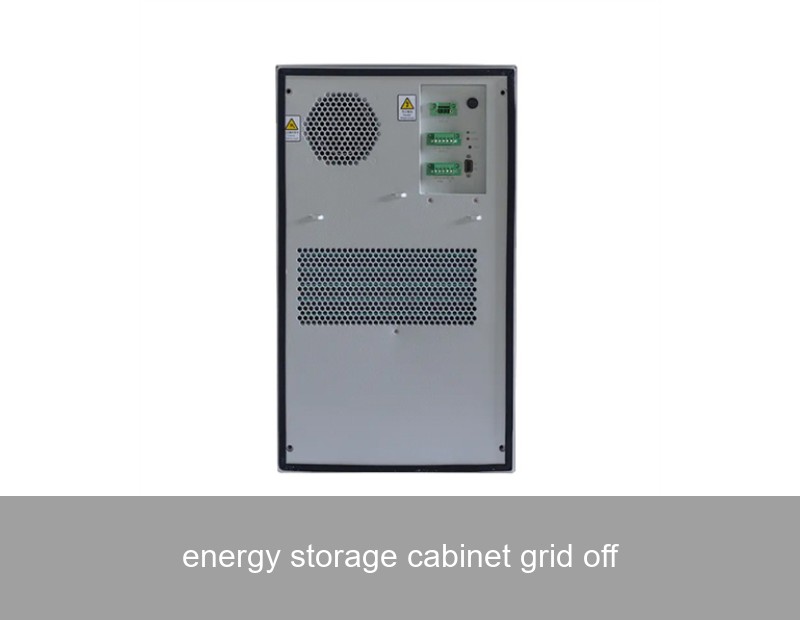
Imagine a sudden storm knocks out power in your neighborhood. The lights flicker and die, your Wi-Fi drops, and the hum of modern life falls silent. For most, it's a frustrating inconvenience. But for businesses, critical facilities, or homes relying on medical equipment, it's a serious threat. This vulnerability is driving a powerful shift towards energy independence. At the heart of this movement is a robust, intelligent piece of technology: the energy storage cabinet for grid-off operation. More than just a big battery, it's an integrated power reserve designed to seamlessly disconnect from the main utility grid and keep your essential operations running smoothly, safely, and sustainably. This article will explore how this technology is redefining resilience.
Table of Contents
- The Grid Reliability Paradox: Why "Always-On" Isn't Guaranteed
- Beyond the Battery: Anatomy of a Modern Grid-Off Energy Storage Cabinet
- Data-Driven Resilience: The Tangible Benefits of Going Grid-Independent
- Case Study: A European Dairy's 24/7 Cold Chain, Secured
- Choosing Your System: Key Considerations for Grid-Off Readiness
- Highjoule's Integrated Approach to Uninterrupted Power
- The Future of Energy Autonomy: What's Next?
The Grid Reliability Paradox: Why "Always-On" Isn't Guaranteed
We often take grid electricity for granted. Yet, data tells a different story. In the US, the average customer experienced just over seven hours of power interruptions in 2021, with major events like severe weather causing the majority of outages (U.S. Energy Information Administration). In Europe, while grids are generally robust, the transition to renewable-heavy systems and geopolitical pressures expose new vulnerabilities. The paradox is clear: our society is more digitally dependent than ever, but our primary power infrastructure faces increasing challenges from climate, age, and complexity.
This is where the concept of grid-off capability moves from a luxury to a strategic necessity. It's not about abandoning the grid entirely, but having the ability to operate independently from it during disruptions. Think of it as having a sophisticated, automated lifeboat for your electrical systems—ready to deploy the moment the main ship (the grid) signals trouble.
Beyond the Battery: Anatomy of a Modern Grid-Off Energy Storage Cabinet
So, what exactly is an energy storage cabinet built for grid-off scenarios? It's a fully integrated system, much more than cells in a box. Let's break down its core components:
- High-Density Battery Modules: Typically using lithium iron phosphate (LFP) chemistry for safety, longevity, and stable performance. These are the energy "fuel tanks."
- Intelligent Battery Management System (BMS): The brain of the operation. It monitors cell voltage, temperature, and health to ensure safety and maximize lifespan.
- Hybrid Inverter/Charger: The heart. This device manages bidirectional energy flow. It converts DC battery power to AC for your loads, and AC from solar/grid to DC to charge the batteries. In grid-off mode, it creates a stable, clean "microgrid" (often called a standalone AC source) for your premises.
- Advanced System Controller: The command center. This software-driven unit automatically manages the transition between grid-tied and grid-off operation, prioritizes loads, and integrates with renewable sources like solar PV.
- Safety & Environmental Enclosure: The robust, weather-resistant cabinet itself houses all components, featuring thermal management (cooling/heating), fire suppression, and secure access.

Image Source: Unsplash (Representative image of industrial electrical equipment)
Data-Driven Resilience: The Tangible Benefits of Going Grid-Independent
Investing in a grid-off capable system delivers measurable returns that go far beyond peace of mind. Here’s what the numbers often show:
| Benefit | Typical Impact | Explanation |
|---|---|---|
| Business Continuity | Prevents $10,000+ per hour of downtime (varies by sector) | Keeps servers, refrigeration, production lines, and security systems operational during outages. |
| Energy Cost Optimization | Reduces peak demand charges by 20-40% | Uses stored energy during periods of high grid prices, slashing utility bills even when grid-connected. |
| Renewable Self-Consumption | Increases solar PV usage from ~30% to 70%+ | Stores excess solar energy for use at night or during outages, maximizing your green investment. |
| Grid Services & Incentives | Potential revenue streams | In some markets, systems can provide grid stabilization services (frequency response) for additional income. |
Case Study: A European Dairy's 24/7 Cold Chain, Secured
Let's look at a real-world application. A medium-sized dairy processing plant in Bavaria, Germany, faced a critical challenge. Their refrigeration and packaging lines required uninterrupted power to maintain product safety and comply with strict EU regulations. Even a two-hour outage could spoil an entire batch, costing over €50,000 in lost product and cleanup.
The Solution: The plant partnered with Highjoule to design and install a turnkey energy storage cabinet system with guaranteed grid-off performance. The installation included:
- Two parallel Highjoule HJ-Cube Industrial storage cabinets, providing a total of 500 kWh of storage capacity.
- Integration with their existing 200 kWp rooftop solar array.
- Advanced logic to prioritize critical refrigeration loads and the packaging line during any disconnection.
The Outcome: Within the first year, the system automatically performed three seamless transitions to grid-off mode during brief utility faults, preventing any production loss. Furthermore, by using stored solar energy to shave peak consumption, the plant reduced its monthly energy costs by an average of 28%. The project's payback period, factoring in avoided losses and energy savings, was calculated at under five years. This is a prime example of how modern storage is both an insurance policy and a profit center.
Choosing Your System: Key Considerations for Grid-Off Readiness
Not all storage systems are created equal for true independence. When evaluating an energy storage cabinet for grid-off use, ask these critical questions:
- Seamless Transition: How fast does the system switch to island mode? High-performance systems do this in milliseconds, preventing any disruption to sensitive electronics.
- Power Rating vs. Energy Capacity: Do you need high power for short bursts (starting large motors) or longer runtime for essential loads? Your cabinet needs the right inverter power (kW) and battery capacity (kWh).
- Scalability: Can you easily add more cabinets as your needs grow? Modular design is key.
- Software Intelligence: Can you easily configure which circuits stay on during an outage? User-friendly monitoring and control are essential.
- Safety Certifications: Does the system carry relevant regional certifications (e.g., UL 9540 in the US, CE / IEC in Europe) for fire safety and grid interconnection?
Highjoule's Integrated Approach to Uninterrupted Power
At Highjoule, we've been engineering resilience since 2005. Our HJ-Cube series of commercial and industrial energy storage cabinets are designed from the ground up for reliable grid-off operation. What sets our solution apart is the deep integration of hardware and software. Our proprietary Energy Operating System (E-OS) doesn't just react to outages; it predicts and prepares for them. It continuously analyzes your load patterns, weather forecasts, and grid status to optimally charge and dispatch your stored energy.
For a small business or a large microgrid, our cabinets provide a scalable foundation. They seamlessly integrate with solar, wind, and even backup generators, creating a unified, intelligent energy ecosystem. We don't just sell a cabinet; we deliver a guaranteed outcome: continuity.

Image Source: Unsplash (Representative image of commercial solar and storage)
The Future of Energy Autonomy: What's Next?
The trajectory is clear. As renewable penetration increases and climate volatility grows, the demand for localized, dispatchable power will only accelerate. The next evolution of the energy storage cabinet will involve even greater grid interactivity, forming collaborative networks of virtual power plants (VPPs) that support community-wide resilience while providing value to their owners. The question is no longer if one needs a plan for energy independence, but when and how to implement it effectively.
Is your organization's energy strategy prepared for the next inevitable grid disturbance, and what would be the true cost of waiting to find out?
 Inquiry
 Online Chat