


What is a Grid Tie Limiter and How Does It Work in an Energy Storage Cabinet?
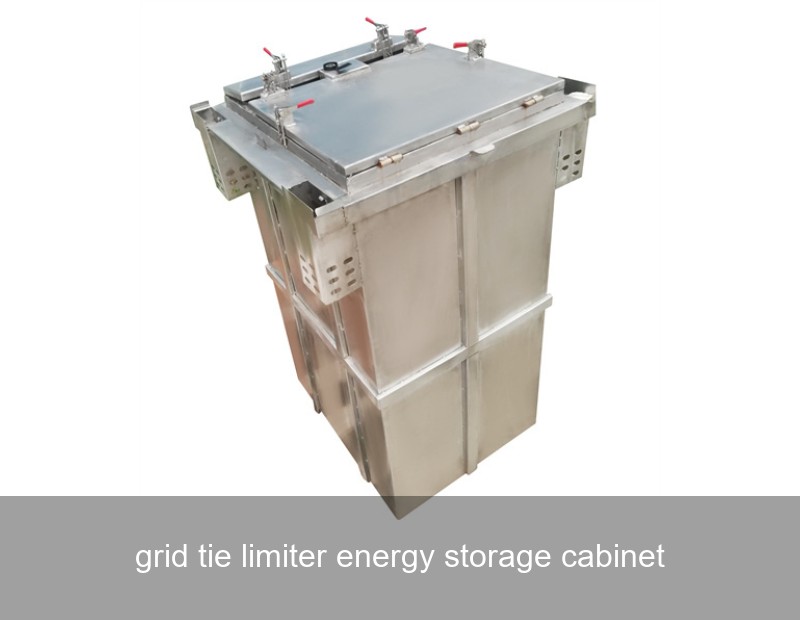
Have you ever wondered how commercial buildings with solar panels avoid overloading the local power grid when they generate more electricity than they can use? Or how a factory with a large battery system ensures it doesn't accidentally export too much power back to the utility, potentially causing safety issues and incurring hefty fines? The answer often lies in a crucial but under-discussed component: the grid tie limiter within the energy storage cabinet. This intelligent device is the unsung hero of modern, grid-connected renewable energy systems, acting as a sophisticated traffic cop for electricity flow. Let's demystify this technology and explore why it's becoming indispensable for businesses and communities across Europe and the U.S. seeking energy independence and grid stability.
Table of Contents
- The Grid Export Challenge: A Growing Phenomenon
- The Data: Why Grid Constraints Are a Real Business Problem
- The Solution: Inside the Grid Tie Limiter Energy Storage Cabinet
- A Real-World Case: Managing Peak Export in a German Industrial Park
- Beyond Limiting: The Advanced Capabilities of Modern Systems
- Choosing the Right Grid-Tied Storage Solution
The Grid Export Challenge: A Growing Phenomenon
The rapid proliferation of distributed energy resources (DERs) like rooftop solar PV is a fantastic trend for decarbonization. However, it presents a unique technical challenge for the aging electricity distribution grid. Traditionally designed for one-way power flow (from central plants to consumers), many local grids are now experiencing reverse power flow during sunny periods when solar generation peaks.
This can lead to voltage fluctuations, transformer overheating, and protection equipment malfunctions. To prevent this, utilities are increasingly enforcing strict grid export limits. They may cap the amount of power a site can feed back into the network at any given time. Exceeding this limit can result in forced curtailment of your solar panels, lost revenue, or even disconnection. This is where the intelligent integration of an energy storage cabinet with a dedicated grid tie limiter function becomes a game-changer.
The Data: Why Grid Constraints Are a Real Business Problem
The issue isn't theoretical. According to a 2021 report by the National Renewable Energy Laboratory (NREL), high levels of solar penetration can lead to significant voltage and power quality issues on distribution feeders. In California, the "duck curve" phenomenon highlights the sharp net load drop during midday solar peaks, requiring rapid ramping of other generation sources later.
For a business owner, the impact is direct:
- Financial Loss: Your solar investment is underutilized if you must turn off panels to stay under an export limit.
- Operational Risk: Potential grid non-compliance penalties or forced disconnection.
- Missed Opportunities: Inability to participate in demand response or grid services programs that require precise power control.
Simply put, without a way to actively manage the point of grid interconnection, your energy assets are not fully optimized or compliant.
The Solution: Inside the Grid Tie Limiter Energy Storage Cabinet
So, what exactly is this system? Think of it as a complete, self-contained power management unit. At its heart is the energy storage cabinet – a robust enclosure housing lithium-ion battery modules, battery management systems (BMS), thermal management, and power conversion systems (PCS). Integrated seamlessly into this cabinet is the brain: the grid tie limiter controller.
Here’s how it works in practice:
| Step | Process | Role of the Grid Tie Limiter |
|---|---|---|
| 1. Monitoring | Continuously measures real-time power flow at the grid connection point (the "utility meter"). | Acts as the system's eyes, gathering critical data on import/export. |
| 2. Analysis | Compares the measured export power against a pre-set limit (e.g., 50 kW). | The brain processes the data against user-defined or utility-mandated rules. |
| 3. Control | If export approaches the limit, it sends instant commands to the power conversion system. | Becomes the traffic cop, issuing direct orders. |
| 4. Action | The PCS either charges the battery with excess solar or reduces inverter output. | The energy storage cabinet executes the command, absorbing or releasing power to maintain the limit. |

Image: A modern energy storage cabinet installation. Source: Unsplash (Representative image)
This all happens in milliseconds, ensuring seamless compliance. Companies like Highjoule have perfected this technology. Our H-IOS (Intelligent Optimization System) software, embedded within our commercial H-Cube energy storage cabinets, provides this precise grid-tie limiting functionality. It allows facility managers to set export limits with a few clicks, ensuring they never exceed their agreement with the utility, while maximizing self-consumption of solar energy and providing backup power.
A Real-World Case: Managing Peak Export in a German Industrial Park
Let's look at a concrete example from our work in Europe. A medium-sized manufacturing plant in Bavaria, Germany, had a 300 kWp rooftop solar array. Their grid connection agreement limited feed-in to a maximum of 100 kW. During summer weekends and production holidays, their solar generation far exceeded onsite load and the 100 kW export cap, leading to frequent, automated curtailment and wasted energy.
The Solution: Highjoule installed a 240 kWh H-Cube energy storage cabinet system with advanced grid tie limiter logic. The system was configured with a hard 100 kW export limit.
The Results (Data from first 6 months of operation):
- Grid Compliance: 100% adherence to the 100 kW export limit, with zero violation incidents.
- Solar Self-Consumption: Increased from 68% to over 92%.
- Energy Waste: Solar curtailment was eliminated entirely.
- Financial Benefit: By storing excess midday solar and using it during evening peak price hours, the plant reduced its electricity costs by an additional €18,000 annually on top of solar savings.
This case demonstrates that a grid tie limiter energy storage cabinet isn't just a compliance tool; it's a revenue-protecting and enhancing asset.
Beyond Limiting: The Advanced Capabilities of Modern Systems
Today's leading systems, such as those developed by Highjoule, do much more than just limit export. They are multi-functional platforms for energy intelligence. When you invest in such a cabinet, you're also enabling:
- Peak Shaving: Discharging the battery during times of high utility demand charges to slash monthly bills.
- Backup Power: Providing critical loads with uninterrupted power during grid outages.
- Frequency Regulation (in some markets): Participating in grid service markets for additional revenue streams.
- Future-Proofing: The software-upgradable platform can adapt to new tariffs, regulations, and market opportunities.

Image: An energy management system dashboard visualizing power flows. Source: Unsplash (Representative image)
For instance, the Highjoule H-IOS platform unifies these functions into a single, user-friendly interface. A facility manager can see real-time power flows, set export limits, schedule peak shaving, and monitor battery health all from one dashboard. This holistic approach transforms a simple storage cabinet into the nerve center of a site's energy ecosystem.
Choosing the Right Grid-Tied Storage Solution
Selecting a system isn't just about battery capacity. You need a partner that understands grid interconnection rules in your specific region (like FERC 2222 in the U.S. or grid codes in the EU) and can provide a system with proven, reliable limit control. Key considerations include:
- Accuracy & Speed: The limiter must react within cycles, not seconds.
- Grid Code Compliance: The entire system must be certified for connection in your target market.
- Scalability: Can the system start small and grow with your needs?
- Software Intelligence: Is the control system smart and adaptable for future needs?
With nearly two decades of experience since 2005, Highjoule has deployed its smart energy storage cabinets across commercial, industrial, and microgrid applications worldwide. Our deep expertise in power electronics and grid software ensures our systems don't just store energy—they manage it intelligently, with features like the grid tie limiter being a standard, robust part of the offering.
As you consider optimizing your energy assets, what specific grid constraint or tariff structure is your business facing that a smarter approach to energy export management could solve?
 Inquiry
 Online Chat