


Unlocking Energy Independence: The Power of the Energy Storage Cabinet Hybrid Prime System
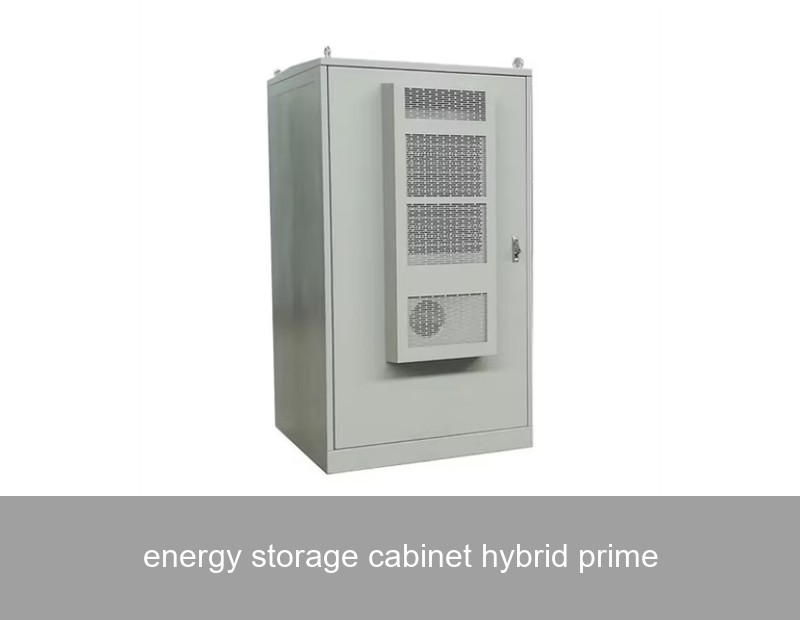
Imagine a power system so intelligent and self-reliant that it can seamlessly juggle solar power, grid electricity, and backup energy, all while slashing your bills and carbon footprint. This isn't a distant future concept; it's the reality delivered by today's most advanced energy storage cabinet hybrid prime solutions. For businesses, communities, and forward-thinking homeowners, these systems are becoming the cornerstone of a resilient and cost-effective energy strategy. But what exactly makes a "Hybrid Prime" system different, and why is it generating so much buzz in the energy sector? Let's dive in.
The Modern Grid Challenge: More Renewables, More Complexity
The energy landscape is undergoing a seismic shift. From California to Bavaria, renewable energy sources like solar PV are being deployed at a record pace. According to the International Energy Agency (IEA), global renewable capacity additions grew by almost 50% in 2023, with solar PV accounting for three-quarters of this expansion. This is phenomenal news for our planet. However, it introduces a new set of challenges for grid stability. Solar and wind are intermittent—the sun doesn't always shine, and the wind doesn't always blow. This variability can strain traditional grids, leading to frequency fluctuations, voltage dips, and even the need for costly grid infrastructure upgrades.
This is where the paradigm shifts from passive consumption to active energy management. The old model of simply drawing power from the grid is no longer the most economical or reliable. The new model? Generate your own clean power, store it intelligently, and use it precisely when it provides the maximum benefit. This is the core promise of a hybrid energy system, and the "prime" designation signifies that the storage system is the primary, intelligent controller of your entire energy ecosystem.

Image Source: Unsplash - A modern industrial solar installation, a key component paired with a Hybrid Prime system.
How a Hybrid Prime System Works: Intelligence at Its Core
Think of a energy storage cabinet hybrid prime system as the master conductor of your energy orchestra. It doesn't just store energy; it makes real-time, millisecond-by-millisecond decisions to optimize every kilowatt-hour. The central component is the energy storage cabinet itself—a robust, self-contained unit housing advanced lithium-ion battery modules, a hybrid inverter, thermal management systems, and the all-important energy management system (EMS) software.
Here’s a simplified breakdown of its decision-making logic:
- Priority 1: Maximize Self-Consumption. When your solar panels are producing excess energy, the system stores it in the batteries instead of exporting it to the grid (which often yields lower financial returns).
- Priority 2: Strategic Discharge. During peak evening hours when grid electricity is most expensive (a phenomenon known as time-of-use rates), the system powers your facility from the batteries, avoiding peak demand charges, which can constitute up to 70% of a commercial electricity bill.
- Priority 3: Grid Services & Backup. The system can provide grid stabilization services if permitted by local regulations. Crucially, in the event of a grid outage, it can island itself and continue to power critical loads seamlessly, a feature invaluable for data centers, manufacturing lines, and hospitals.
| Time of Day | Solar Generation | Battery Action | Power Source for Loads | Result |
|---|---|---|---|---|
| Midday (Sunny) | High | Charging | Solar + Grid (if needed) | Excess solar stored, grid use minimized. |
| Evening Peak (6-9 PM) | Low/None | Discharging | Battery Storage | Avoids expensive peak grid tariffs. |
| Night (Off-Peak) | None | May charge from grid | Grid (Low-Cost) | Battery topped up with cheap electricity for next day's peak. |
| Grid Outage | Any | Discharging | Battery + Solar (if available) | Uninterrupted power for critical loads. |
A Real-World Case Study: Powering a German Manufacturing Plant
Let's move from theory to practice with a concrete example from Southern Germany. A mid-sized automotive parts manufacturer was facing two major pain points: skyrocketing electricity costs, driven largely by peak demand charges and volatile market prices, and a corporate mandate to reduce its carbon emissions by 30% within five years.
Their solution was a turnkey energy storage cabinet hybrid prime installation. The system integrated their existing 500 kW rooftop solar array with a new 720 kWh Highjoule H-Cube Pro energy storage cabinet and a sophisticated energy management platform. The results, monitored over 12 months, were compelling:
- Peak Demand Reduction: The system's predictive algorithms shaved peak grid demand by 40%, translating to direct savings of over €45,000 annually on demand charges alone.
- Self-Consumption Rate: The ability to store solar energy increased their on-site consumption of renewable power from 35% to over 80%, drastically reducing their reliance on the German grid mix.
- ROI & Sustainability: The project achieved a simple payback period of under 7 years, while concurrently reducing the facility's scope 2 carbon emissions by an estimated 280 tonnes of CO2 equivalent per year. The system also provided UPS-grade backup for their quality control lab, preventing costly production halts.
This case, documented in part by the Fraunhofer Institute for Solar Energy Systems, highlights the multi-faceted value proposition of a well-engineered hybrid prime system.
The Highjoule Solution: Engineered for Reliability and Performance
At Highjoule, we've been at the forefront of this energy transition since 2005. Our approach to the energy storage cabinet hybrid prime market is built on two decades of deep system integration expertise. We understand that a cabinet is more than just batteries in a box; it's a mission-critical power asset.
Our flagship product for commercial and industrial applications, the H-Cube Pro Series, embodies this philosophy. It's a fully containerized, plug-and-play solution designed for ease of deployment and unmatched safety. Key features that set it apart include:
- All-in-One Design: Integrates battery modules, a bi-directional hybrid inverter, a liquid cooling system, and our proprietary JouleMind AI EMS into a single, compact footprint.
- Advanced Liquid Cooling: Ensures optimal cell temperature under heavy cycling, extending battery life and maintaining consistent performance in diverse climates from Texas heat to Scandinavian winters.
- Cybersecurity & Grid Compliance: Built with secure communication protocols and readily configurable to meet grid code requirements in North America (UL 9540, IEEE 1547) and Europe (VDE-AR-N 4105, CE).
- Scalable Architecture: From a single 200 kWh cabinet to multi-megawatt hour installations, our systems scale to meet evolving energy needs.
Our service goes beyond hardware. Highjoule provides comprehensive feasibility studies, system design, installation support, and long-term performance monitoring via our cloud-based portal. We partner with you to ensure your energy storage cabinet hybrid prime system delivers on its financial, operational, and sustainability promises for years to come.

Image Source: Unsplash - Technician servicing a large-scale battery energy storage cabinet.
The Future Outlook for Hybrid Prime Systems
The trajectory is clear. As electricity markets continue to evolve with greater price volatility and as the imperative for decarbonization intensifies, the business case for intelligent, behind-the-meter energy storage will only strengthen. Future energy storage cabinet hybrid prime systems will likely play an even more active role in grid balancing, participating in virtual power plants (VPPs) and providing ancillary services that generate additional revenue streams for owners.
The technology is also advancing. We are actively researching next-generation battery chemistries and refining our AI-driven energy forecasting algorithms. The goal is to push efficiency and value even further, making energy independence accessible to more businesses and communities. For a deeper look at the technological and policy drivers, resources like the U.S. Department of Energy's Office of Energy Efficiency & Renewable Energy provide valuable insights.
So, the question isn't really *if* a hybrid prime system will become a standard component of smart energy management, but *when*. Is your organization ready to audit its energy flows, model its potential savings, and take control of its power destiny? What would a 40% reduction in your peak demand charges mean for your bottom line this year?
 Inquiry
 Online Chat